

Open Access
Published: November 2026
Licence: CC BY-NC-4.0
Issue: Vol.21, No.2
Word count: 3,899
About the author/creator
Residue as wayfinding: Navigating transformation through creative arts therapy enquiry
Annika Evans
Abstract
This enquiry positions residue as a form of wayfinding; returning to discarded fragments of creative practice to explore how meaning and transformation emerge through reflection and regeneration. Developed through my engagement with the MIECAT approach, this enquiry positions residue as an orientation point through which integration occurs, generating a proprioceptive cartography of transformation. An assembly of theoretical voices grounds this enquiry in culturally diverse ways of knowing and becoming. This work offers several maps and takes many lines of flight. Wayfinding is acknowledged, foremost, as deeply embedded in Moana origin stories and ontologies. Residue is proposed as epistemic material and a guide for navigating cycles of transformation. In creative arts therapy, residue-based wayfinding offers a possible orientation for embodied integration: an improvisational practice finding resolution in resonance and coherence without completeness.
Keywords
Residue, wayfinding, phenomenology, arts-based enquiry, embodied knowing, cognitive maps, creative arts therapy
Cite this reflectionEvans, A. (2026). Residue as wayfinding: Navigating transformation through creative arts therapy enquiry. JoCAT, 21(2). https://www.jocat-online.org/re-26-evans
The opening act
This article opens with an assembly of theoretical voices. I provide this not as scaffolding for argument, but as a grounding gesture. These voices are the support act. The main event is purely process: process as presence, process as proof, a sentiment echoed by Lett et al.’s (2014) notion of ‘process as value’ and Sajnani’s (2012) proposition that elevates presence above proof. In this arts‑based enquiry, the making has shown itself to be the knowing, a position that resonates with practice-led theorists who foreground process as epistemic (e.g., Barrett & Bolt, 2010; Sajnani, 2012). I have intentionally left the creative process alone on the stage, under a single spotlight, without an understudy or prompt; it stands calm and unwavering, ready to take centre stage (see Figure 1). This article emerges from a studio‑led enquiry, exploring process, residue, and the unfolding of meaning through creative exploration, later situating these movements within broader architectures of internal navigation.
Figure 1. Annika Evans, Pre-work Detritus Centre Stage, 2025, digital collage incorporating Midjourney-generated images, dimensions variable.
The beginning, middle and end
This is the beginning. It is also the middle and end, yet none of these at all. Each thought contains the fullness of a circle, each one a never-ending loop back to itself, an ouroboros of sorts. Everything is complete unto itself. What we see is the process of realisation: Self realising itself. All we can do is leave traces of this process as signposts on our way home. Therefore, nothing I come to say here is the end, the full stop, or conclusion. These are relics of resonance, poignant postcards or surreal snapshots, solicitations of more.
Home is a feeling, though the illusion is encapsulated in bricks and mortar. So too is truth, a many-faceted conceptual prism, shifting with perspective and time. Through this lens, then, research is not about anchoring answers, but about positioning signposts, gentle flags that echo moments of truth that reverberate across time, reminding us that home is a collaboration of things.
Arts-based research allows for this multidimensionality. When adopting a phenomenological stance and an insistence on openness, it does not seek to solve, but to resolve, a distinction I draw to emphasise integration over closure. This is accommodation, not accountability. A generous invitation to multiple perspectives, where the doorway itself is reshaped through discourse and discovery. In this space, knowledge is co-created, improvised, and always in motion, aligning with what Sajnani (2012) describes as “contingent ‘truths’” (p.83). In her text on critical autoethnography, Holman Jones (2016) recalibrates Della Pollock’s notion of “living bodies of thought” by alluding to theory as “an ongoing process that links the concrete and abstract, thinking and acting, aesthetics, and criticism” (p.2). Holman Jones states that “theory is not a body of knowledge—a given, static and autonomous set of ideas, objects, or practices” (p.2).
When viewed through the lens of improvisation, arts-based research resonates deeply with what Sajnani (2012) refers to as “Living Enquiry”, a fluid, emergent approach to knowledge-making that privileges presence over proof (p.84). This is echoed by McNiff (2014) when he suggests artistic expression is in itself the empirical evidence. Sajnani (2012) believes such enquiry unfolds “on canvas, in writing and onstage as it does in life” (p.84), inviting discoveries that are fleeting, evolving, and intimately tied to experience.
This approach challenges the hierarchies that privilege theoretical abstraction over embodied practice. As Lyotard notes, knowledge is often defined by those “who decide what knowledge is, and know what needs to be decided” (Lyotard, as cited in Nelson, 2006, p.105). Foucault (1980) critiques the institutional gatekeeping of epistemology, while Bourdieu and Plato are invoked by Sajnani (2012) to highlight how action and emotion have historically been devalued in favour of contemplation and logic. In this context, creative or embodied enquiry begins on the back foot, yet it also offers a radical reorientation.
Here, arts-based enquiry resists the urge to cauterise meaning. It demands the courage to risk expression amidst ambiguity, uncertainty and chaos (Sajnani, 2012, p.82). Improvisation becomes not just a method but a “stance”, one that allows knowledge to emerge as a “verb”, as “yearning”, and as a process filled with sentiment and “temporary investments” (Sajnani, 2012, p.82). As Leavy (2009) notes, drawing on Sinner et al. (2006), such inquiry must be evaluated not only for its “rigor” but for its “vigor” – its capacity to generate “dimensionality”, layered meaning, and collaborative vitality (p.16).
For improvisation, there must be an element of the unknown. Here, enquiry begins not with certainty, but with ambiguous unknowing, a phenomenological position that does not seek in a directed or driven way, but observes in a curious, slow, sensory manner, akin to Tishman’s (2018) art of ‘slow looking’. As enquirers, we become wide-eyed wanderers in the liminal, torch in hand, stalking rich, glistening fugitives that dwell quietly in the dark, awaiting their avowal.
To know, then, is to forget. To approach with empty hands, so they may be free to form something new. This becomes a meta enquiry, something much bigger than a singular proposition. If phenomenology asked me to forget in order to enter the work, residue invited me to return – to inspect the amnesic impressions in order to integrate. Thus, knowledge appears to be cyclic; a form of ouroboric digestion that enables implicit wisdom.
At this threshold between theory and studio, I found myself drawn back to the philosophical underpinnings of my early studies in visual arts, where Deleuze and Guattari’s notion of “lines of becoming” (1987) forged a new pathway toward the anthropological sensibilities of Tim Ingold and his own discoveries on movement and the unfolding of process.
Ingold’s work on wayfaring positions creative practice as an unfolding line of movement, where the ‘trace’ denotes the inscription of attention as it occurs (Ingold, 2011). His emphasis on correspondence, improvisation, and the emergent nature of making has been influential across arts-based and practice-led research (Barrett & Bolt, 2010). Yet while Ingold attends closely to the line of becoming, he rarely doffs his hat to what is left behind; though he echoes both Bergson (1911) and Whitehead (1929) when he posits that it is impossible to “reach the ends of life” (Ingold, 2011, p.13). Much of the existing literature similarly focuses on the visible trajectory of creative action, but not on the by-products of making. In my own enquiry, these remnants emerged not as incidental waste, but as footholds or orientation points. These were the material signposts that revealed where transformation had occurred.
From here the residual fragments acted as a form of wayfinding, offering both a way back to the self and a way forward or foothold into what was yet to emerge. In this sense, residue became a kind of cartography or proprioceptive system through which direction, transformation, and the unfolding of self could be sensed. Attending to residue illuminated not only where I had been, but how I had arrived, suggesting that the discarded elements of creative practice may hold their own generative knowledge.
Wayfinding carves a deep epistemic lineage within Moana (Pacific) cultures, where navigation extends beyond Western notions of movement through space and is culturally embedded and understood as an embodied, relational way of knowing (Iosefo et al., 2021). Refiti’s (2015) work on Sāmoan spatial thought offers an associated understanding of ‘vā’ as relational space, through which relationships, place and pathways are constituted. Pasifika artist and academic Raymond (2026) describes her engagement with vā as allowing “the past to have a presence in the now”; she states it has “presence”, it “forms relationships” and “necessitates reciprocal obligations” (p.181). These perspectives position wayfinding within a relational field of knowledge, connecting bodies, place, culture and experience, which are continually evolving. My use of the term acknowledges this origin story before adapting the concept for creative enquiry, hopefully without sequestering its spirit.
Within autoethnographic and practice-led research, wayfinding has been used metaphorically to describe processes of navigating uncertainty, emergence, and embodied enquiry (Adams et al., 2015; Iosefo et al., 2021; Lasczik Cutcher & Irwin, 2018). In this work, wayfinding becomes a metaphor for orientation through residue; a proprioceptive mode of sensing direction by attending to the fragments, offcuts, and traces left behind in the studio. Residue‑based wayfinding navigates the internal and external terrain of creative process, following the subtle signposts that reveal where transformation has occurred. This adaptation honours the relational spirit of wayfinding while situating it firmly within the context of arts‑based enquiry.
Before dimming the house lights and turning toward the studio, it becomes pertinent to map how metaphorical wayfinding threads through a neural architecture, and how the wake of therapeutic processes shapes the more tangible, dynamic versions of ourselves.
Creative arts therapy has long recognised that change often begins in the body, in gesture, sensation, and the pre‑verbal emergence of symbolic form (Finlay, 2011; Knill et al., 2005; Malchiodi, 2020; McNiff, 1998). Artistic expression is understood as arising first through embodied experience before it becomes image, movement, or narrative. This embodied orientation resonates with recent developments in neuroscience, which suggest that the brain navigates the cognitive space of thoughts, memories, and choices via internal landscapes using the same systems that guide our physical movements (Behrens et al., 2018). It is the brain’s hippocampal-entorhinal network that constructs cognitive maps (Behrens et al., 2018; Kabrel & Aru, 2026), which are representational terrains that expand, reorganise, and become returnable locations, so long as they are integrated.
Kabrel and Aru (2026) describe therapeutic transformation within psychotherapy as a process of “mental navigation” and “cognitive map expansion” (p.49). They argue that becoming aware is not a single moment, but an exploratory movement across internal space, where new representations must be symbolised and anchored via meaning-making to become accessible in future (Kabrel & Aru, 2026). Conceptualisation then becomes like the cartographer’s quill, sketching out this newly navigable world. Without this step, insight remains pre-symbolic and unintegrated, and the map remains narrow and outdated. Their model positions therapy as an internally directed process of exploration, and one that helps clients move beyond habitual flat-earth trajectories and into previously inaccessible conceptual terrain.
Research on creativity reinforces this architecture. Beaty and Kenett (2023) show that creative thinking relies on flexible navigation of associative networks. Here, insight tends to arise from remote or unusual associations, and it is often those who can wander further across the conceptual map who find themselves arriving at creative insight. Creativity, in this sense, is akin to internal wayfinding and mirrors both cognitive map expansion and the navigational shifts that occur through therapeutic process. Through creative process, new representational terrain is generated, explored, and gradually stabilised through conceptual and symbolic form.
Reflecting on residue and attending to fragments, offcuts, and traces in the studio becomes a proprioceptive form of navigation, a material form of guidance that leads the artist beyond familiar routes. Each gesture leaves a signpost; each signpost opens new conceptual territory. These foreign emergent forms assimilate and act as symbolic anchors, stabilising the terrain that has been discovered so it can be revisited, integrated, and externalised. In this way, residue is not simply the by‑product of making, but the very potent material through which orientation, reflection, and transformation occur.
Through this lens, residue‑based wayfinding offers creative arts therapy a possible framework for understanding mechanisms of change, bringing embodied practice into dialogue with cognitive neuroscience. It suggests how material engagement can broaden the internal maps through which clients navigate, how conceptual meaning-making may tether new experience to memory, and how creative enquiry may genuinely open new pathways into places that were previously intangible, unreachable destinations. Wayfinding in creative practice can become more than a metaphor; it could be seen as a therapeutic orientation, a tool to explore and inhabit one’s inner world with curiosity, courage, and the capacity to move differently when you arrive back on shore.
With this philosophical ground laid, I turn toward the studio, not to illustrate theory, but to enact it. The studio becomes a site of reflexive reduction, where theory is not cited but felt, not proven but embodied – a living example of “knowledge as poiesis, knowing by creating” (Östling et al., 2018, as cited in Contos, 2022, p.1).
Processing the negatives: The proofs
To begin this enquiry, I deliberately attended to all the existing studio material accumulated over previous weeks. Rather than setting them aside, I invited them in, allowing their presence to shape the threshold of this new cycle.
My studio practice has always been experimental and materially curious, embracing new technologies and processes as opportunities to test, extend and disrupt my creative vocabulary. I approached generative AI in this same spirit, not as a shortcut or replacement for artistic labour, but as another experimental material within my practice. The images generated through Midjourney were never intended as finished artworks; rather, they functioned as preliminary studies and raw material for a larger moving-image work involving extensive manual stitching, editing and animation. My thoughts have always moved rapidly, and I found in AI something of a sketching companion, allowing me to externalise fleeting internal images and explore their possibilities and prototypes at a pace that could finally keep up with my own creative thinking. This engagement is not without ethical complexity, particularly concerning authorship, appropriation and the provenance of training data, and I remain conscious of these tensions as I explore its creative potential. This is a delicate situation with broader existential consideration.
Annika Evans, TacitKinesis, 2025. Single-channel digital video incorporating Midjourney-generated still images, digital compositing, and animation. Duration: 2 min 28 sec.
I began by looking back – at all the work that didn’t become the work. All the dissonant and discarded images I had created using Midjourney. In my mind it felt akin to a funeral for the brief life they had given in service of my research. Did they not deserve reverence? This felt overwhelming, there were so many, and I knew if I continued producing at the same feverish pace, then this graveyard would soon become immense. The imagined scale of the graveyard reflected my internal reckoning with accumulation and intensity, a looping emotional state mirrored in the sheer volume of what I felt compelled to bury.
Turning here towards reflexivity, I began to question what place this had in my overall enquiry and took notice of my own physiological responses. My heart quickened in pace a little; I felt curious, and charged, even vital. Here was a moment of lived embodied experiencing, a form of knowing. These sensations arose in an intersubjective field, my body responding automatically to the presence of the discarded works as though they were companions in dialogue.
All failures are important, I thought; all the things that don’t make it are underpinning each work that does. These are your experiences as you journey and practise. This is the residue of process – the stones we step on to get to where we are going. All the individual, casually dispensed words we grapple with, before we form the beautiful poetry that is fully-fledged language. I was working directly with dissonance, staying with the discomfort of the search, and the ambiguity of not-yet-knowing, a clear parallel to the aforementioned idea of improvisation in arts-based research.
I was cycling back, going in reverse, like you do when you lose something. The repetitive, careful, well-worn steps back over unearthed ground, eyes fixed on signs for where you have been. Tiny clues like shining metallic objects, displaced earth, or broken and snapped twigs. A tracker of my own self. I was hunting myself. What had I done?
I had the sudden urge to print these images, cut them up and place them into neatly dug dirt holes. Initially this was an attempt to amplify or enlarge the scope of the material, which quickly shifted into a reduction, or distillation; perhaps in the hope that its weight could then be felt, or even embodied. This echoed my own internal state: overwhelmed, attuned, and searching for a way to honour what had been discarded.
I set about gathering approximately 700 images on screen, barely two days’ worth. I wanted to print them in grid form onto paper and cut them all out painstakingly (see Figure 2). I questioned why my studio process always involved some gruelling repetition, absurd rituals forced by my own hand.
Figure 2. Annika Evans, Discarded Proofs, 2025, digital collage incorporating Midjourney-generated images, dimensions variable.
While my computer ticked away downloading this mass extermination, my mind pictured the physical act of cutting. I realised I wanted these images to be printed on more fragile paper, something veiled, but translucent, a recent, persistent theme. Tracing paper sprang to mind, and it fitted perfectly with its smooth, thick transparency; there, but not quite there, the trace of all that is left – extending this theme of detritus and process.
After what felt like an eternity of formatting images, I trialled taping tracing paper to standard white A4 paper. To my surprise, it worked on the first print. I was ecstatic. They looked old, and remarkably like what we used to call a contact sheet back in the old days of analogue photography and darkrooms (a sheet of small positive images produced directly from strips of negatives before selecting photographs for enlargement; see Figures 3 and 4). I instantly revered them, and commenced cutting this trial row of the deceased (see Figure 5).
Figure 3. Annika Evans, First Contact, 2025, digital collage incorporating Midjourney-generated images, dimensions variable.
Figure 4. Annika Evans, First Contact III, 2025, digital collage incorporating Midjourney-generated images, dimensions variable.
Figure 5. Annika Evans, First Cut, 2025, digital collage incorporating Midjourney-generated images, dimensions variable.
Figure 6. Annika Evans, The Negatives, 2025, digital collage incorporating Midjourney-generated images, dimensions variable.
Incredibly, they had developed themselves into the uncanny likeness of a small strip of photographic negatives, albeit in positive form. Row by row, I cut them off. I held one strip up to the light and the feeling evoked the same curiosity, the same strained examination, the same strange miniature world captured at the end of my fingertips (see Figure 6). They even left fresh, inky residue on my skin and reminded me of dipping my fingers in chemical developing trays which resulted in darkly stained fingertips for days (see Figure 7). Elation coursed through me like an electric current. Here was a tactile imprint of the process, where the material marked me as much as I marked it.
Figure 7. Annika Evans, Im-prints, 2025, digital collage incorporating Midjourney-generated images, dimensions variable.
I took one strip to the lamp, where my grandfather’s antique, weighty magnifying glass sat close by, and I had to laugh at the synchronicity – this inherited treasure had come from his personal darkroom in the garage (see Figure 8). As I stared through the bulging, convex lens into the new world that had been revealed to me, I felt transfixed at this transformation (see Figure 9).
Figure 8. Annika Evans, Nonno’s Magnifying Glass, 2025, digital collage incorporating Midjourney-generated images, dimensions variable.
Figure 9. Annika Evans, New World, 2025, digital collage incorporating Midjourney-generated images, dimensions variable.
I continued to cut the quasi-negatives and pondered on the word ‘negative’. The opposite of positive. The reverse of life, the inverted version, where light is dark, and dark is light. Light, I considered, is invisible, you cannot see it without the dark. The contrast is imperative. “Contrast,” I repeated to myself, and marvelled at how uncannily the pieces came together.
I was keen to follow my initial impetus to bury these ‘negatives’. So, I collected a tray of dirt from the yard and brought it into the studio (see Figure 10). I cut one of the strips into single images and proceeded to push holes into the dry dirt with a single digit. As soon as I began, the gesture transformed. When I dropped the tiny images into the holes, it did not feel like a funeral. I was struck by the realisation that I was creating seed holes. I was not burying, I was planting (see Figures 11 and 12). As I pushed the small mounds of dirt back over to carefully cover them, they called quietly for water and somehow promised future growth. Into what, I had no idea, but I was resonating so completely, I felt as though my body had become a thrumming beehive.
Figure 10. Annika Evans, Home Cemetery, 2025, digital collage incorporating Midjourney-generated images, dimensions variable.
Figure 11. Annika Evans, Single Seed, 2025, digital collage incorporating Midjourney-generated images, dimensions variable.
Figure 12. Annika Evans, Seed Tray, 2025, digital collage incorporating Midjourney-generated images, dimensions variable.
This transformation was intersubjective. The soil, the images, and my own body co‑created and embodied a new meaning, which had only emerged through the act or process of making. The dialogue between gesture and material shifted the ritual from mourning to regeneration. Yet, I was more than aware that this new knowing remained tenuous, shifting forevermore as the cycle began anew.
Empirical gesticulations
These gestures of printing, cutting, staining, and planting are not endpoints; they are snapshots. Each one a provisional understanding, a close companion to meaning, each one a trace of home, of truth. These residual offcuts form a proprioceptive cartography, a breadcrumb trail through which orientation becomes possible. In this light we can see each end for what it is, a beginning. Here the ouroboros loops again, not to close, but to continue.
Through this process, I am coming to know arts‑based research not as a method, but as a way of being. It privileges resonance over resolution, and honours knowledge as something felt, gestured, embodied, and always in cyclical, fluid motion. Meaning is not anchored, but invited through ritual, residue, and relational activation.
The expanded theoretical frame developed in this enquiry reinforces this orientation. Cognitive neuroscience suggests that internal navigation draws on hippocampal-entorhinal architectures that also support movement through physical space (Behrens et al., 2018; Kabrel & Aru, 2026), while creative insight emerges through flexible traversal of associative networks (Beaty & Kenett, 2023). Kabrel and Aru (2026) develop their account of mental navigation and cognitive map expansion specifically in relation to psychotherapy (p.49). Here, I extend this proposition into creative arts therapy, bringing it into dialogue with the embodied and material processes of creative practice. In this way, the studio and the mind share a common geography. They are active sites where unfamiliar territory can be sensed, explored, symbolised, and gradually integrated.
Through this shared topography, residue-based wayfinding offers creative arts therapy a possible orientation for understanding processes of change. Fragments, offcuts and traces become symbolic footholds, revealing where transformation has occurred and tethering emergent experience to meaning, however temporary that may be. Attending to residue may allow previously unavailable internal territory to become representable, integrated and returnable, expanding the maps through which we navigate conceptual and emotional terrain. Residue is therefore not waste, but epistemic material; visceral evidence of movement, an invitation toward integration and a guide for returning and beginning again.
As the creative enquiry circles onward, I will continue to prototype methodologies that honour the resonant ambiguity and emotional immediacy of improvisation. I will treat the negative, dissonant residue not as waste, but as positive evidence, epistemic material to be composted into new possibilities for knowing. This is not a search for answers, but a reverent improvisation with presence, emergence, and the courage to remain empty‑handed, empirically incomplete, yet fully self‑realised.
References
Adams, T.E., Holman Jones, S., & Ellis, C. (2015). Autoethnography. Oxford University Press.
Barrett, E., & Bolt, B. (Eds.). (2010). Practice as research: Approaches to creative arts enquiry. I.B. Tauris.
Beaty, R.E., & Kenett, Y.N. (2023). Associative thinking at the core of creativity. Trends in Cognitive Sciences, 27(7), 671–683. https://doi.org/10.1016/j.tics.2023.04.004
Behrens, T.E.J., Muller, T.H., Whittington, J.C.R., Mark, S., Baram, A.B., Stachenfeld, K.L., & Kurth‑Nelson, Z. (2018). What is a cognitive map? Organizing knowledge for flexible behaviour. Neuron, 100(2), 490–509. https://doi.org/10.1016/j.neuron.2018.10.002
Bergson, H. (1911). Creative evolution (A. Mitchell, Trans.). Henry Holt.
Contos, I. (2022). The significance of engaging with materials and modes: A language of inner workings. Journal of Creative Arts Therapies, 17(1). https://www.jocat-online.org/a-22-contos
Deleuze, G., & Guattari, F. (1987). A thousand plateaus: Capitalism and schizophrenia (B. Massumi, Trans.). University of Minnesota Press.
Finlay, L. (2011). Evaluating research. In Phenomenology for therapists: Researching the lived world (pp. 261–274). Wiley-Blackwell.
Foucault, M. (1980). Power/knowledge: Selected interviews and other writings, 1972–1977 (C. Gordon, Ed.). Harvester Press.
Holman Jones, S. (2016). Critical autoethnography. In S. Holman Jones, T.E. Adams, & C. Ellis (Eds.), Handbook of autoethnography (pp.228–242). Routledge.
Ingold, T. (2011). Being alive: Essays on movement, knowledge and description. Routledge.
Iosefo, F., Harris, A., & Holman Jones, S. (2021). Wayfinding as Pasifika, indigenous and critical autoethnographic knowledge. In F. Iosefo, S. Holman Jones, & A. Harris (Eds.), Wayfinding and critical autoethnography (pp.15–27). Routledge. https://doi.org/10.4324/9780429325410-3
Kabrel, N., & Aru, J. (2026). Becoming aware through internal exploration: Understanding psychotherapy on conceptual and neurobiological levels. Perspectives on Psychological Science, 21(1), 49–79. https://doi.org/10.1177/17456916251378430
Knill, P.J., Levine, E.G., & Levine, S.K. (2005). Principles and practice of expressive arts therapy: Toward a therapeutic aesthetics. Jessica Kingsley.
Lasczik Cutcher, A., & Irwin, R.L. (2018). A/r/tographic peripatetic inquiry and the flâneur. In A. Lasczik Cutcher & R.L. Irwin (Eds.), The flâneur and education research: A metaphor for knowing, being ethical and new data production (pp.127–154). Palgrave Macmillan. https://doi.org/10.1007/978-3-319-72838-4_6
Leavy, P. (2009). Method meets art: Arts-based research practice. Guilford Press.
Lett, W., Fox, K., & Von der Borch, D. (2014). Process as value in collaborative arts-based inquiry. Journal of Applied Arts & Health, 5(2), 209–217. https://doi.org/10.1386/jaah.5.2.209_1
Malchiodi, C. A. (2020). Trauma and expressive arts therapy: Brain, body, and imagination in the healing process. Guilford Press.
McNiff, S. (1998). Art‑based research. Jessica Kingsley.
McNiff, S. (2014). Art as research: Opportunities and challenges. In P. Leavy (Ed.), The Oxford handbook of qualitative research (pp.253–264). Oxford University Press.
Nelson, R. (2006). Practice-as-research and the problem of knowledge. Performance Research, 11(4), 105–116. https://doi.org/10.1080/13528160701363556
Östling, J., Sandmo, E., Larsson Heidenblad, D., Nilsson Hammar, A., & Nordberg, K. (2018). Circulation of knowledge: Explorations in the history of knowledge. Nordic Academic Press.
Raymond, R. (2026). Conser.VĀ.tion | Acti.VĀ.tion: Culti.VĀ.ting niu museology practices through the Vā Body. In A-C. Engels-Schwarzpaul, L. Lopesi, B. Lythberg, E. Parr, A.L. Refiti, & A. Walker (Eds.), Vā Moana: Space and relationality in Pacific thought and identity (pp.161–183). ANU Press. https://doi.org/10.22459/VM.2026.09
Refiti, A.L. (2015). Mavae and tofiga: Spatial exposition of the Samoan cosmogony and architecture [Doctoral thesis, Auckland University of Technology]. Tuwhera Open Access. https://openrepository.aut.ac.nz/items/16292b4a-0858-491e-9c7b-f26c06a15202
Sajnani, N. (2012). Improvisation and art‑based research. Journal of Applied Arts & Health, 3(1), 79–86. https://doi.org/10.1386/jaah.3.1.79_1
Sinner, A., Leggo, C., Irwin, R.L., Gouzouasis, P., & Grauer, K. (2006). Arts-based educational research dissertations: Reviewing the practices of new scholars. Canadian Journal of Education, 29(4), 1223–1270. https://doi.org/10.2307/20054216
Tishman, S. (2018). Slow looking: The art and practice of learning through observation. Routledge.
Whitehead, A. N. (1929). Process and reality. Macmillan.
Author/creator
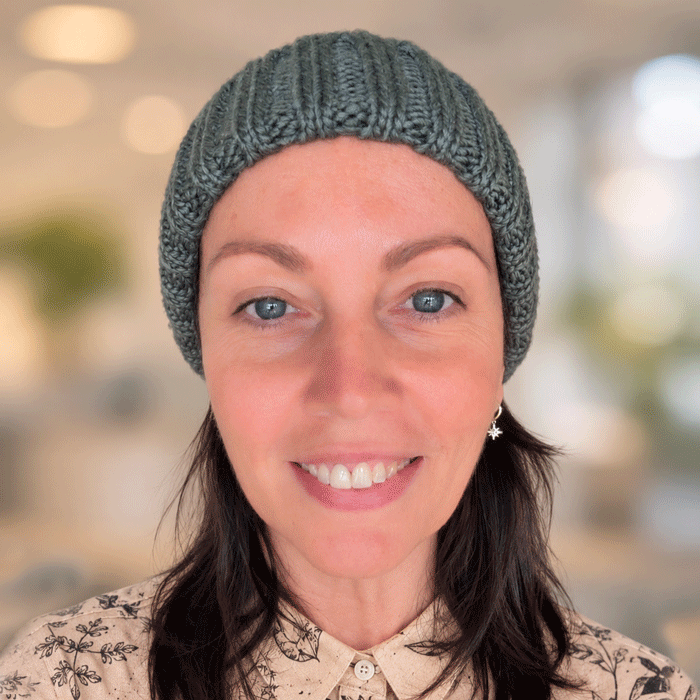
Annika Evans
MVisArts(Res), BVisArts(Hons), BVisArts(Sculpt), DipHealthStud, DipTransArtTher
Annika is a South Australian interdisciplinary artist, writer and educator whose conceptually-driven practice explores the intersections of material experimentation, emerging technologies and diverse fields of knowledge. She holds a Master of Visual Arts (Research) and First Class Honours from the UniSA. Her work has been exhibited nationally and internationally, supported by arts grants, awards and scholarships. A founding member and former co-director of FELTspace, she has taught at UniSA and contributed critical writing to Artlink and Eyeline. Her professional experience spans therapeutic arts, mental health and arts-in-health, complemented by therapeutic arts studies at both IKON Institute and MIECAT.
Email: annikamevans@gmail.com