

Open Access
Published: October 2026
Licence: CC BY-NC-4.0
Issue: Vol.21, No.2
Word count: 1,509
About the reviewer
Cite this reviewOcchiuto, L. (2026). Book review – Materials and Media in Art Therapy Contemporary Theory and Practice (2nd ed.), edited by Catherine Hyland Moon. JoCAT, 21(2). https://www.jocat-online.org/r-26-occhiuto
Book review
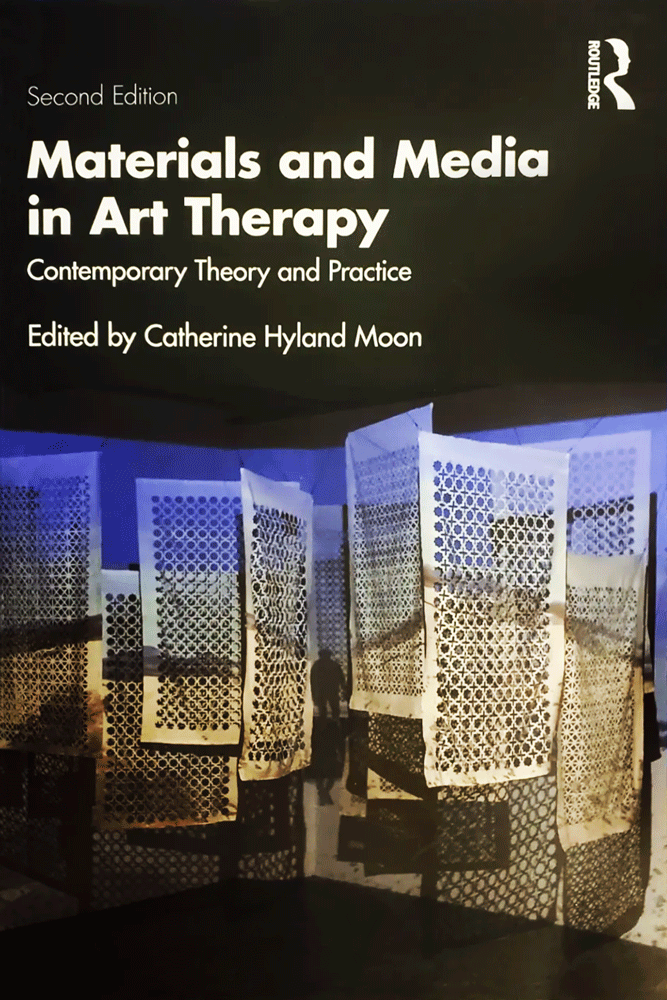
Materials and Media in Art Therapy Contemporary Theory and Practice, (2nd ed.), edited by Catherine Hyland Moon
Publisher: Routledge
Published: February 2026
ISBN: 9781032710181
Reviewed by Liliana Occhiuto
Introduction
Materials and Media in Art Therapy offers a much-needed update on using media in therapeutic settings. Edited by Catherine Hyland Moon, the collection offers broader perspectives on applying theories of materiality to non-traditional creative media, including VR, manicures, and environmentally responsive works.
As an early-to-mid-career Australian-based art therapist, with lived experience working with and being diagnosed as neurodivergent, I feel as though this work arrives at a pivotal time in history. In Australia, we face rapid sociocultural shifts that are affecting our collective cultural standing. As societal patterns impacting work, education, politics, access to technology and economic parity alter our collective framework, the collective efforts put forth within this body of literature offer some much-needed reconsiderations of how therapeutic art practices can be meaningfully applied.
This literary work incorporates the voices of art therapists and interdisciplinary practitioners. The diverse range of subjective social locators, experiences, engagement preferences, and modalities highlights the reflexive, integrative ways art therapy can exist.
Eco-art, material ethics and place
Throughout the book, multiple authors explore themes that draw on eco-art therapy approaches, making space for decolonised approaches to creative art therapies to come to the forefront. Gentle yet poignant shifts that counter traditionalist therapy–client hierarchies within Westernised models of art therapy are explored through thoughtful insights, critical reflections, and case studies in which therapy is practised through site-responsive work, upcycled materials, and locally available resources to make meaning and authentically hold space.
Eunhae Jung’s chapter powerfully compels readers to sit with the discomfort that everyday actions, including taking selfies, misusing plastics, and littering, impact our planet. By extension, the reality is that the use of select art processes contributes to ecological damage.
Jung’s chapter, which focuses on recycling found materials on Korean beaches to create an ephemeral sculptural work titled Plastic Mandala (2021), akin to those of Andy Goldsworthy, offers a frank, raw, and powerful delivery that illustrates the tensions between healing ourselves and healing the environment. The eco-art therapy approach mentioned in the chapter actively holds us, as creatives and consumers, accountable and calls for an ethically responsive approach to engage in creative therapies (Moula et al., 2025, p.2–3).
The importance of honouring materials and relationships within our spaces was also well explored in the chapter by Zöe Harris, Ella Mahoney, Michelle Napoli, Asa Peters, Leana Pilet, Brittney Peauwe Walley and Rachel Parks Winters. This chapter uses polyvocality to explore how materiality can shape our experiences when engaging in artmaking.
Subversion of everyday rituals
Throughout the book, multiple contributors shared ways to embed considered, therapeutic art approaches within everyday contexts. Several contributors emphasised the importance and place of ritual.
Roxie Rose Ehlert’s chapter on art therapy manicure rituals offers a curious, innovative reflection on how decoupling femme expressions from binary heteronormative essentialism can celebrate femininity beyond the rigid confines of imposed gender roles. The chapter explores how an everyday item such as nail polish, loaded with preconceived meaning, can be subverted through revolutionary application. The wearable nature of the art counters traditional notions of art staying within the confines of a therapy space and offers a small yet powerful way for clients to celebrate their bodies through personalised political subversion via this gender-affirming process (Fusar-Poli et al., 2026, p.364).
Ehlert’s ability to frame these everyday moments of artistic expression as empowerment offers new ways to consider how to integrate creativity while strengthening our subjectivity. In the current economic climate, as resources become harder to acquire, finding new, accessible, and innovative ways to assert one’s subjectivity is increasingly vital. Fashion and cosmetics, as signifiers of the self, also offer empowering ways to reclaim and construct one’s identity through femme strategies. Ehlert’s makes compelling arguments that rituals of tending to the body can serve as an accessible, anti-oppressive means of healing. This chapter, alongside others in the book, offers a much-needed shift away from art therapy’s chronic overreliance on fine arts materials and processes.
Veronica Precious Bohanan’s chapters on radical re-imaginings of how art therapy approaches can be applied within non-hierarchical contexts echoes similar sentiments. Within the chapter, participants are encouraged to engage in a group art therapy approach that explores transpersonal art therapy through directives including Intention Jars, SoulCollage, and altar-making. The chapter contains underlying threads that explore the role of rituals, embodied practices, and space-making within art therapy. When reflecting on the role of ritual and directives in art therapy, I wonder how directive approaches can be adapted to meet the needs of clients who require accommodations.
For instance, when facilitating a group that encourages the use of ritual, how do we ensure that those with compulsive tendencies can safely engage? How do we ensure that people don’t subconsciously fall prey to unhealthy levels of magical thinking? While it is not practical or realistic to address the needs of every individual group member mentioned in this book, I believe deeper exploration of effective ways to engage in flexible, adaptive group facilitation would have strengthened the chapters that included directive and group approaches.
Several chapters examine the importance of ritual through self-identification via accessorising, adapting traditional cultural practices for the modern world, or operating within peer-led therapeutic contexts. The simple yet potent ways everyday rituals can affect individuals are illustrated in unique and thoughtful ways in several chapters of the book.
When reflecting on Mahlie Jewell and Catherine Camden-Pratt’s contributions, their dialogical approach to structuring their chapter had a lasting impact. Through this format, the monological approach of academia is innately challenged on account of its inherently multiplicitous nature and authentic voice. Their unique format makes weighty topics such as complex identity systems, lived experience, and the myth of the neutral engaging, welcoming and digestible. The accompanying artwork titled I see you, I hear you, I believe you (Jewell & Pratt, 2024) reaffirms the value of exploring such complexities effectively via an empathetic non-hierarchical approach. While the chapter doesn’t explicitly explore ritual, its unapologetic advocacy for lived experience demonstrates, through practice, how therapists can draw on their lived experiences to enrich their practices.
Non-hierarchical studio spaces
Many of the overarching themes present within the work Materials and Media in Art Therapy compel the reader to reflect and, at times, reconsider the traditional positioning of the therapist’s role within clinical settings.
Royster’s chapter explores alternative contexts in which art therapy communities can exist through co-creation in communal spaces such as kitchens, reiterating the deep value that can be cultivated in collective spaces. Royster’s writings examine ways that non-hierarchical studio spaces can provide rich opportunities to uncover rich self-discoveries via individual and group processes while simultaneously providing opportunities for knowledge sharing, community care, collective meaning and safe exploration of psychodynamics. Hartney’s chapter offers similar sentiments by inviting the reader to explore meaning-making, materiality and possible expansions of collective psychological states through the appropriation of found materials. Hartney’s multi-modal process work, Mother’s Right (2015), provides an evocative case study showing how multimodal, collaborative artworks can serve as an effective form of advocacy for a collective. Both contributors reflect on how community-arts activations can serve as non-hierarchical, non-invasive, peer-led interventions that can evolve and adapt to community needs (Royster, 2026, p.3–5).
Considerations
When reflecting on the overarching themes within Materials and Media in Art, there are continual resonances centring on social justice, decolonialism, and expansions of how therapy can be practised. Broadly, the work shows a strong collective commitment to developing ecologically conscious and accountable creative art practices. Materials and Media in Art Therapy frequently emphasised the importance of environment and place throughout several contributions in the book.
While the overarching themes in this multi-authored body of work compel readers to reconsider traditional Westernised therapeutic models, Moon’s introduction explicitly calls for further academic research and theoretical development.
Given the book’s repeated emphasis on identifying decolonised, innovative approaches to practising art therapy in a decentralised manner, this call raises important questions regarding the true value of academic frameworks within the field of art therapy. Deeper explorations of the tensions of institutional validation and decolonial approaches to art therapy would enrich future contributions as we work to identify how art therapy continues to benefit and serve communities while meaningfully decentring itself from the constraints of Western colonial capitalistic ideologies.
Conclusion
Overall, this book effectively demonstrates the broader ways art therapy can be utilised to address collective, communal, and individualised causes. Throughout the broader exploration of new approaches to art-making and innovative materials, all contributors effectively demonstrated the therapeutic potential within overlooked, accessible everyday materials. The inclusive and globalised approach embedded in this book’s edit presents possibilities for art therapy to broaden beyond colonial and clinical frameworks and exist as something else entirely.
Moon’s contributions compel us to hold space for the co-existing intersections attributed to us, while also calling us to look beyond classic therapeutic approaches, hold ourselves accountable, and work in a way that is reflexive, responsive, and congruent with the needs of those we serve.
References
Fusar-Poli, P., Estradé, A., Rosfort, R., van der Schaar, A., Searle-Barnes, J., Jackman, M., Sharma, P., Shaikh, A., Lacey, V., Jahagirdar, S. M., Thelly, A. S., Stanghellini, G., Esposito, C. M., Mancini, M., Bonoldi, I., Damiani, S., Figazzolo, E., Torta, G., De Micheli, A., . . . Maj, M. (2026). The lived experience of trans persons: A bottom-up review co-written by experts by experience and academics. World Psychiatry, 25(3), 359–381. https://doi.org/10.1002/wps.70080
Moula, Z., Whitaker, P., & Hickman, C. (2025). The nature of art therapy: Uniting human and planetary health. International Journal of Art Therapy, 30(1), 2–4. https://doi.org/10.1080/17454832.2025.2458382
Royster, R. (2026). A room of our own: Art therapy studios as relational ecosystems of care in schools. Art Therapy, 1–11. https://doi.org/10.1080/07421656.2025.2610838
Royster, R. (2026). Where we tend: Black land-based healing as art therapy, creative resistance, and research-creation. Art Therapy, 43(3), 228–238. https://doi.org/10.1080/07421656.2025.2560701
Reviewer
Liliana Occhiuto
MA ATh, B.Media Prod, AThr
Liliana (she/her) is an art therapist who has extensive experience working across education, disability and community sectors across New South Wales. Her practice spans school settings, community arts organisations and private practice. She uses art therapy to provide support through reflective, therapeutic, and psychosocial approaches. She runs creative workshops, group therapy and individual therapy within private practice. Liliana also maintains an expressive community arts practice within her local government area.
Email: lilianaocchiuto@outlook.com