

Practice reflections: Playfulness, connection, and puppetry on a forensic mental health unit
Alana Sawrey
Abstract
This practice paper explores the development, implementation, and therapeutic impact of a puppetry initiative within a secure forensic mental health environment in Queensland, Australia. Drawing on principles of relational security, therapeutic play and creative arts therapies, the project utilised puppetry, poetry, and creative storytelling. The primary therapeutic themes that emerged were the externalisation of trauma and difficult material, and strengthening and supporting prosocial behaviour. This paper reflects on the benefits, challenges, and implications of the Puppet Show initiative for multidisciplinary practice, highlighting the role of symbolic and playful modalities in secure settings.
Keywords
Art therapy, puppetry, forensic mental health, storytelling, trauma-informed care, relational security, therapeutic play
Open Access
Published: November 2026
Licence: CC BY-NC-4.0
Issue: Vol.21, No.2
Word count: 3,061
About the author
Cite this practice paperSawrey, A. (2026). Practice reflections: Playfulness, connection, and puppetry on a forensic mental health unit. JoCAT, 21(2). https://www.jocat-online.org/pp-26-sawrey
Introduction
Residents receiving treatment in secure forensic settings are often diverted from the criminal justice system into the mental health system under specialised treatment orders (Hanley & Ross, 2013) after offending in the context of psychosis or other serious mental illness. The unit receives referrals for people over 18 years old from mental health courts and acute inpatient services when longer-term treatment and rehabilitation is required (Gold Coast Health, 2026b). Many residents have lived in institutions or carceral settings for a significant portion of their life and have adopted something of a ‘prison’ vocabulary: often referring to female staff as ‘Miss’ and employing other phrases common in prison settings. This secure setting, a mixed-gender long-stay (6 to 12 months) rehabilitation unit with 20 beds, offers a variety of therapeutic support, including occupational therapy, cooking, music therapy, and art therapy; psychological, pharmacological and psychiatric services; and access to a dietician, exercise physiologist, and lived-experience peer workers. Art therapy is a voluntary form of therapy on the unit, and is available to all consumers in various formats, including one-to-one sessions, open-studio sessions, and closed groups. While staff are aware of and have access to the psychiatric histories of each resident, I also conduct an art therapy intake with each person on their arrival to the unit. This involves a brief one-page assessment to capture material preferences or aversions, and previous experiences with art-making or art therapy, and assesses readiness and willingness to engage in art therapy.
Project goals
There is a paucity of research on the use of puppetry in forensic settings, though one scoping review identifies significant improvements in emotional regulation and social interaction when puppetry was used in paediatric and educational settings. The same study asserts that puppetry is a versatile intervention with applications across diverse populations including healthcare (Abu-Ras et al., 2025). The Puppet Show emerged as an opportunity to offer a flexible, meaningful avenue for expression within the art therapy program. Initially, several goals were identified:
to create a therapeutic project to foster prosocial behaviour on the unit (with the additional benefit of this goal being a reduction in the likelihood of interpersonal conflicts or serious incidents on the unit);
to provide residents with a therapeutic experience of play as a component of the art therapy program; and
to provide an externalisation process in which residents could explore and express difficult subject matter (in a setting where this may otherwise feel unsafe or remain unexpressed).
An additional goal emerged during the project: to invite staff to participate in the project (promoting a collaborative working relationship with residents) by either creating their own small puppet and story, or to join as audience members to support residents during a film screening on the unit.
Clinical frameworks
Relational security
Relational security is an aspect of security in forensic treatment settings that focuses on trust and rapport between staff and patients, appropriate staffing ratios and contact time (Huang et al., 2023). The unit incorporates a relational security framework called See, Think, Act, defined by Allen (2010) as a framework for safe and effective relationships between staff and residents that are “professional, boundaried, therapeutic and purposeful” (p.5). One aspect of this framework highlights the importance of fostering an environment where residents can connect positively with each other and engage collaboratively with staff. Another area focuses on the need to find innovative ways to encourage participation, reinforce new skills and help residents manage their recovery (Allen, 2010). This was an underpinning set of values that functioned to guide the puppet project. Some specific relational safety parameters were developed due to the communal nature of the project: avoiding targeting someone else by using their name or puppet in a story (unless consent to incorporate their puppet was given); being mindful of language suitable for a communal project, considering the audience (both residents and staff); and the impact of the themes, and avoiding the glorification of past substance use.
Trauma-informed creative arts therapy
The core skills needed for trauma-informed care are embedded within creative arts therapy principles and include “providing a safe container without wrestling power from the client; working gently at a pace that matches the client’s capability; and engaging in embodied processes that facilitate hemispheric integration; offering communication when words and memories fail” (Coles et al., 2024, p.2).
Keeping these principles in mind, I offered phased project engagement. For some, silently painting the puppet backdrop with repetitive movements was tolerable. Others created detailed puppets exploring identity, where complex symbolic stories emerged, or engaged simply by showing curiosity, viewing what others had created and offering positive feedback.
Therapeutic play
Shen and Masek (2024) discuss Winnicott, an early pioneer of therapeutic play within positive psychology, as defining play as a bridge between the inner world and external reality: a transitional space of sorts where one can explore and freely express thoughts and emotions. One literature review found that qualitative data on therapeutic play in adult mental healthcare showed improved social connectedness and competency, relationship vitality, and empowerment and hope (Shen & Masek, 2024). For this project I adopted Winnicott’s definition, treating play as a context that wasn’t dependent on an intolerable examination of inner experiences, nor was it overly focused on outward circumstances. It existed as a safe place where both worlds could be explored and integrated. I was aware of this unusual space in the context of a secure unit, in which contact with staff is structured and often involves discussing physical health symptoms, undergoing regular observations, and engaging in meetings relating to residents’ legal status and treatment engagement. Sitting down with craft items and working alongside residents to ‘play’ was a novel divergence from the ‘normal’ interactions that occur on the unit.
Considerations
Ethical considerations included obtaining informed consent from residents who shared their puppet stories for the showcase. Residents were given the option to create a puppet and story that remained confidential as part of their art therapy sessions (engaging in one-to-one sessions to create a puppet, though not filming a puppet story for communal sharing). However, when given this option, most residents who participated chose to use their puppet and recorded story or poem for the larger project, and appeared enthusiastic for their work to be showcased and celebrated by others (often spontaneously taking their puppet out of the art room to show other residents and staff). Explicit written consent was obtained to photograph and discuss residents’ puppets in this paper.
Project context
Participant profiles
The residents on the unit, like many people in forensic institutions, face challenges including diagnoses of mental disorders such as schizophrenia, related psychosis and mood disorders, alongside complex presentations including substance use disorders, a history of trauma, maladaptive patterns of behaviour, and clinically significant deficits in psychosocial functioning (Gold Coast Health, 2026b). Additionally, social stigma and emotional isolation are common experiences within forensic cohorts (Reisner et al., 2025). All residents who were willing to participate were invited to engage in the project. Self-exclusion was the primary exclusion criteria, as the Puppet Show was designed to offer engagement to all levels of ability and mental health capacity. Half of the residents engaged in the entirety of the project, with several additional residents supporting it peripherally.
Project framework
The project spanned two time periods: one in December 2025, in which residents told a short story, recording their voice and a puppet story via a stop-motion app, and the other in April 2026, which entailed writing a poem and then recording their puppet ‘reciting’ it using the same app and process. Residents on the unit engaged in one-to-one sessions to create finger puppets from items including felt, clay, wool, fabrics, paper, googly eyes, and other craft items. The need for scaffolded and individualised work to suit varied cognitive and motor abilities became apparent, and sessions were adapted to suit attention and capacity. Engagement in the project spanned several short sessions rather than one prolonged sitting. Initial sessions focused on the creation of a puppet, and subsequent sessions involved discussing the puppet’s character: Do they have a back story? What are their character traits? Are they a representation of the participant, someone they know, an archetype, or something else? How is emotive content handled in the story? From this exploration, a short story emerged, and was then filmed using a stop-motion app as the participant moved the puppet around on a painted background. The stories were incorporated into the show as short films and screened in sequence.
Risk mitigation and boundaries
Attention is paid in forensic environments not only to relational security but also to environmental (the physical setting) and procedural security, which involves policies and procedures that mitigate risk at individual and system levels (Huang et al., 2023). I engaged with verbal handovers from nursing staff inside secure nursing stations before attending the unit, including receiving updates on residents’ mood changes or current identified risks.
On the unit, all staff wear phones that can immediately trigger a call for security and other staff to attend should an incident occur. Staff are required to complete Occupational Violence Prevention (OVP) training at a high level, which allows them to work one-to-one with residents with significant risk profiles. Assessing risks, identifying early warning signs and learning practical de-escalation skills are part of this training (Queensland Health, 2016). Attending to environmental considerations, therapy spaces have clear walls and doors, and can be viewed from multiple sides. There are multiple entry and exit points from therapy spaces, and staff are aware of their location in relation to exits. Some art materials are restricted on the unit: there are no scissors, as sharp objects are limited, so I pre-cut certain items including felt and ensured materials could be ripped or managed in alternative ways.
Relational dynamics
It has been identified in existing literature that one of the significant challenges in forensic treatment settings is balancing the promotion of autonomy and active engagement in recovery with the constraints of secure settings. Treatment can often be seen as punitive in these settings (Roberts et al., 2025), and rigid hierarchies can exist between staff and patients (Reeves, 2015; Reisner et al., 2025). On the unit, residents are required to conform to parameters such as a set schedule (including being awake at a certain time in the morning to receive medication), mandatory attendance for some ward programs to access leave from the unit, and other constraints due to legal conditions of either a forensic order or treatment authority. Working collaboratively with patients to build trust and improve patient experiences is recommended in psychiatric literature (Markham, 2025) and I was mindful of this in my approach to the Puppet Show, emphasising the voluntary nature of this form of therapy to promote agency, as well as involving both staff and residents in a collaborative working relationship to mitigate some of the existing power dynamics on a secure unit. One peer worker created a puppet representing a loved one and worked alongside a resident to engage with the tactile puppet materials. Several staff contributed poems to the poetry component of the project. I created several puppets representing emotions including sadness, anger and joy which were available to borrow as characters in the emerging stories. In working alongside and actively participating in the project, staff were communicating, “We’re with you, we’re willing to give this a go too, we’re actively invested in working alongside you”.
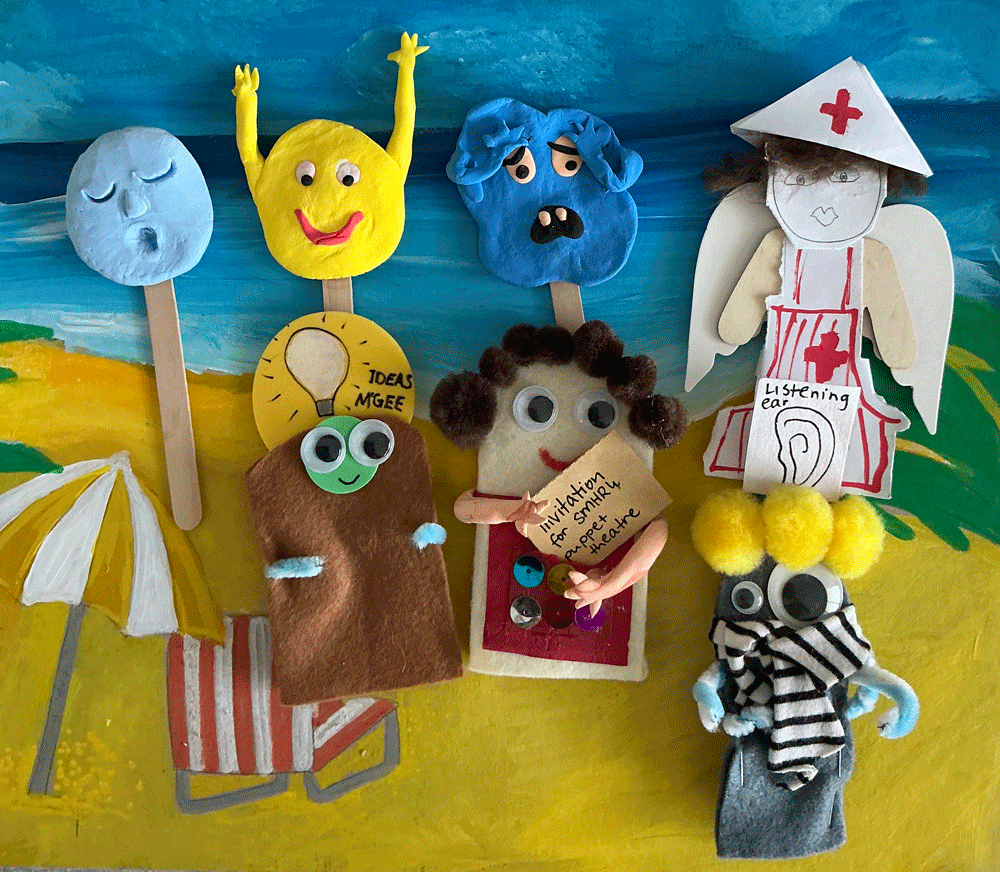
Figure 1. Alana Sawrey, Staff puppets, 2026.
Emergent therapeutic themes
Externalisation of trauma and difficult material
Sajnani (2021) discusses drama and expressive arts therapy within psychiatric care, noting one can “try out new roles” (p.133) and that this reinforces spontaneity and creativity. It is noted that by allowing one to “role play their psychological world” (p.135), distancing from emotional content and observing can allow for greater insight and self-control. Importantly, I chose this type of project because of its adaptability for our unit, and because I saw the therapeutic potential for residents to ‘practice’ real-life scenarios, or even revisit past situations with the emotional distance afforded to them by externalising their experiences: we discussed how the puppet felt, or what the puppet might do next, rendering emotional content more tolerable to explore.
One person who otherwise avoided exploring emotional content created a poem about their puppet losing a teddy, and this functioned as a metaphor for their own experiences, expressed in a tolerable way: the puppet felt lost and sad, the puppet was searching for a sense of balance and peace by searching for their cuddly toy. Puppets encountered challenges – such as making a choice in response to another puppet offering them illicit substances – or expressed frustration, sadness or other emotions that would otherwise perhaps feel too dangerous or ‘off-limits’ to express in this setting. The puppets as symbols functioned as ‘containers’ as well as “communicators of internal states” (Reisner et al., 2025, p.6). These were vehicles that allowed participants to explore ambivalence, consequences, and desire for change without the shame or defensiveness often triggered by direct discussion.
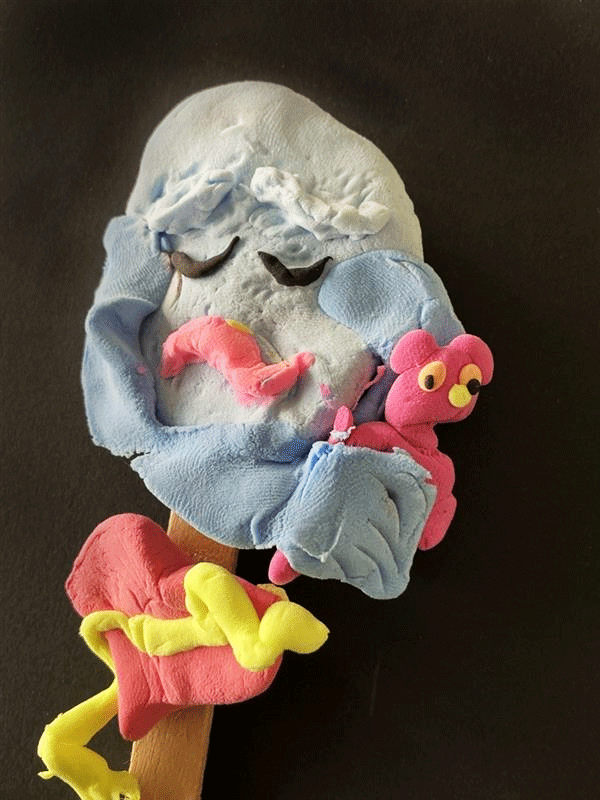
Figure 2. Unnamed resident, Puppet with teddy, 2026, paperclay and paddlepop stick.
One resident with a history of substance misuse created a puppet named Jimmy the Junkie with a comically wild expression and missing teeth, and this puppet became popular among the residents. With the creator’s permission, others borrowed this puppet and incorporated him into their stories.
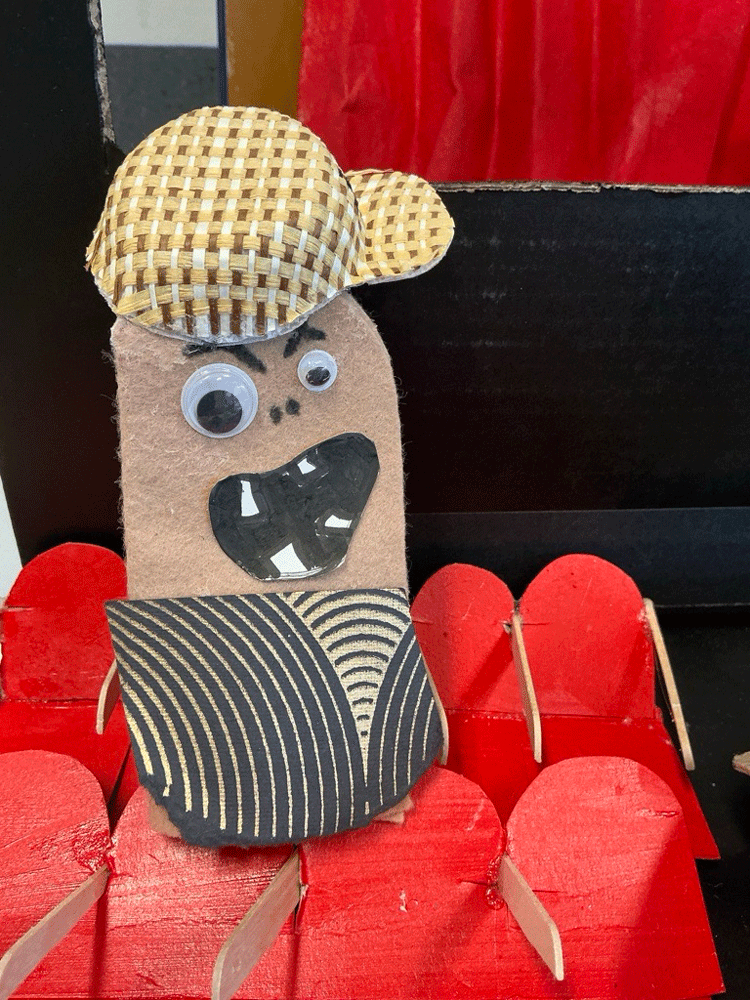
Figure 3. Unnamed resident, Jimmy the Junkie, 2026, felt, paper and miscellaneous craft items.
Jimmy became a stand-in for past experiences with dealers, perhaps as a container to express an image of self, or as a character representing either a misunderstood, untrustworthy, or nefarious figure. The resident who created Jimmy began referring to the character as Jimmy the Former Junkie in poetry about the character. In this way, the puppet reflected an evolving sense of self, functioning to externalise the process of personal change that the resident was experiencing. Puppetry enabled narrative experimentation: trying new choices, imagining different outcomes, and supporting reflective distance.
Prosocial behaviour
Residents were highly curious about what others had created and the stories they were telling; it was also not uncommon for someone to leave the art therapy room with their puppet to proudly show their creation to nurses and other residents and elicit positive feedback. In a cohort with a diagnostic prevalence of antisocial personality disorder, these positive interactions and opportunities to be curious and offer genuine feedback mediated through puppets encouraged prosocial engagement (which might have been too risky or emotionally loaded if attempted directly). Collaborative conversations were used to empower residents to make intentional choices about the narratives they chose to share. One resident drafted a short story in which his created puppet initiated a physical altercation with another resident’s puppet. With prompting to consider the impact of this behaviour (on the story, the resident who made it, and a potential wider audience), a new story emerged in which the puppet refrained from violence but instead chose exercise as an alternative way to manage feelings of frustration.
The showcase screenings (in which staff and residents were invited to attend as audience members) produced meaningful relational shifts. Staff observed increased pride, enjoyment, and connection (Gold Coast Health, 2026a). Some people continued discussing their puppet long after the event, reflecting meaningful engagement. One person who had, during art therapy sessions, previously voiced wanting more responsibility, stood up in front of the audience before a screening and read an introduction, confidently welcoming co-residents and staff to the show. Some residents who declined engagement in the project chose to participate by handing out flyers and welcoming people to their seats for the screening.
Challenges
A significant barrier was fluctuating or diminished motivation: a clinically significant symptom of severe mental health conditions, particularly schizophrenia and bipolar disorder (Strauss et al., 2021), prevalent in this cohort. A typical response to being invited to engage in art therapy was “I don’t feel like it” and “maybe later”. Another hurdle was a perception of play and puppetry, or art therapy more generally, as a childish endeavour (or “stuff I did in preschool” as one resident suggested), which required repeated explanations about the purpose and value of art therapy as a vehicle to communicate meaningful content. I was aware that for some, I may have represented a teacher or other authority figure, and oppositional responses may have been based on projections or transference; they perhaps viewed my invitation to participate as an opportunity to challenge authority in some way by declining engagement. Another challenge was limited participant availability due to competing commitments (medical or legal appointments and scheduled off-unit leave with support workers). These challenges highlighted the importance of flexibility (adapting to what was happening on the unit), relational attunement, and reframing play and creativity as an adult therapeutic modality.
Application for other disciplines
The project demonstrated the value of creative modalities across disciplines. Playfulness provided a universal rapport-building tool, while the puppet screening and invitation for staff to engage with their own creating alongside participants supported multidisciplinary collaboration.
The ‘showcase’ component of the project demonstrated to staff what art therapy initiatives can look like in a medical setting. I invited staff from all disciplines, including psychiatry, nursing, allied health, and the management team to attend the screenings to help build an understanding of the art therapy program. Our acting Nurse Unit Manager offered his take on the project: “As a staff member, it was wonderful to witness how the creative and therapeutic approach fostered connection, emotional expression and a sense of community within the group” (Gold Coast Health, 2026a). I hope that wider advocacy and understanding by other disciplines will raise the profile of what art therapy can offer in both forensic and medical settings, opening opportunities for cross-disciplinary collaboration.
Conclusion
This project reaffirmed the transformative potential of creative arts therapies in forensic mental health settings. Puppetry facilitated safe emotional exploration via the externalisation of difficult subject matter, offered opportunity for therapeutic play, and fostered prosocial behaviour. This project also highlighted the effectiveness of collaborative projects on a secure unit in supporting staff–resident engagement and rapport. There is an ongoing need for the advocacy of arts therapies in forensic settings in Australia, and a gap in the research regarding art therapy in prison and forensic settings (Reisner et al., 2025; Tucker & Luetz, 2025). Future projects delivered on this unit will continue to contribute to a growing awareness of creative interventions within Australian forensic healthcare.
References
Abu-Ras, W., Al-Kubaisi, A., Idris, L.B., & Aboul-Enein, B.H. (2025). The role of puppetry in mental health promotion: A scoping review of its efficacy and applications. The Arts in Psychotherapy, 92, Article 102251. https://doi.org/10.1016/j.aip.2025.102251
Allen, E. (2010). See, think, act: Your guide to relational security. Royal College of Psychiatrists Quality Network for Forensic Mental Health.
Coles, A., Murphy, N., & Winter, N. (2024). Working with trauma: Expanding, examining, and evidencing the value of art therapy. International Journal of Art Therapy, 29(1), 2–3. https://doi.org/10.1080/17454832.2024.2314417
Gold Coast Health. (2026a). Puppet show helps mental health consumers find their voices. https://www.goldcoast.health.qld.gov.au/about-us/news/puppet-show-helps-mental-health-consumers-find-their-voices
Gold Coast Health. (2026b). Secure mental health rehabilitation unit. https://www.goldcoast.health.qld.gov.au/our-services/mental-health/secure-mental-health-rehabilitation-unit
Hanley, N., & Ross, S. (2013). Forensic mental health in Australia: Charting the gaps. Current Issues in Criminal Justice, 24(3), 341–356. https://doi.org/10.1080/10345329.2013.12035965
Huang, A., Vrklevski, L., McGregor, F., & Yu, L. (2023). Patient outcomes in an Australian low secure forensic psychiatric rehabilitation inpatient unit: A 10-year retrospective study. Psychiatry, Psychology and Law, 30(4), 486–500. https://doi.org/10.1080/13218719.2022.2059026
Markham, S. (2025). Stigmatization and marginalization of forensic psychiatric patients. Illness, Crisis & Loss, 33(3), 613–635. https://doi.org/10.1177/10541373241268095
Queensland Health. (2016). Occupational violence prevention in Queensland Health’s Hospital and Health Services: Taskforce report. Queensland Government.
Reeves, E. (2015). A synthesis of the literature on trauma-informed care. Issues in Mental Health Nursing, 36(9), 698–709. https://doi.org/10.3109/01612840.2015.1025319
Reisner, A., Van Lith, T., Ashley, D., & Mynard, L. (2025). Creating space for meaning: Exploring emotional integration through psychodynamic art therapy in forensic mental health. JoCAT, 20(1). https://www.jocat-online.org/pp-25-reisner
Roberts, C., Luder, M., Ward, N., McMullen, C., Dignam, P., Ireland, M., & Cole, R. (2025). “Getting people back into the community”: Forensic mental health nurses’ perceptions and experiences of the recovery model within a high-secure hospital. Journal of Forensic Nursing, 21(2), 136–143. https://doi.org/10.1097/JFN.0000000000000511
Sajnani, N. (2021). Drama/theatre practice in psychiatric care. In U. Volpe (Ed.), Arts therapies in psychiatric rehabilitation (pp.133–141). Springer. https://doi.org/10.1007/978-3-030-76208-7_18
Shen, X., & Masek, L. (2024). The playful mediator, moderator, or outcome? An integrative review of the roles of play and playfulness in adult-centered psychological interventions for mental health. The Journal of Positive Psychology, 19(6), 1037–1050. https://doi.org/10.1080/17439760.2023.2288955
Strauss, G.P., Bartolomeo, L.A., & Harvey, P.D. (2021). Avolition as the core negative symptom in schizophrenia: Relevance to pharmacological treatment development. NPJ Schizophrenia, 7(1), 16. https://doi.org/10.1038/s41537-021-00145-4
Tucker, S., & Luetz, J.M. (2025). Therapeutic prison art interventions: Empirical perspectives. Springer Nature. https://doi.org/10.1007/978-3-031-85991-5
Author
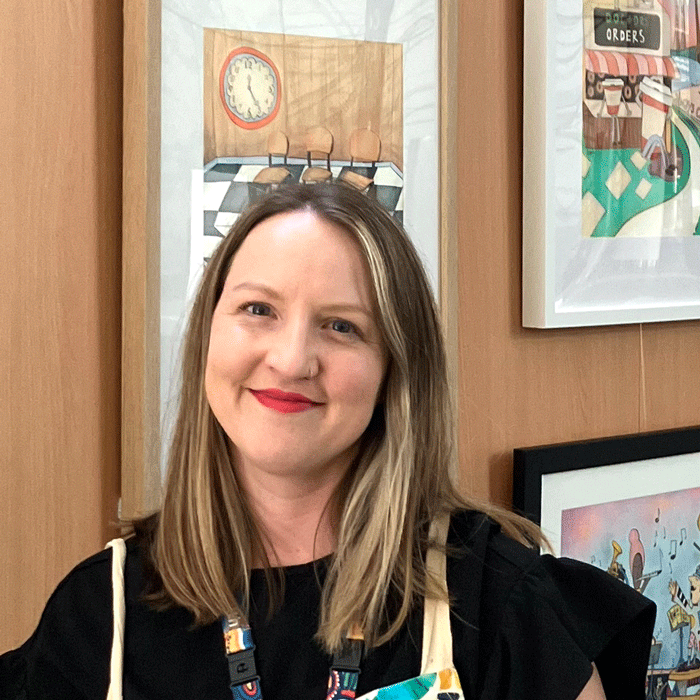
Alana Sawrey
MAT, BSocSci, AThR
Alana (Lani) uses visual art, particularly colourful pencil and biro illustrations, as her outlet for expressing emotions, processing thoughts and connecting with others. She focuses on topics including mental health, faith, and incorporating whimsy into everyday experiences. As well as for her own therapeutic benefit and delight, she uses art-making to reflect on the experiences of the people she works with as an art therapist: How can one meaningfully reflect on what they hear as a therapist? How do the symptoms of post-traumatic stress show up in regular suburban life? Lani enjoys the challenge of representing these complex topics in creative and accessible ways to reduce stigma, foster curiosity and understanding and help educate people about mental health.
Email: alanabosgra@gmail.com
Orcid ID: 0009-0002-0206-7738