

Open Access
Published: April 2026
Licence: CC BY-NC-4.0
Issue: Vol.21, No.1
Word count: 551
About the creators
Cite this creative contributionRye, C. (2026). International Women’s Day 2026: Women in graffiti – Ōtautahi Christchurch. JoCAT, 21(1). https://www.jocat-online.org/c-25-rye

In recognition of
International Women’s Day
8 March
International Women’s Day 2026: Women in graffiti – Ōtautahi Christchurch
Claire Rye with collaborating artists:
Ms Yellow, Faux, Snaps, Thorn, Temu, Spice, Meep, Sekr, Poise, Fluro, Kons and Nels
Creative arts therapist statement
This project is a celebration of the wāhine in graffiti. In this case ‘graffiti’ refers to stylised lettering painted in spray paint. I have been involved in graffiti art for 30 years and I wanted to mark the significance of this and to acknowledge the part it has played in my more recent career as a creative arts therapist. Hispanic graffiti artist William Carrero in his professional master’s degree at the Pratt Institute, similarly links graffiti with art therapy and his thesis is “written for any graffiti writer or graffiti appreciator who wants to follow a creative arts therapy career path” (2024, p.4).
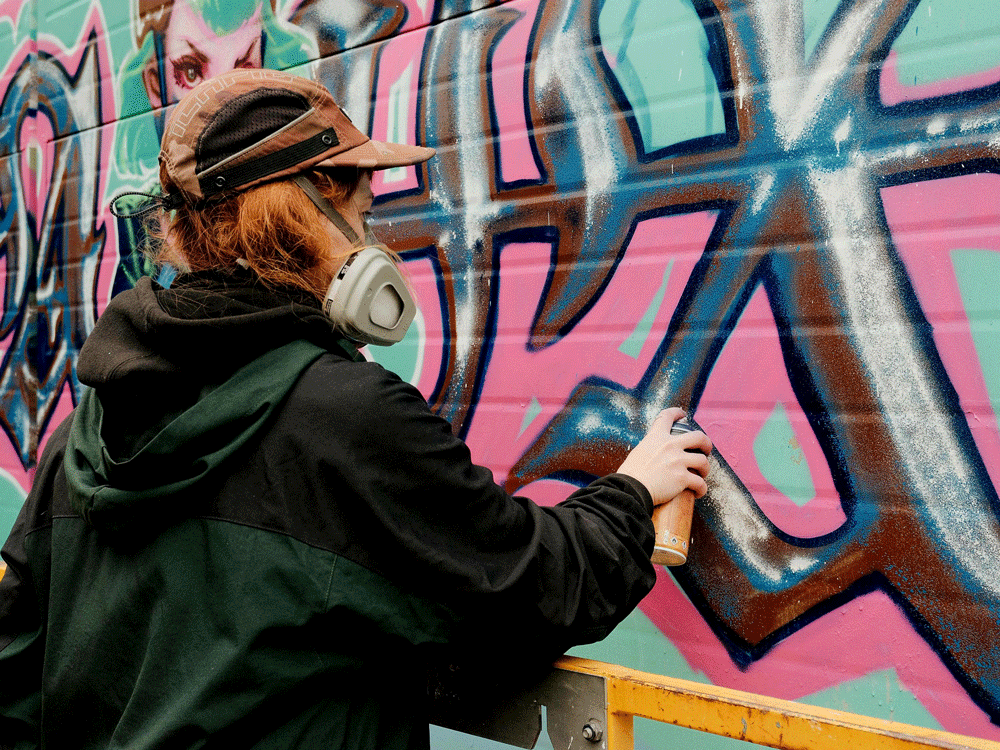
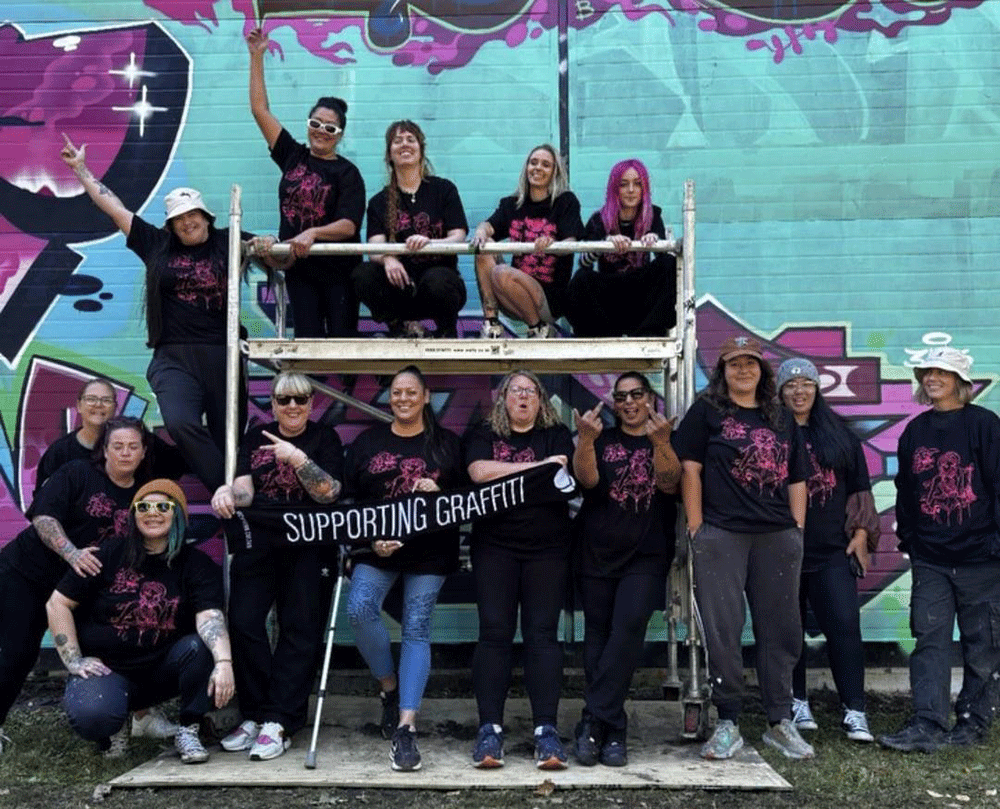
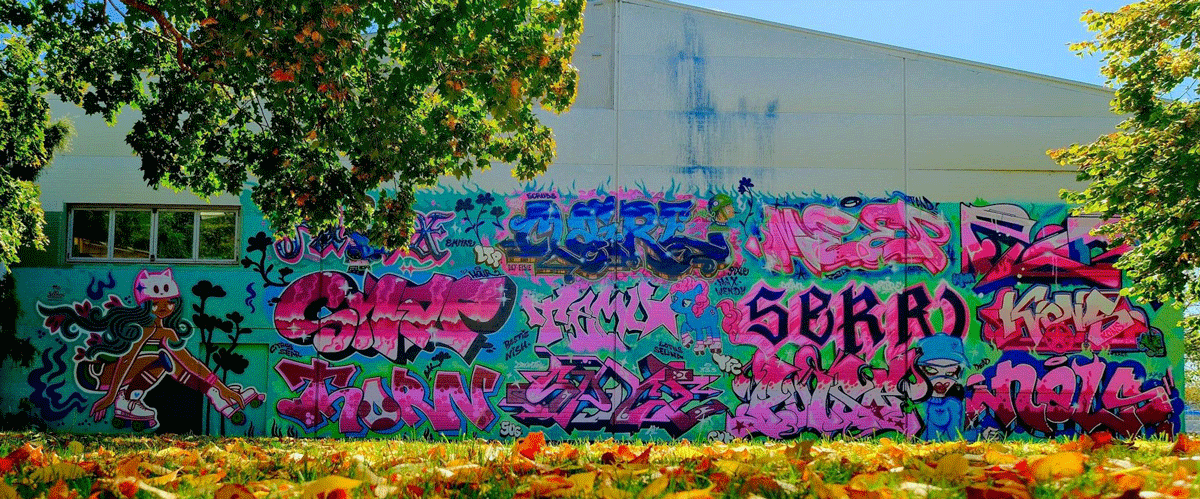
Marking this 30th anniversary, this International Women’s Day (IWD) felt like an appropriate opportunity to organise a meet-up with my graffiti collective crew (Ms Yellow, Faux, Snaps, Thorn, Temu, Spice, Meep, Sekr, Poise, Fluro, Kons and Nels) to collaboratively paint a mural. This project was not sponsored. Instead we decided to self-fund it for the joy of collectively painting as an intergenerational community.
Women’s graffiti jams are beneficial as they can provide a fun, safe, supportive space for female writers to grow and connect.
When our bodies and stories are not socially, politically and legally entitled to take up (as much) space as others, staying and existing in spaces, moving across boundaries and borders, being heard and visible, or remaining undetected, are acts of resistance. (Smith et al, 2020, p.4)
Graffiti and the use of graffiti personas can allow women to challenge gender norms and take up public space (Pabón-Colón, 2018), which can be empowering, once the nerves subside. In addition, this IWD event gave the women in attendance a chance to meet, build relationships in person, and grow in collective identity.
Thirteen wāhine painted together. We came from Australia, different parts of Aotearoa and Ms Yellow, travelled from the USA. Artists such as Spice from Sydney and Poise from Perth, who have been painting since the 1980s (at the start of modern graffiti in the Southern Hemisphere), painted alongside artists like Temu from Ōtautahi, who is 17 years old.
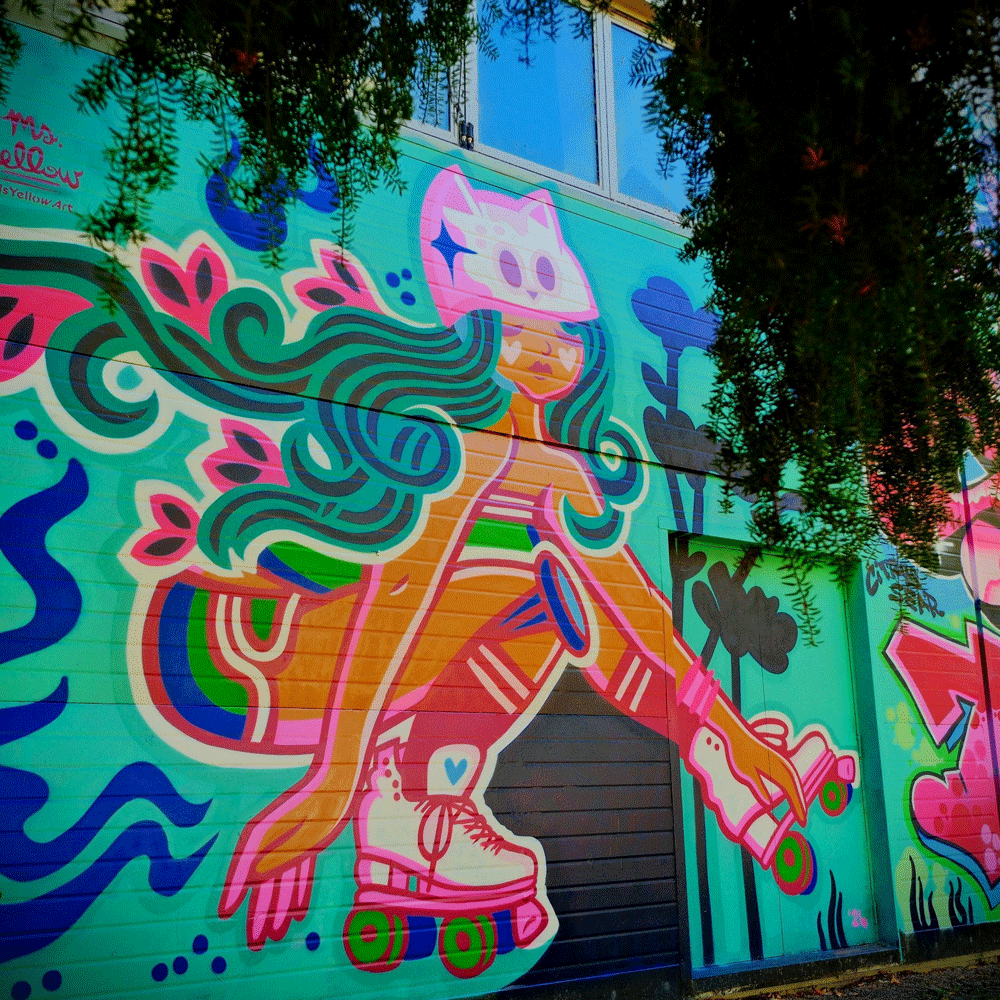
Collectively, we decided on a theme of “Roller Derby Girls” during our online planning sessions. This was an apt theme because they are a similar scene to graffiti women, in that we have a rebellious identity and a DIY mindset, driven by a proactive creative spirit.
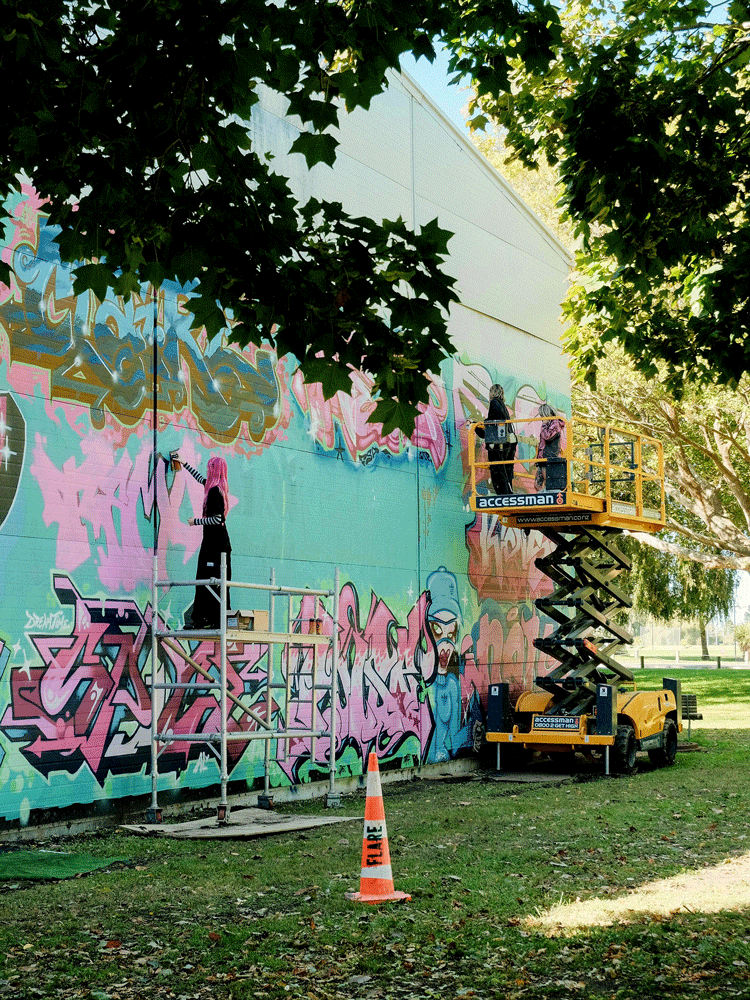
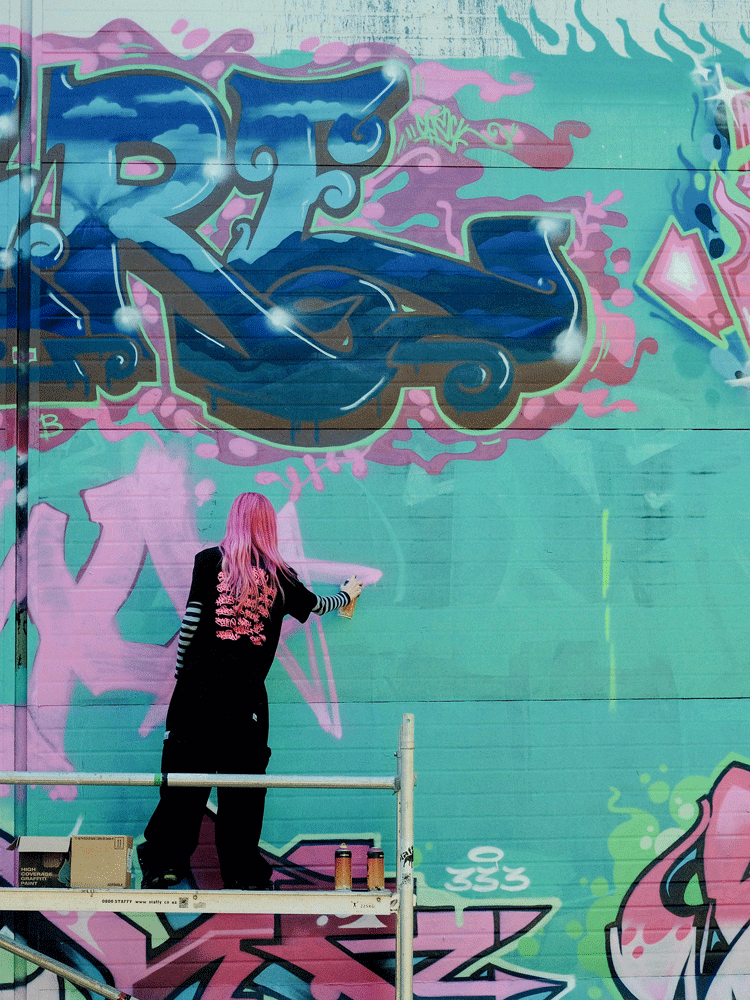
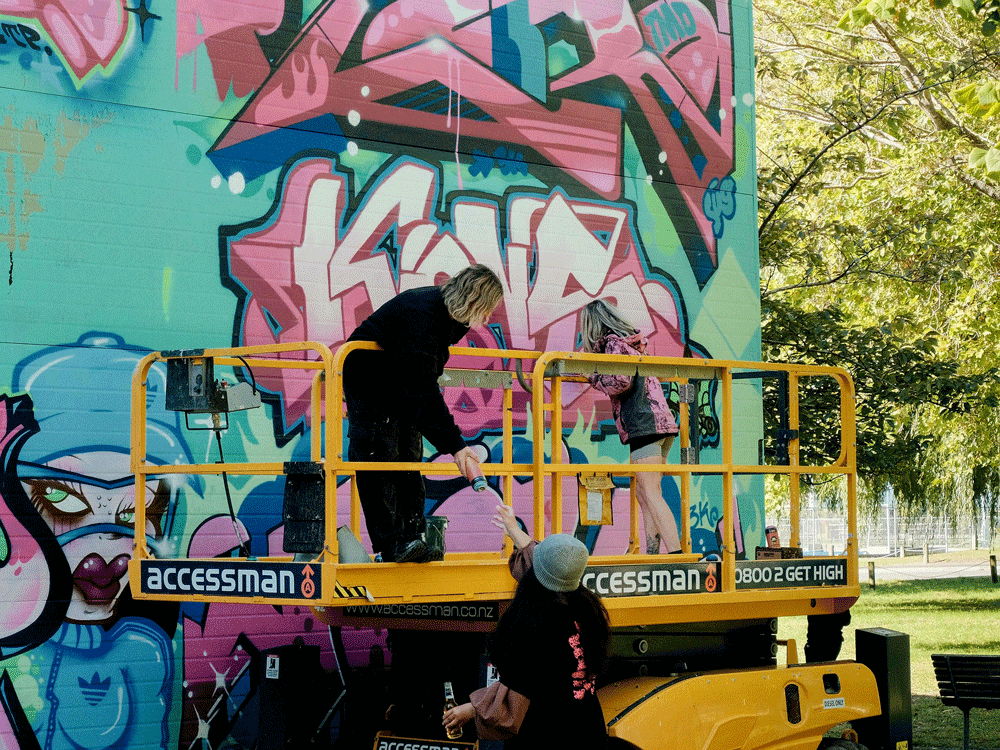
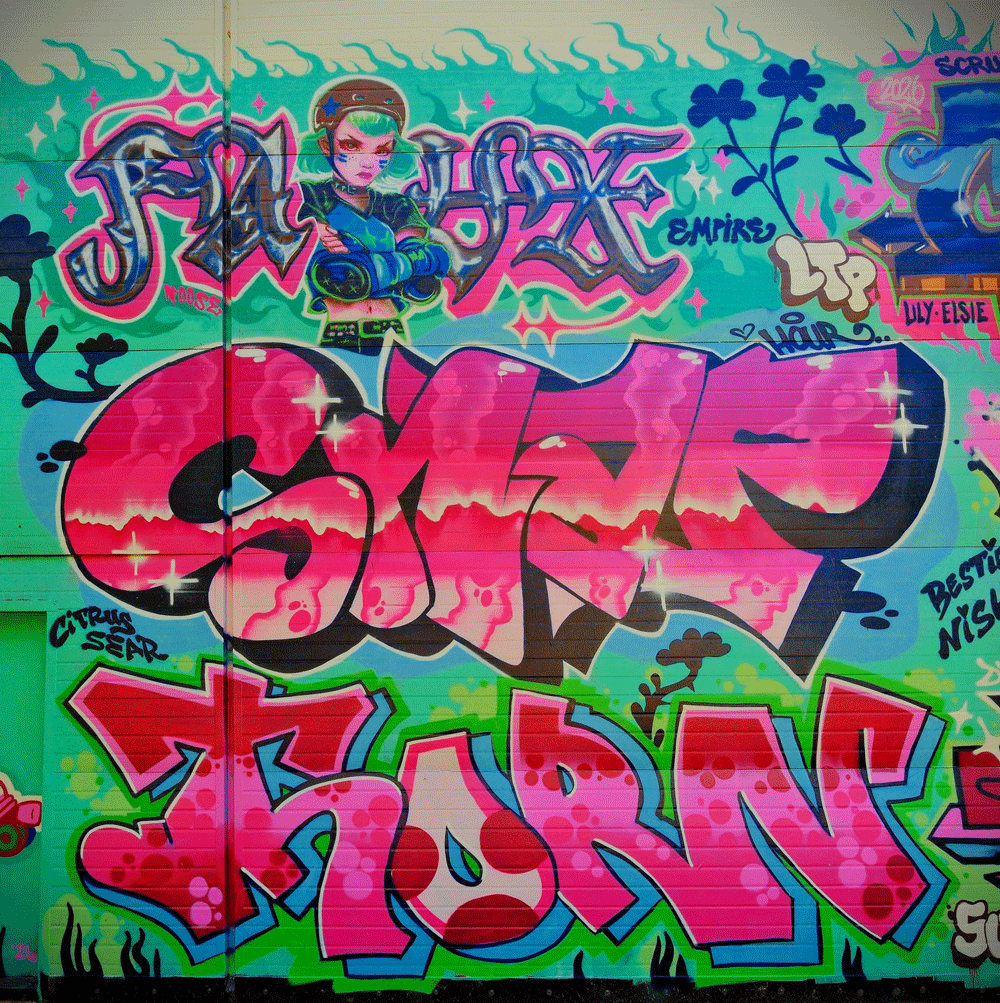
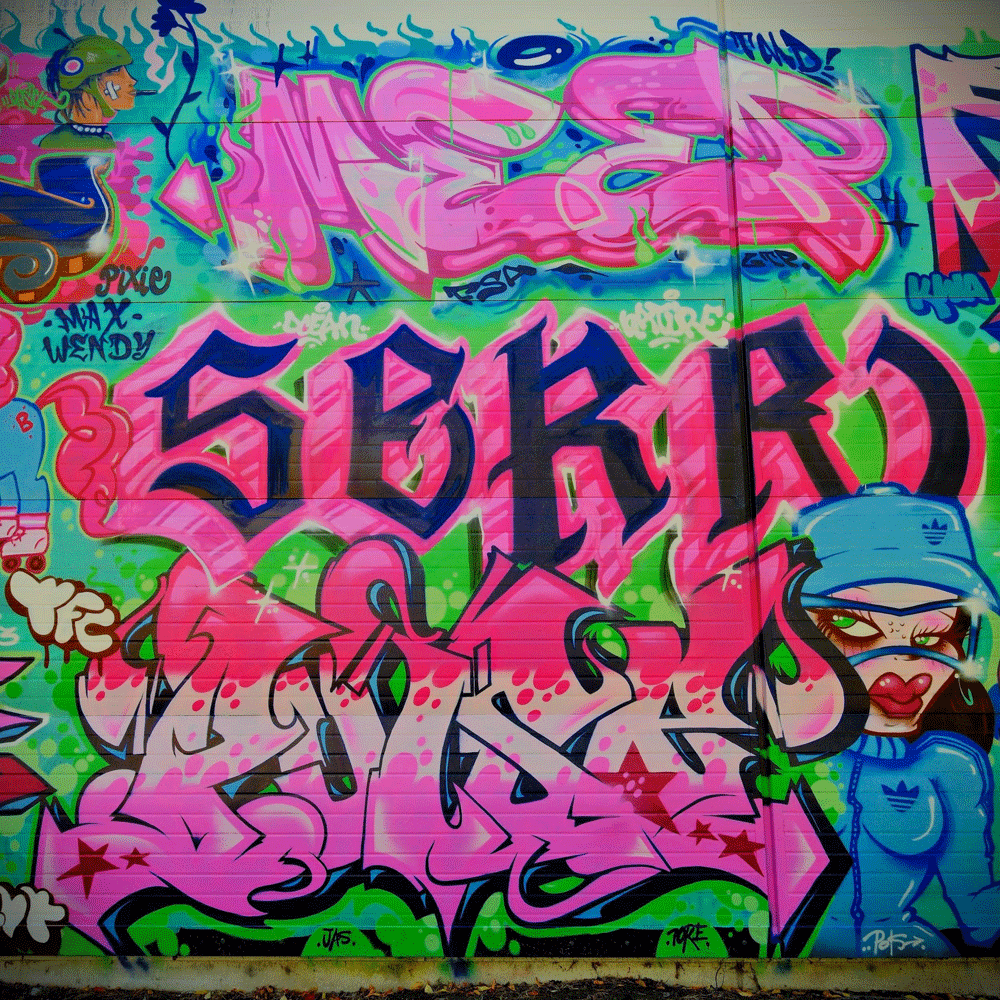
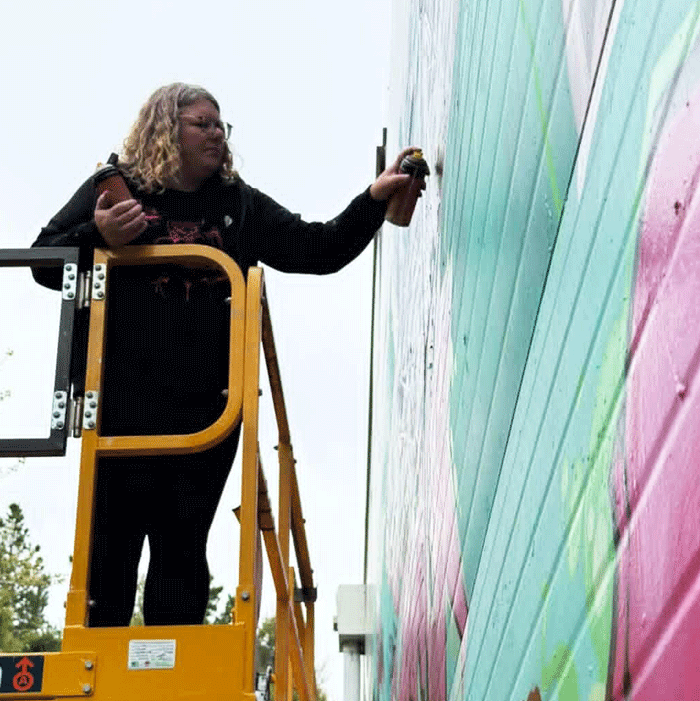
Through our collaborative process we chose a shared colour palette of pinks and blues. Each artist was free to use those colours as they chose. The wall was found for us by local graffiti artist Meep, who is part of the Flare Street Art Festival team. We created a grid design for the wall so that each woman got an equal space. Those with mobility issues were given ground level spaces with easier access. The rest of the artists used a mobile scaffold, ladders, or a scissor lift to gain access to the higher levels.
The resulting work is a vibrant three-layer mural, visible to the local community of school children, parents and local workers.
Thank you to everyone who stopped by for a kōrero and words of encouragement.
References
Carrero, W. (2024). Graffiti [Unpublished master’s thesis]. Pratt Institute. https://www.proquest.com/dissertations-theses/graffiti/docview/3072480740/se-2
Pabón-Colón, J.N. (2018). Graffitti Grrlz: Performing feminism in the hip hop diaspora. New York University Press.
Smith, K., McMahonb, G. & Davidson, A. (2020). Creating feminist spaces: Occupying hostile environments. Feminist Media Studies, 20(8), 1–9. https://doi.org/10.1080/14680777.2020.1786935
Creators
Claire Rye
MACAT, BA(Hons) Fine Art, AThR
Claire is a registered clinical art therapist based in Ōtepoti-Dunedin, New Zealand. Born in the UK, she comes from a creative background; she studied fine arts and has been an urban artist for 30 years. She learned street mural painting skills via graffiti/style writing and is a champion of female participation within the scene. With a lot of experience in alternative education and mentoring young people, Claire worked as a youth worker for 15 years. She has worked in the family harm service, helping families/whānau affected by violence in the home and is currently working as an ACC Sensitive Claims Counsellor at her art therapy space The Mill, part of the Holding Space network. Claire integrates creative and somatic approaches to enable people to progress their lives, well-being and overall happiness. She enjoys working with neurodivergent people in ways that meet their needs and interests.
Collaborators’ Instagram accounts
Spice: https://www.instagram.com/banditqu333nspice/
Poise: https://www.instagram.com/ladiepoise/
Thorn: https://www.instagram.com/thornizm/
Snaps: https://www.instagram.com/___snaps/
Fluro: https://www.instagram.com/holly___rock/
Nels: https://www.instagram.com/nelsski_/
Ms Yellow: https://www.instagram.com/msyellowart/
Meep: https://www.instagram.com/kophie_loaf/
Faux: https://www.instagram.com/infaux__/
Cons: https://www.instagram.com/cons_chch/