

Open Access
Published: July 2026
Licence: CC BY-NC-4.0
Issue: Vol.21, No.1
Word count: 5,006
About the author
The symbols of the therapist: Examining reoccurring motifs within clinical response art
Cathryn Scarano
Abstract
This research explores the subjective meanings associated with reoccurring visual motifs in response art using a novel method of data generation and analysis combining IPA, imaginal dialogue, and pursuit of the image. The results have implications for identifying and managing countertransference, as the majority of the motifs were found to be manifestations of the intersubjective plane surrounding clinical experiences. Additional inferences are made about the life cycle of a motif and the individual’s artistic language in comparison to the collective consciousness of symbols. This research serves as a pilot study to address the gap in the literature regarding reoccurring motifs in clinical response art.
Keywords
Art therapy, response art, motif, symbol, intersubjectivity, countertransference
Cite this articleScarano, C. (2026). The symbols of the therapist: Examining reoccurring motifs within clinical response art. JoCAT, 21(1). https://www.jocat-online.org/a-26-scarano
Introduction
The majority of humans are visual and creative creatures – since the very early days of humanity, we have thought in metaphors and used symbols to represent our experiences, thoughts, and feelings (Cohen, 1981; Morrell, 2011). Often in these expressions, reoccurring visual symbols or motifs can emerge that hold significant meaning (Maclagen, 2001). This forms a foundation within my own art therapy practice of helping an individual explore their inner world or outer mask through encouraging visual artistic expression. In this essay, I will argue that the same might be said for the response art of the therapist.
Throughout my art therapy training, I have maintained a visual journal of my affective response to days on clinical placement. These are not specific to any one client, but rather, a cumulative reaction to the people, places and spaces of my clinical training. My intrigue surrounding this topic arose after noticing that within my own response art I had developed new motifs and stylisations that I had previously never used in my own personal artistic practice. While symbols and motifs in client art are well researched (Carter, 2010; Fish, 2019, 2012; Gullatz, 2010; Maclagen, 2001), there is no research to my knowledge on reoccurring symbols or motifs within the therapist’s response art.
In this essay I seek to begin addressing this gap in the literature and explore the underlying, subjective meanings, associations, and significance of motifs emerging in my own response art-making as a site of learning and insight into my professional practice and identity.
Motifs
Symbols are representations of deep and complex experiences or concepts (Morrell, 2011). By my definition, a symbol is a distinct and identifiable image, icon, shape, and/or colour that signifies a deeper meaning beyond itself. A symbol becomes a motif when it is repeatedly used in a congruent way. In the world of fine art, a motif refers to an intentionally used symbol charged with meaning and intended to reiterate a message (Anderson, 2014). While a symbol can be viewed alone within only one artwork, its power comes from the repetitive nature of belonging to a sequence and not just one artwork, hence becoming a motif (Lange, 2021). Some motifs in fine art are universally accessible to all audiences, and some are more nuanced and require an art history lens (Anderson, 2014), such as the very specific horseback riding stance discussed by Lange (2021), symbolising masculinity. In a therapeutic context, motifs are pockets of meaning often hidden from their creator “beyond the wall of words” (Gullatz, 2010, p.693) until properly explored (Cohen, 1981). Forming these symbols and motifs is inherent to humans and is both a method and product of self-exploration (Gullatz, 2010; Isserow, 2013). The symbol, once created externally to the self, helps anchor the creator in their identity and confirm their existence (Gullatz, 2010). Overall, to define motifs simply, they are repeated symbols in artworks that signify complex ideas and are helpful for the artist to both explore their inner world and communicate that world to others.
Motifs in art therapy
Often during art therapy, clients develop their own visual language equipped with symbols, motifs, metaphors, and self-expressions (Maclagen, 2001; Wadeson, 2003). According to Jung’s (1968) archetypal theory, some symbols are believed to belong to a collective unconsciousness inherited and alive in all people, meaning that the majority of viewers can understand those symbols (Carter, 2010; Gullatz, 2010). In art therapy, clients can both access the universally understood and reproduced symbols, and invent their own visual language to match their artistic style (Maclagen, 2001). The art of the client can act as a mirror, reflecting the unconscious and bypassing the inhibitions of the super-ego or conscious mind, a process referred to in psychoanalysis as sublimation (Cohen, 1981; Gullatz, 2010). Hence, in art therapy, clients may over time develop unique symbolic expressions as well as having access to a plethora of motifs shared by many.
Carter (2010) suggests that simply representing the unconscious through art is not sufficient for therapeutic change, the symbols must be reflected upon. The artwork becomes a subjective but concrete manifestation of symbolic representation that acts as a mediator between therapist and client (Carter, 2010; Isserow, 2013; Maclagen, 2001). While the client discovers and solidifies their artistic language, it is the role of the art therapist to not only learn but become fluent in this language by carefully attuning to the reoccurring colours, shapes, themes, and symbols (Maclagen, 2001; Wadeson, 1995, as cited in Isserow, 2013). From my observations, the client’s artistic language often develops further to include motifs or reoccurring imagery. As art therapists, we often utilise clients’ artistic language and motifs in our response art, recreating client art or trialling client motifs in an effort to attune better to the client (Deaver & McAuliffe, 2009). Overall, these motifs are very important to therapists both when working with the client and when deciphering client artworks post-session.
Response art
Response art, or clinical art-making, is art made by the therapist following a therapeutic experience. The art is often private and kept separate from the client (Fish, 2012). Across the literature there are many different types or styles of response art. Nash (2020) uses the term “reflect piece imagery” to refer to art made directly after a client session, becoming a “visual expression of the therapist’s internal responses activated by the complexity of visual, verbal, non-verbal and sensory communication experienced during the session” (p.3). Wadeson (2003) distinguishes between two approaches in response art made directly after a session: spontaneous art-making, often venting strong feelings evoked by the session, and systematic art processing procedure, where a slower, more reflective approach is utilised. Clinical art-making does not have to immediately follow a session, however, and can be visual reflections made at any time to process therapeutic encounters (Deaver & McAuliffe, 2009). Response art can also be made alongside a client during a session (Nash, 2020), often in the form of echoing or mirroring the client’s art and gestures (Wadeson, 2010). Additionally, a therapist can replicate a client’s artwork as a form of response art (Deaver & McAuliffe, 2009; Wadeson, 2003).
There are many benefits of response art cited throughout the literature, such as building empathy and attunement with clients (Nash, 2020; Wadeson, 2010); serving as an outlet or container for strong emotional responses (Fish, 2019; Wadeson, 2003); stress release (Deaver & McAuliffe, 2009); and articulating otherwise inaccessible thoughts (Deaver & McAuliffe, 2009; Fish, 2019), including identifying countertransference (Deaver & McAuliffe, 2009). Response art is also commonly used for case conceptualisation (Deaver & McAuliffe, 2009) and brought to supervision (Fish, 2012; Nash, 2020; Wadeson, 2003). Overall, response art is very useful for art therapists, therefore it is important we pay close attention to what is occurring within our response art.
Addressing the gap
As discussed, there is much in the literature about symbols and motifs in both fine art and art therapy, as well as many papers on the numerous benefits of response art for the art therapist. In a therapeutic encounter where motifs emerge in a client’s artworks, the therapist would be remiss not to explore what the motif means and why it is happening. While symbols and motifs in client art are well researched (Carter, 2010; Gullatz, 2010; Maclagen, 2001), there is no research, to my knowledge, on motifs within the therapist’s response art. In this research project, I begin addressing this gap in the literature. Here, I explore the meanings, associations, and significance of motifs emerging in my own response art-making and ask: What might the motifs mean and why are they happening?
Methodology and methods
Methodology
To best answer my question, I took a heuristic phenomenological approach in an attempt to understand my subjective experience of response art. Heuristic methods of self-inquiry are driven by curiosity about the patterns surrounding us (Kenny, 2012). They seek to discover and explore a driving question that is often significant to the researcher (Moustakas, 1990; Smith & Osborn, 2003). Heuristic enquiry is founded on tacit knowing, being the deep intuitive knowledge that comes from experiencing something (Moustakas, 1990). This concept fits beautifully with art-making, as artistic inquiry can bring this tacit knowing to the surface (Coles, 2014). Hence, applying elements of arts-based inquiry to expand on heuristics with self-dialogue through visual expression has strengthened my research (McNiff, 1998; Moustakas, 1990).
It is important to recognise that this research is founded on Western-centric models that privilege the individuated psyche. Such Western humancentric models are being expanded on and challenged by posthuman and relational ontologies within the world of art therapy. While further research on this topic would benefit from these more contemporary models (as mentioned in the conclusion), I have chosen heuristic inquiry as a way to focus on discovery and self-reflection during the research process, and on finding subjective meaning instead of one single answer applicable to everyone (Kenny, 2012; Moustakas, 1990). Additionally, as an Australian professional, I acknowledge that the perspectives discussed in this research are from a Western worldview and may not be applicable First Nations teachings or to other cultures.
Methods
I have developed my own research methods and analysis, taking key elements from interpretive phenomenological analysis (IPA) (Smith et al., 2009; Smith & Osborn, 2003), Watkins’ (1986) “imaginal dialogue” (as cited in Watkins, 2003, p.93), and Wadeson’s (1987) “pursuit of the image” approach (p.265).
IPA employs an exploratory and discovery-based research method that focuses on acknowledging the personal and subjective experiences of its participants (Smith et al., 2009; Squires, 2023). Using this approach, I have treated each artwork as a live participant, each with their own voice (Smith & Osborn, 2003). Within this framework, the journalling process utilised is ‘imaginal dialogue’, a process developed by Watkins (1986) that involves accessing the conversational nature of our inner thoughts to allow for true autonomous expression (Watkins, 2003). McNiff (1998) expanded on this process by using imaginal dialoguing to converse with his artworks, enabling a deeper understanding and connection with the art. In accordance with these methods, my goal in the journalling process was to dialogue with the artwork: to talk to each one as though it were alive. Giving the art sentience and a voice through our conversation allowed the art to have presence in the room, which placed me very clearly with it, not simply as an observer but as an equal co-creator of knowledge. In line with IPA, each ‘conversation’ was akin to a semi-structured interview, with guiding questions available but conversation often flowing naturally. The questions were:
What emotion do you evoke when I look at you?
What do I find most interesting? What is standing out? Where are my eyes drawn?
What thoughts arise as I sit with you?
I gathered all my response art made in the six-month period from February to August 2025, consisting of over 50 pieces. I excluded any artworks that contained client names, information, or artwork recreation. This left me with 33 artworks; to properly examine the motifs emerging, I needed a large array of motifs to examine. As each journal response was a dialogue, I placed no restrictions on materials and no time limit on my writings; however, I allowed myself no more than an A4 page to write on. I spent roughly 20–40 minutes responding to each artwork, both verbally and visually.
Additionally, I included elements of arts-based inquiry in my research design. Wadeson’s (1987, 2003) “pursuit of the image” approach involves iterative image-making by responding to one image with another (p.265, p.209). This responsive image-making is intended to focus on what the person finds intriguing, thought provoking or perplexing in the original artwork, and can theoretically be an infinite loop of artistic responses (Wadeson, 1987, 2003). Adhering to this approach, I created a larger artwork encompassing my intuitive responses, as well as any epiphanies experienced, in both the original response art and my conversation with it. After each conversational journal entry, I added to this larger artwork, grouping common motifs together on the page. Throughout this paper, this artwork shall be referred to as DArTA (data + art), a term I have created for this research.
I analysed the data, both the written journal entries and DArTA, using IPA (Smith et al., 2009), reading each journal entry multiple times before moving on to the next. I coded for the motifs, which artwork they were present in, the client or situation the art was made in response to, strong associated words, and illustrative quotes.
Ethical considerations
This study remained unobtrusive by focusing on my clinical art-making as the therapist, without including or discussing the client art or presentations. I focused on my experiences and artistic responses to those experiences. Additionally, my dialogues with the response art were chronologically spaced out to avoid burnout and were done alongside self-care practices and support from peers.
Findings
I identified 34 visual symbols, 27 of which (79.4%) occurred two or more times, becoming motifs. The visual imagery present across all the artworks was broken down into three categories: colours, shapes or types of lines, and figurative depictions. The following table details the symbols that emerged from the 33 artworks (see Appendix, Table 3) along with word associations and illustrative quotes from the conversational journal entries. The symbols that did not repeat or have consistent associations, such as black, neutral tones, triangle, bird, rabbit, and washed-away words, have been removed from the table (see Appendix, Table 2). The results are shown below.
Note: Artwork number refers to which artwork the motif occurred in (see Appendix, Table 3). Context refers to what the artwork was in response to: S (session) is art done directly following an art therapy session, with the numbers referring to the number of clients it was in response to; NS (non-session) are artworks done in my own time, with U being unknown. The word associations and illustrative quotes were pulled from the analysis of the journal entries, with the bracketed number referring to the artwork in reference.
Tables 1, 2 and 3.Dictionary of motifs within response art.
Figure 1. Cathryn Scarano, DArTA, 2025, mixed media, 530 × 620mm.
Note. Number labels within DArTA correspond to the response artwork the artistic insight derived from.
I used DArTA often as a way to trial the motifs I was noticing by recreating them in the larger artwork. Additionally, the DArTA visualised the findings before I found them.
Discussion
Each reoccurring motif (represented in italics in the discussion below) had very consistent emotional or cognitive associations. Some motifs were more common than others or provoked a stronger reaction; however, each artwork evoked a strong embodied emotional response (excerpts from personal journal entries will also be represented in italics). I was aware of many of the motifs and their symbolism before I began this research, such as sky blue, teal, magenta, circles, scribble lines, boat, tiles, hidden face, and ripple lines. I was aware of the presence of some of the motifs in my art responses but ignorant of their full meaning, such as red, blended abstract paint, squares, and peach/pink. Then there were motifs that surprised me entirely, either because I had no knowledge of their existence or did not realise how often they occurred. These include duality/flipping, blobs, and yellow.
Figure 2. Cathryn Scarano, Close-up of DArTA reflection 6a, 6b, 2025, mixed media.
Figure 3. Cathryn Scarano, Close-up of DArTA reflection 6c, 2025, mixed media.
Duality surprised me the most and was significant in my communication of important realisations. For example, after examining artwork 6, I realised how different materials, artistic methods, and motifs have a different feeling of emotional expression, with more figurative artworks (such as artworks 1, 6, 8, 20) feeling like reaching down inside you, but with gloves on and more abstract artworks (such as artworks 4, 7, 12, 19) feeling like the energy is pouring out of me, down my arm, and onto the page. This was then represented in DArTA as a duality artwork, despite that motif not being present in the original artwork (Figures 2 and 3).
Collective vs individual motifs
While each person has their own individual language of symbols unique to them, there also exists a collective language of symbols. This speaks to Jung’s (1968) ‘archetypal theory’ of the collective consciousness of symbols (Carter, 2010; Gullatz, 2010; Maclagen, 2001). In addition to the purely personal connotations, there are motifs within my artistic language that can also be understood as deriving from archetypal symbols, such as circles. Circles are a symbol present in the collective unconsciousness, according to Jung (2017), symbolising balance and self-individuation. Circles are often understood in art therapy contexts as symbols of boundaries, protection, and containment (Athanasekou et al., 2022). Circles had a very strong presence both visually and verbally, occurring in five artworks (15%) with 10 associations surrounding controlling or containing feelings of chaos, and being recreated eight times in DArTA (Figure 4). While circles in my response art did not necessarily symbolise balance or protection, their presence symbolised my desire for such things as I wanted to relate to it. Altogether, circles, along with other less prominent motifs, may derive from a collective library of symbols rather than being purely my own.
Figure 4. Cathryn Scarano, Close-up of DArTA grouping of circles, 2025, mixed media.
Figure 5. Cathryn Scarano, Close-up of DArTA reflection 12b, 2025, collage.
Figure 6. Cathryn Scarano, Close-up of DArTA reflection 1, 2025, sticker.
There were symbols identified within the artworks that I expected to be part of this collective unconscious of symbols, yet they did not become a motif in my artworks. For example, bird and rabbit only appeared once in the artwork, yet were recreated in DArTA. I was surprised at their lack of repetition within the examined artworks, as they still have very clear symbolic associations within this study, with bird meaning ‘freedom’ (Figure 5) and rabbit meaning running away (Figure 6). These were symbols that could have become motifs, but didn’t. I expected these to be motifs, as in my experience they are commonly used symbols in the artworks of others, especially birds meaning freedom. We see this in poems such as Maya Angelou’s ‘Caged Bird’ (1983) and Emily Dickinson’s poem ‘Hope is the Thing with Feathers’ (1999), originally written in 1861, as well as in artworks such as Pablo Picasso’s Man with a Bird (1972). To my knowledge from a Western standpoint, birds are often used in fine art and art therapy to symbolise peace, freedom, and religious representations. While the symbol of the bird is a motif within our collective unconscious and many people’s artworks, within my own artwork it is merely a borrowed symbol; it can be accessed if needed, but is not characteristic of my own visual language.
The life cycle of a motif
Another surprising discovery in the literature and my research was that motifs can be as alive and rich themselves as the artist (Lange, 2021). They are born, they live, and they die out. When examining my response art chronologically, motifs often changed, expired, or were invented. For example, washing away words is a process I have used very often in the past and have brought to my professional practice; however, when examining the response art, the symbol only occurred once. Additionally, an emerging motif in my current response art is the triangle (Figure 7). Again, while the triangle only occurred once in the examined response artworks, in my recent response art it has transpired as a symbol of inspiration and stability. While some motifs come in and out, there are also many that seem never to die, such as scribble lines, bubbles, and ripple lines. These are motifs I have used for many years and in many contexts, yet they have not lost their potency. I have captured a small snapshot of my response art within this paper, but it is very clear that both my clinical art-making and personal artistic practice have a past and future that are not fully represented. This process is akin to the experience of art therapy as both the client and therapist, as we are only seeing a short time in a person’s life, when in reality each person has a plethora of selves that meet in the art therapy room to form new patterns and examine existing ones (Carter, 2010).
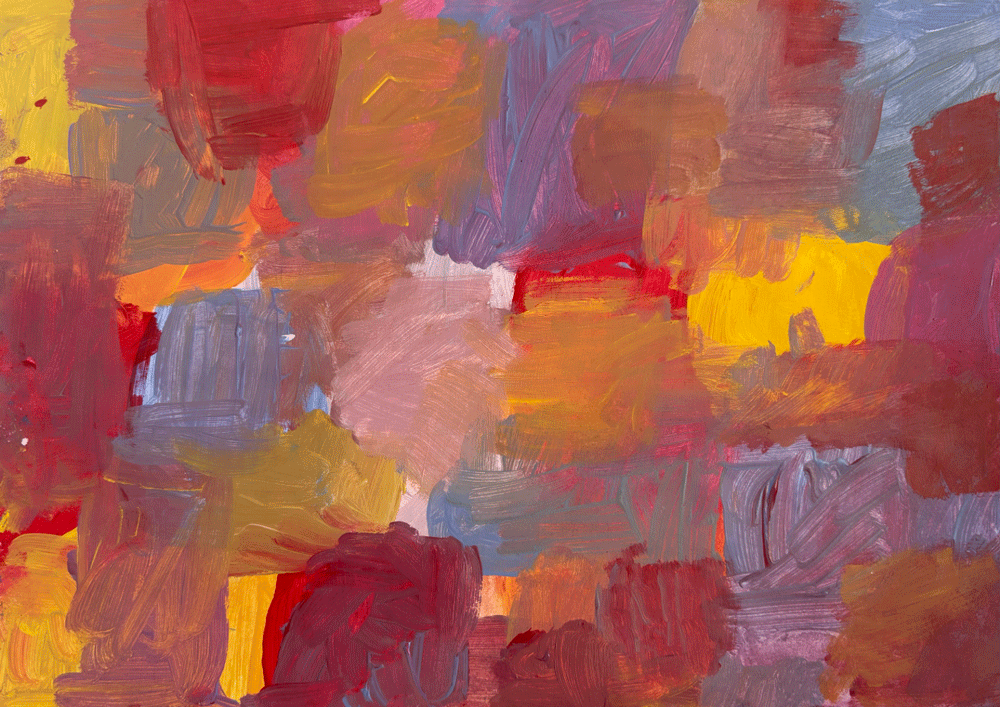
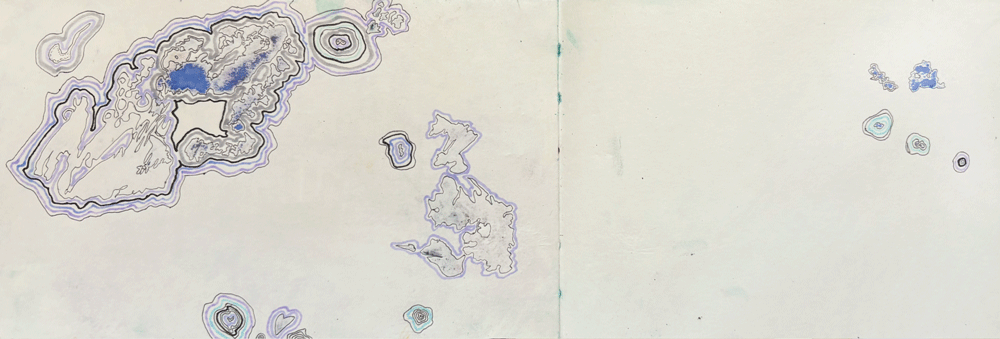
Expanding on this idea of change and growth through therapeutic interaction, squares as a symbol did not die out, but evolved into something new. This change happened so naturally and gradually that it was only when undertaking this research that I discovered the change. Squares began as synonymous with tiles to represent feelings of my own boredom after sessions with certain clients. I perceived the two symbols as synonymous, because tiles were always square shaped and often in response to similar clients, hence within DArTA the motifs are overlapping (Figure 10). The client experiences that often led to an appearance of tiles and squares in my response art usually involved the clients hiding their true feelings under a pretty and fun therapeutic wall, tiling over the muck. Within the journal reflections I discovered that the squares have been left behind (Figure 8), transforming into blobs over time and changing in meaning. When responding to the artworks containing blobs, I still identified reflections of boredom and pure aesthetic value without emotional symbolism; however, blobs have expanded to be more free than squares and to include clinical experiences of smiling through the pain instead of covering the pain entirely (Figure 9). To explore the significance of this finding, we must look deeper into where the symbol is coming from and examine countertransference.
Figure 7. Cathryn Scarano, Close-up of DArTA reflection 33, 2025, pencil.
Figure 8. Cathryn Scarano, Close-up of DArTA reflection 23b, 2025, pencil.
Figure 9. Cathryn Scarano, Close-up of DArTA reflection 26, 2025, pencil and marker.
Countertransference and intersubjectivity
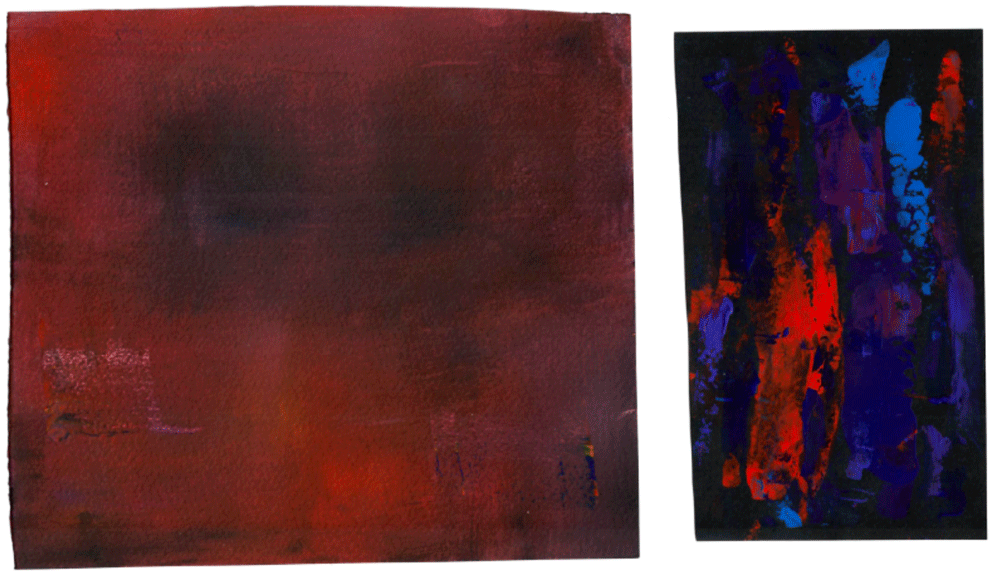
What I found most surprising was that my initial thinking about the ways in which motifs occur and reoccur in artworks was for the most part incorrect. I had previously anticipated that the motifs would be representations of the clients, and by examining the artworks it would be akin to reading my case notes or being in the room with the client. While this did occur with some motifs – such as with blobs, geometric lines, and boat occurring in response to the same clinical experience each time – what I did find, however, was that all the colours except pink symbolised my own emotions and were very separate from clinical experiences. When journalling and conversing with the response art, I was initially unsure what the artwork was in response to for 27% of the artworks (artworks 2, 3, 7, 22, 23, 26, 28, 32, 33). The majority of the motifs were in response to multiple clients but similar clinical experiences. In DarTA, the motifs that were in response to similar clinical experiences were intuitively grouped together, such as swirly lines, geometric lines, tiles, pink, colourful [1] (Figure 10). This mental field of intermingling experiences is the reason behind motifs and can be explained by countertransference and intersubjectivity.
Figure 10. Cathryn Scarano, Close-up of DArTA grouping of motifs, 2025, mixed media.
Transference describes the process of perceiving someone in an imagined sense, meaning our perception of a person is reliant not only on the individual, but also on similar past experiences (Gerber et al., 2012). In a therapeutic relationship, the therapist in turn projects their own transferences of feelings and thoughts based on past experiences back onto the client in a process called countertransference (Guntrip, 1969, as cited in Wieber, 2024, p.27). It is inevitable that unconscious reactions to the therapist arise in the client, and in turn the therapist corresponds with their own projections (Gerber et al., 2012; Jung, 1968; Kielo, 1991; Wieber, 2024). Intersubjectivity expands on countertransference by suggesting that not only are client and therapist projecting certain views and opinions onto each other, but they are also intertwined through the therapeutic relationship (Carter, 2010). Intersubjectivity describes how the client and therapist share an ever-changing subjective state in which these unconscious protections intertwine and take imagined form (Rankanen, 2021; Skaife, 2001). In summary, while countertransference refers to a therapist projecting onto their clients, intersubjectivity suggests therapist and client projections are entwined together. I hypothesise the motifs within the response art represent the intersubjective field between therapist and client.
Despite motifs often occurring in response to multiple clients, I frequently felt as though certain motifs belonged to certain clients. I believe this is because these motifs were formed intersubjectively. Skaife (2001) discusses how viewing a person intersubjectively requires seeing them not as only possessing an individual subjective psyche distinct from the world, but also as systems of interaction with the world. The past and present occur simultaneously within the artwork as past experiences blend together (Carter, 2010). This leads to a co-authorship of sorts over the artwork, not with the actual client but with the imaginary intersubjective version of them occupying our mind. However, because these projections are based on past experiences, they are affected by past clients; hence motifs belong to many clients whom I perceive as similar to each other. Overall, the confusion surrounding what the artworks were in response to as well as the previously discussed grouping together of symbols within DArTA is due to many of my projections of clients overlapping and combining intersubjectively.
Where the intersubjective expression of similar clients gets increasingly interesting is when viewing how my perspectives on certain motifs changed, which reflects my perspective shift on the clinical experiences they pertained to. For example, as previously mentioned, squares evolved over the artworks to become more free-form blobs; however, my initial perception of these blobs often failed to recognise they are actually squares that aren’t squares (Figure 11). Additionally, my emotional perspective shifted regarding geometric lines. When the motif was created, I found them boring but visually satisfying. When re-examining them throughout this study, however, I found them much prettier than I remembered. I now regard them as being fun and interesting to explore and recreate, hence their taking up so much space in DArTA (Figure 10). The morphing of these motifs, whether visually or emotionally, is significant, as it represents a change in how I perceived my clients. Who we are as people, especially in a therapeutic context, is shaped by how we are perceived. These perceptions, however, are constantly being updated and are never fixed (Skaife, 2001). Understanding my unconscious projections and how they change is crucial for adaptability in clinical work (Rankanen, 2021). Furthermore, using identified motifs and considering their changes can be very useful in managing our projections.
Figure 11. Cathryn Scarano, Close-up of DArTA reflection 23a, 2025, mixed media.
What we are left with
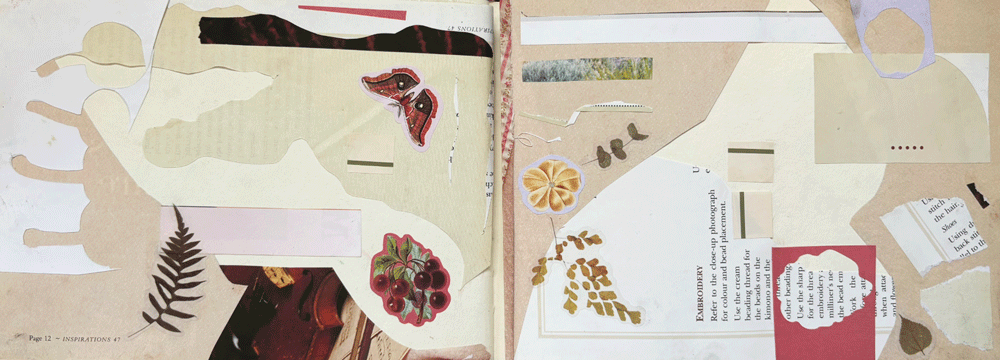
I believe this intersubjective representation in the artworks is heightened by my use of leftover materials from clinical sessions. The artworks and motifs within them were often depictions of the thoughts and emotions I was left with following the art therapy. Adding to this, the artworks were often made using leftover materials from art therapy sessions, such as paint (for example, artworks 2, 4, 12, 24) or scraps of collage images and cut-outs (such as artworks 16, 25, 27). Additionally, many of the reflections in DArTA were around unintentional art byproducts – in other words, artworks made accidentally while working on another artwork (Figures 12, 13).
Figure 12. Cathryn Scarano, Close-up of DArTA reflections 31b and 18c, 2025, mixed media.
Figure 13. Scarano, Close-up of DArTA reflections 25 and 27, 2025, mixed media.
Conclusion
This research sought to explore the meaning of the symbols and motifs arising within a therapist’s response art and uncover why these motifs are occurring. I discovered that some of these motifs were in relation only to my own thoughts, emotions, experiences, and expressions and were separate from art therapy sessions; however, the majority of the symbols were manifestations of the intersubjective plane surrounding clinical experiences. Additionally, the motifs within the artworks have life spans, with motifs being born, dying, and outliving each other. Noticing these artistic life cycles can give us, as therapists, insights into changes in our thoughts and feelings, especially those directed at our clients or therapeutic work. The knowledge gained here has guided my understanding of my past artworks and will continue to shape my perspective on my future professional practice and response art. This research encourages art therapists to explore the motifs within our response art in order to recognise our unconscious projections of our clients, how we are grouping these experiences together, and how this may enhance or hinder our work with them.
This research functions as a pilot study to begin addressing the gap in the literature regarding motifs within the art therapist’s response art. As this is important new territory, this research could be expanded and improved upon. I suggest next steps should include clinical examples of client artworks and case studies to address the triadic relationship of art therapy (Schaverien, 2000). This could potentially lead to an expanding of the client–therapist–artwork triad to include the therapist’s artwork and explore how this inclusion affects the therapeutic relationship. Including clinical examples could also further attest to the insights gained from art therapists examining the symbols and motifs in their response art. Additionally, response art could be examined through a more fluid lens, such as diffractive analysis, to examine the entangled and relational nature of the client, the therapist, client art, and response art (Mazzei, 2014; Munro, 2025). Since discovering that each motif is alive in a sense, I now believe that diffractive analysis may offer deeper insights into the motifs through exploring the animacy and agency of the artworks. Additionally, a new materialist lens, which draws attention to the living nature of inanimate objects such as art, could offer new understandings of the response art (Bennett, 2004). While these methodologies could arguably be better suited to this topic, they were impossible to fully accomplish in the short time-span allocated to this research project, which was potentially the greatest limitation.
Endnote
[1] The symbol of colourful was removed from Table 1 as it held very inconsistent word associations. Please see Table 2 in Appendix. [back to place]
References
Anderson, G.N. (2014). Artlore: An introduction to recurring motifs generated by the study of fine art. Folklore, 125(2), 145–160. https://doi.org/10.1080/0015587X.2014.921411
Angelou, M. (1983). Caged bird. In Shaker, why don’t you sing? (p.12). Random House.
Athanasekou, M., Giannou, R., & Leventi, E. (2022). Sacred circles: Mandalas and their many dimensions in art, education and therapy. In D. Honorato, M.A.G. Valerio, I. Reichle, & A. Giannakoulopoulous (Eds.), Taboo transgression transcendencein art and science (pp.95–101). Ionian University Publications.
Bennett, J. (2004). The force of things: Steps toward an ecology of matter. Political Theory, 32, 347–372. https://www.jstor.org/stable/4148158
Carter, L. (2010). Countertransference and intersubjectivity. In M. Stein (Ed.), Jungian psychoanalysis: Working in the spirit of CG Jung (pp.201–212). Open Court Publishing.
Cohen, F.W. (1981). Art therapy: Psychotic expression and symbolism. The Arts in Psychotherapy, 8(1), 15–23. https://doi.org/10.1016/0197-4556(81)90015-0
Coles, A. (2014). ‘Being time’: An exploration of personal experiences of time and implications for art psychotherapy practice. International Journal of Art Therapy, 19(2), 71–81. https://doi.org/10.1080/17454832.2013.844184
Deaver, S.P., & McAuliffe, G. (2009). Reflective visual journaling during art therapy and counselling internships: A qualitative study. Reflective Practice, 10(5), 615–632. https://doi.org/10.1080/14623940903290687
Dickinson, E. (1999). Hope is the thing with feathers. In R.W. Franklin (Ed.), The poems of Emily Dickinson: Reading Edition. Harvard University Press, 1, 71.
Fish, B.J. (2012). Response art: The art of the art therapist. Art Therapy, 29(3), 138–143. https://doi.org/10.1080/07421656.2012.701594
Fish, B.J. (2019). Response art in art therapy: Historical and contemporary overview. Art Therapy, 36(3), 122–132. https://doi.org/10.1080/07421656.2019.1648915
Gerber, N., Templeton, E., Chilton, G., Liebman, M.C., Manders, E., & Shim, M. (2012). Art-based research as a pedagogical approach to studying intersubjectivity in the creative arts therapies. Journal of Applied Arts & Health, 3(1), 39–48. https://doi.org/10.1386/jaah.3.1.39_1
Gullatz, S. (2010). Constructing the collective unconscious. Journal of Analytical Psychology, 55(5), 691–714. https://doi.org/10.1111/j.1468-5922.2010.01878.x
Guntrip, H. (1969). Schizoid phenomena: Object relations and the self. Routledge.
Isserow, J. (2013). Between water and words: Reflective self-awareness and symbol formation in art therapy. International Journal of Art Therapy, 18(3), 122–131. https://doi.org/10.1080/17454832.2013.786107
Jung, C.G. (1968). The archetypes and the collective unconscious (R.F.C. Hull, Trans., 2nd ed.). Routledge. https://doi.org/10.4324/9781315725642
Jung, C.G. (2017). Mandala symbolism. Princeton University Press. (Original work published in 1972)
Kenny, G. (2012). An introduction to Moustakas’s heuristic method. Nurse Researcher, 19(3), 6–11. http://doi.org/10.7748/nr2012.04.19.3.6.c9052
Kielo, J.B. (1991). Art therapists’ countertransference and post-session therapy imagery. Art Therapy, 8(2), 14–19. http://doi.org/10.1080/07421656.1991.10758923
Lange, J. (2021). The history of a motif (Karl Johns, Trans). Journal of Art Historiography, 25. https://epapers.bham.ac.uk/id/eprint/3486/1/johns-trans-lange-2.pdf
Maclagen, D. (2001). Reframing aesthetic experience: Iconography and embodied responses to painting. Journal of Visual Art Practice, 1(1), 37–45. https://doi.org/10.1386/jvap.1.1.37
Mazzei, L.A. (2014). Beyond an easy sense: A diffractive analysis. Qualitative Inquiry, 20(6), 742–746. https://doi.org/10.1177/1077800414530257
McNiff, S. (1998). Enlarging the vision of art therapy research. Journal of the American Art Therapy Association, 15(2), 86–92. https://doi.org/10.1080/07421656.1989.10758718
Morrell, M. (2011). Signs and symbols: Art and language in art therapy. Journal of Clinical Art Therapy, 1(1), 25–32. https://www.researchgate.net/publication/241810530_Signs_and_Symbols_Art_and_Language_in_Art_Therapy
Moustakas, C. (1990). Heuristic research: Design, methodology, and applications. Sage.
Munro, S. (2025). Beyond gesture: A creative practice research study tracing embodied cognition, diffraction and iteration in the contemporary painting process [Unpublished doctoral dissertation, CQUniversity].
Nash, G. (2020). Response art in art therapy practice and research with a focus on reflect piece imagery. International Journal of Art Therapy, 25(2), 1–10. https://doi.org/10.1080/17454832.2019.1697307
Rankanen, M. (2021). Embodied, intersubjective, and aesthetic art therapy relationship. In V. Huet & L. Kapitan (Eds.), International advances in art therapy research and practice: The emerging picture (pp.141–148). Cambridge Scholars.
Schaverien, J. (2000). The triangular relationship and the aesthetic countertransference in analytical art psychotherapy. In A. Gilroy & G. McNeilly (Eds.), The changing shape of art therapy: New developments in theory and practice (pp.55–83). Jessica Kingsley.
Skaife, S. (2001). Making visible: Art therapy and intersubjectivity. Inscape, 6(2), 40–50. https://doi.org/10.1080/17454830108414030
Smith, J.A., Flowers, P., & Larkin, M. (2009). Interpretative phenomenological analysis: Theory, method and research. Sage.
Smith, J.A., & Osborn, M. (2003). Interpretative phenomenological analysis. In J.A. Smith (Ed.), Qualitative psychology: A practical guide to research methods (2nd ed.) (pp.53–80). Sage.
Squires, V. (2023). Interpretative phenomenological analysis. In J.M. Okoko, S. Tunison & K.D. Walker (Eds.), Varieties of qualitative research methods: Selected contextual perspectives (pp.269–274). Springer Nature.
Wadeson, H. (1987). The dynamics of art psychotherapy. Wiley.
Wadeson, H. (1995). The dynamics of art psychotherapy (2nd ed.). John Wiley & Sons.
Wadeson, H. (2003). Making art for professional processing. Art Therapy, 20(4), 208–218.
Wadeson, H. (2010). Art psychotherapy. John Wiley & Sons.
Watkins, M. (1986). Invisible guests: The development of imaginal dialogues. Erlbaum.
Watkins, M. (2003). Dialogue, development, and liberation. In I.E. Josephs (Ed.), Dialogicality in development (pp.87–109). Bloomsbury.
Wieber, E.V.H. (2024). The exquisite corpse: A healing symbol of the intersubjective third. Pacifica Graduate Institute.
Appendix
Table 2. Symbols removed from results table.
Catalogue of response artworks
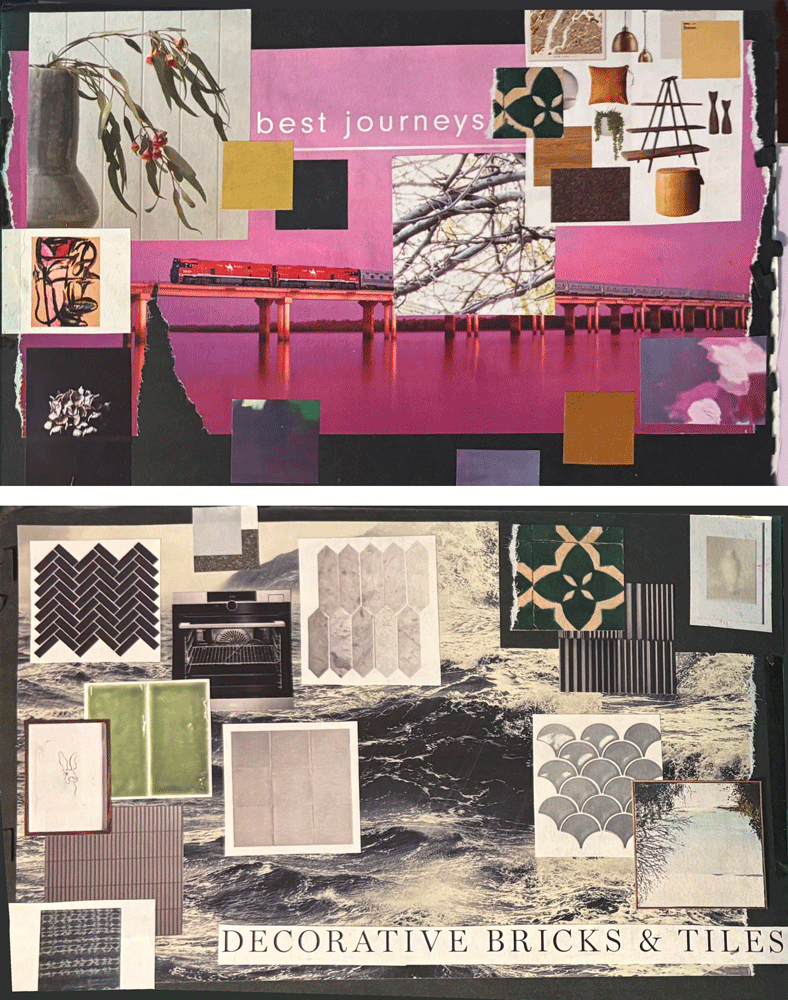
Artwork no. 1a and 1b
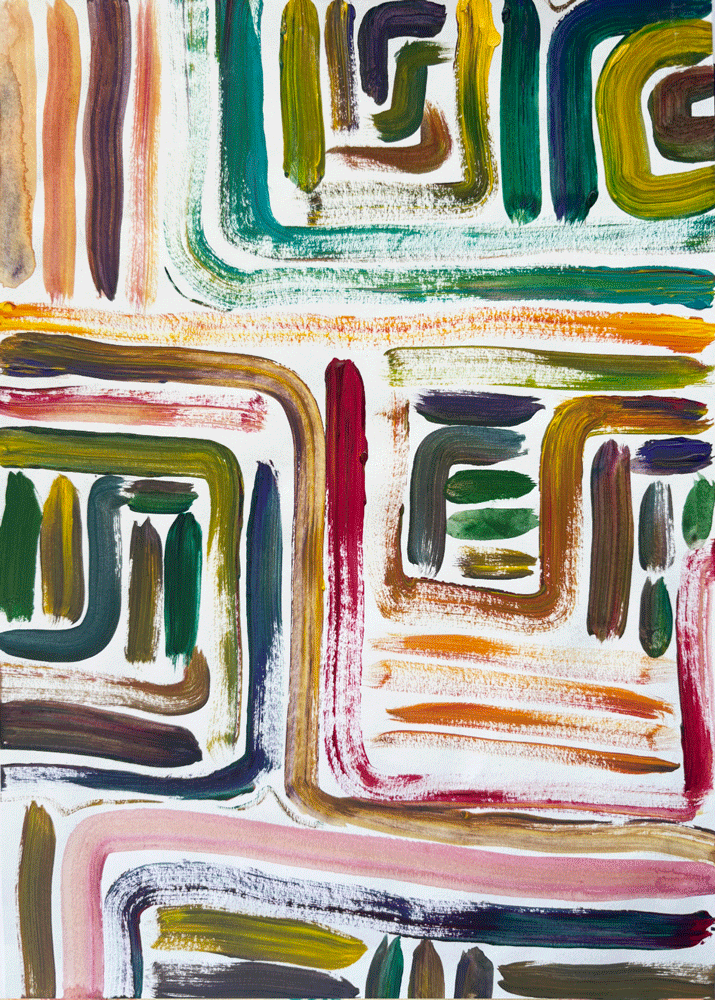
Artwork no. 2
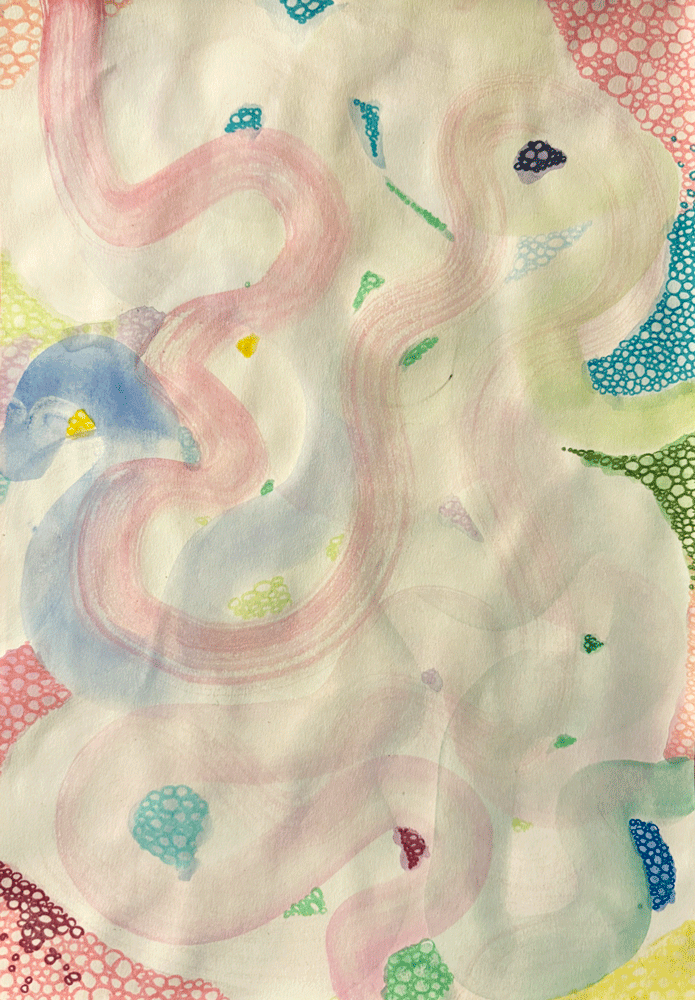
Artwork no. 3
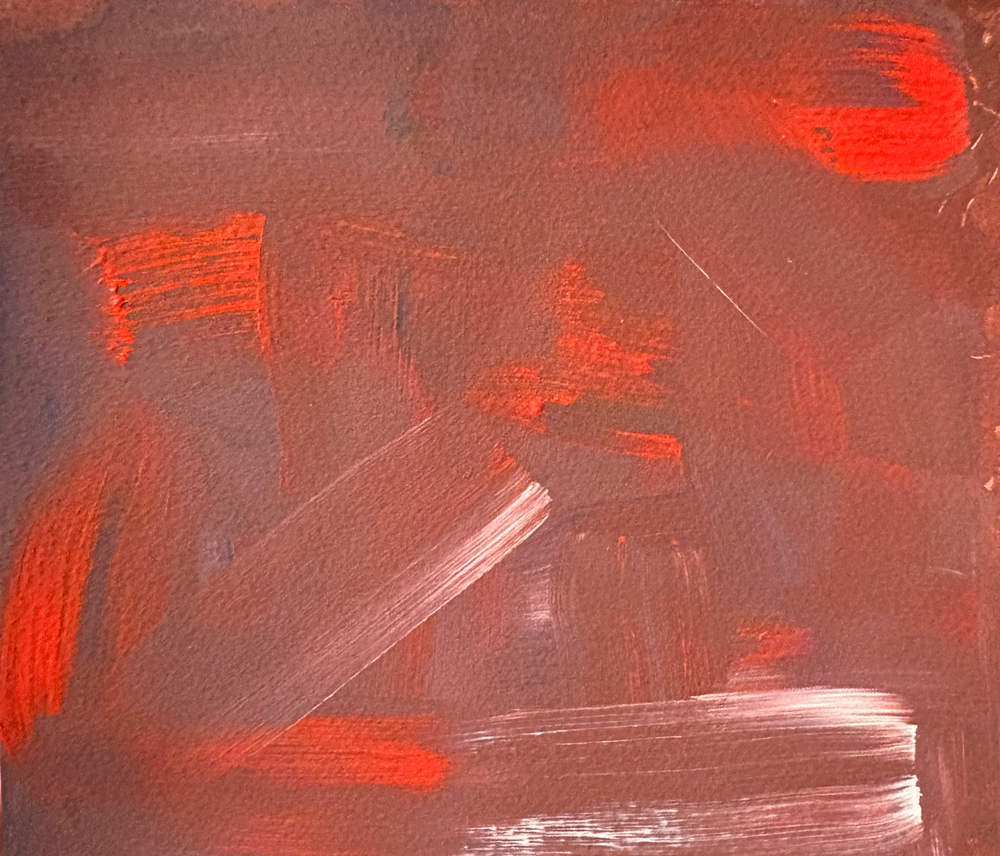
Artwork no. 4
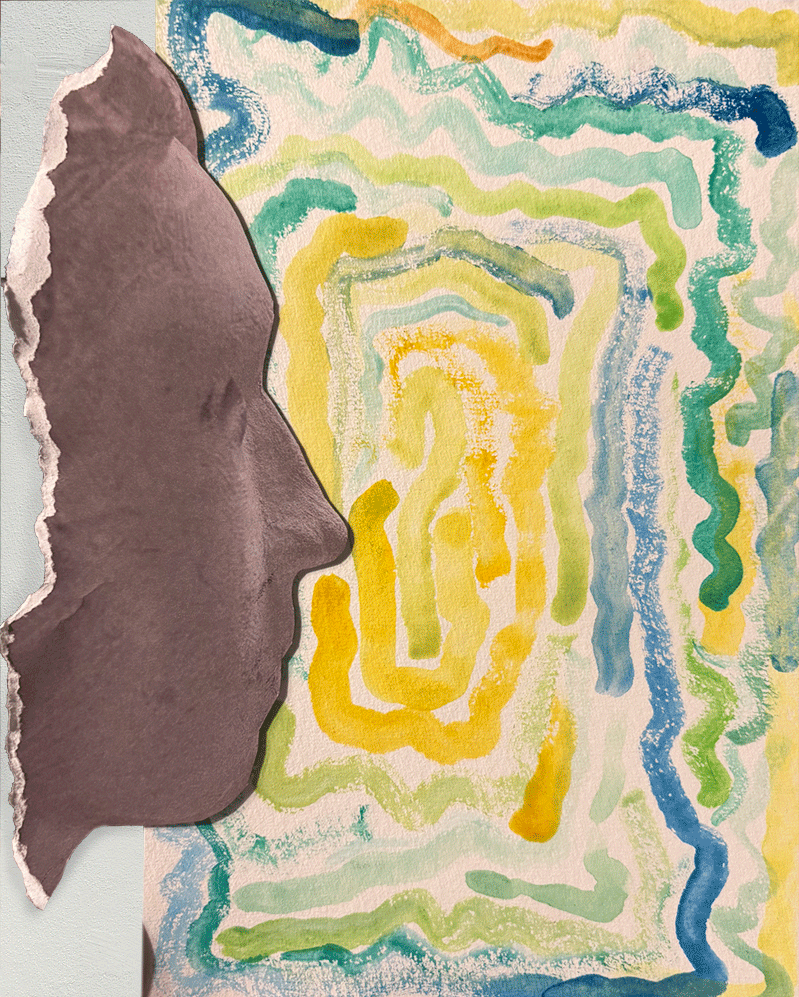
Artwork no. 5
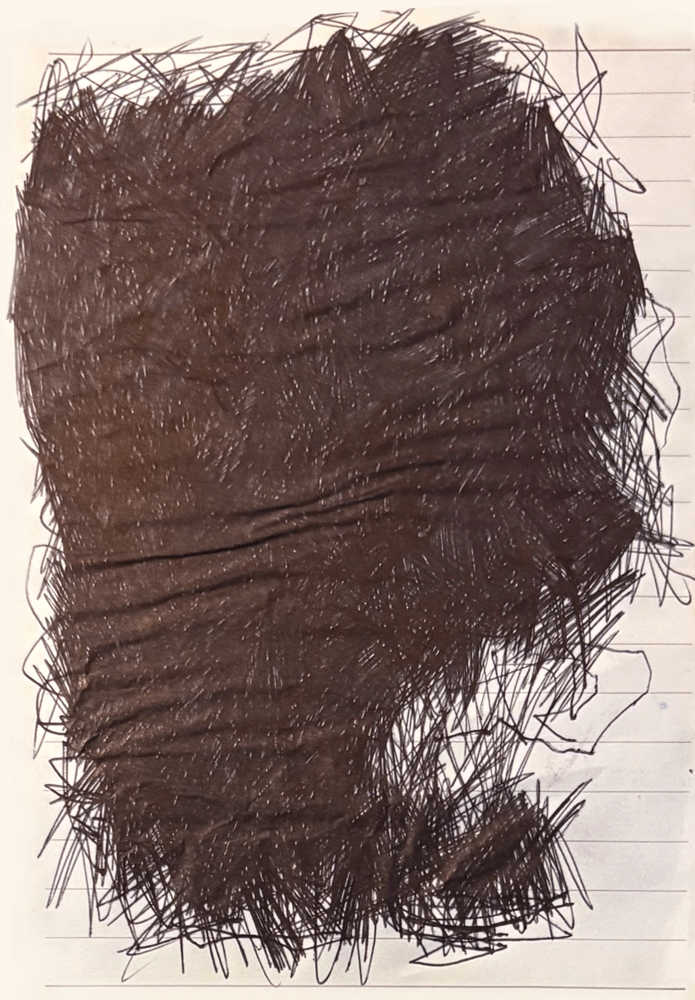
Artwork no. 6
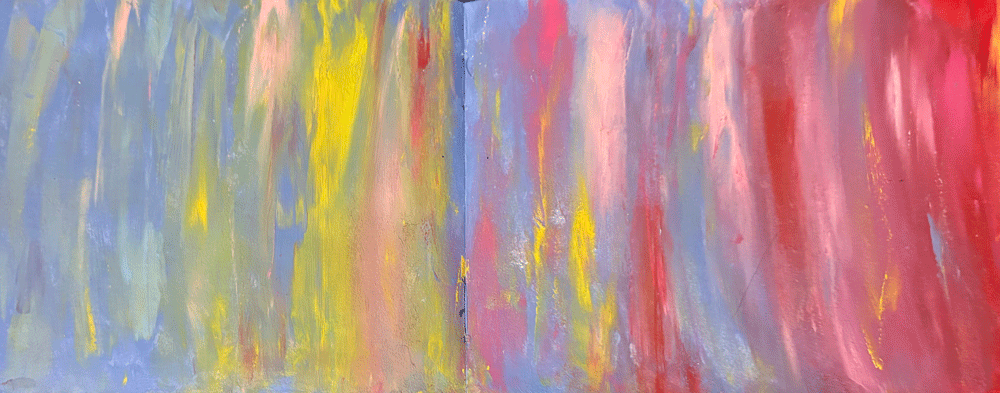
Artwork no. 7
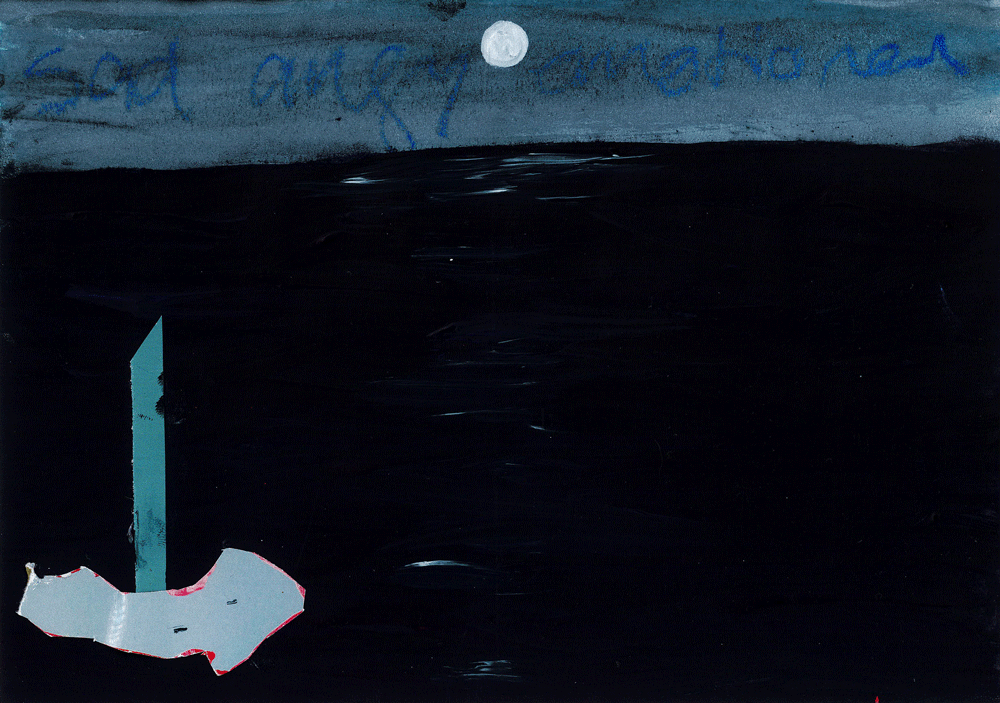
Artwork no. 8
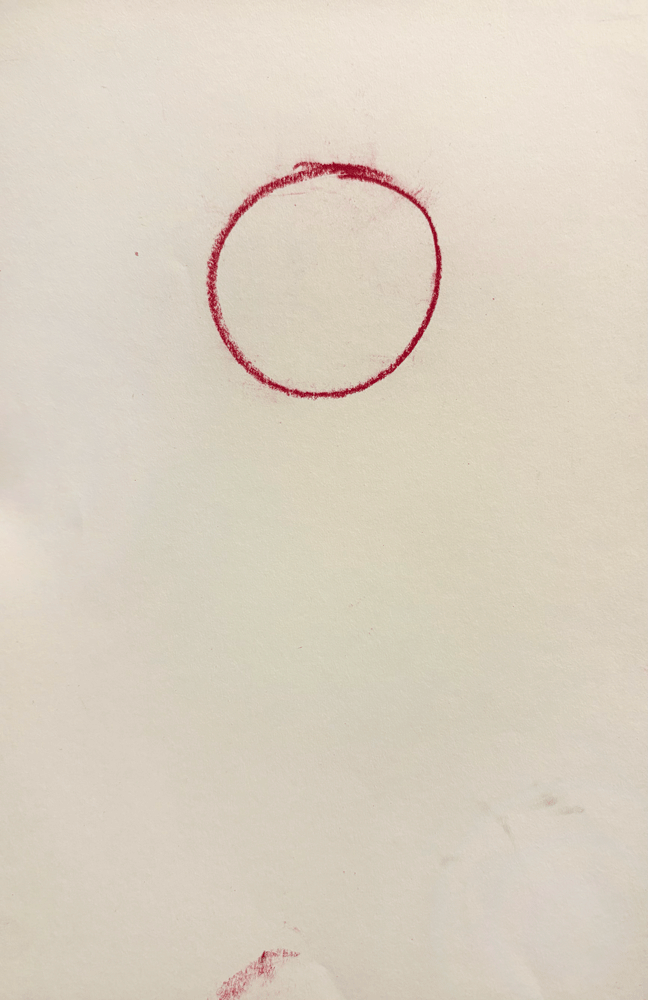
Artwork no. 9

Artwork no. 10
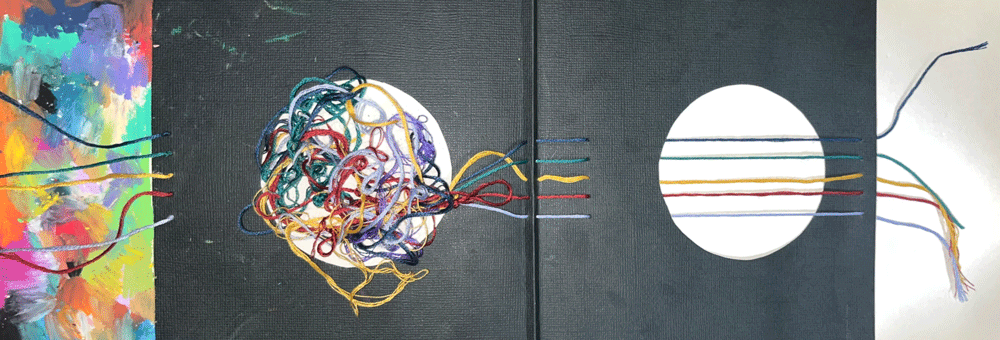
Artwork no. 11
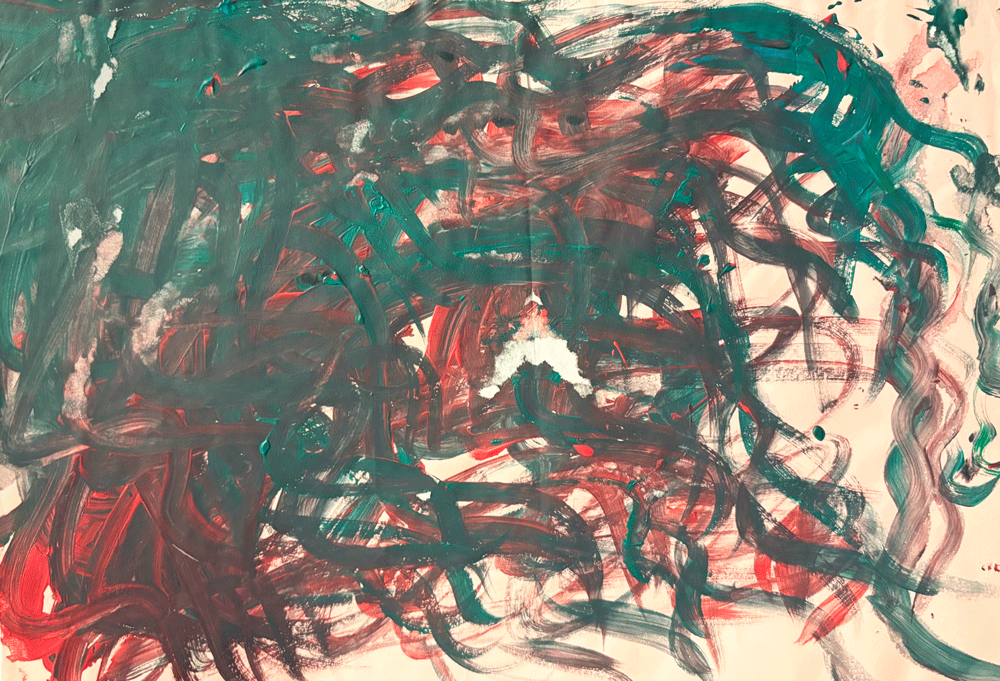
Artwork no. 12
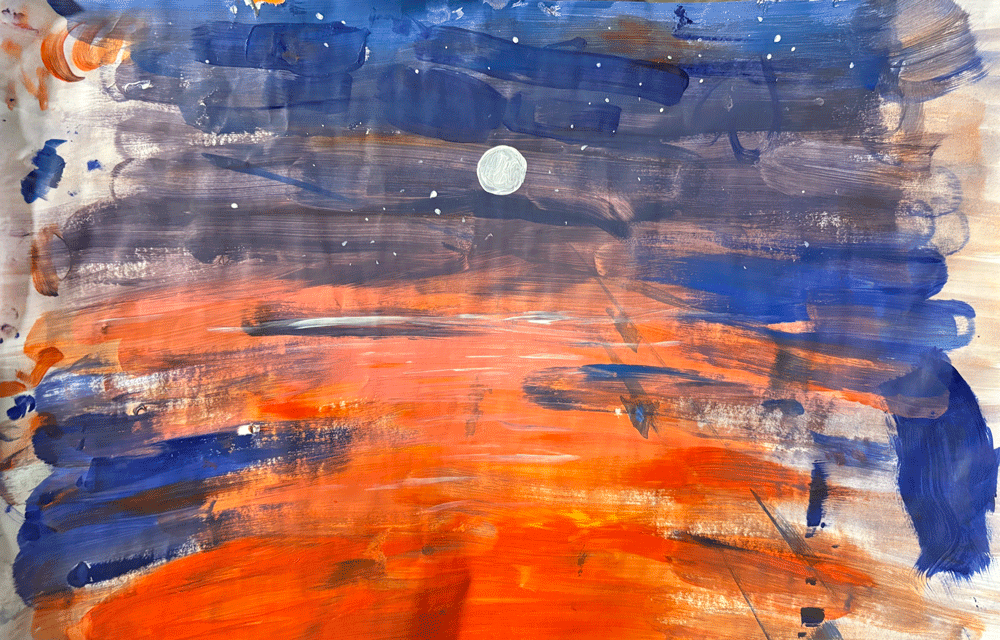
Artwork no. 13
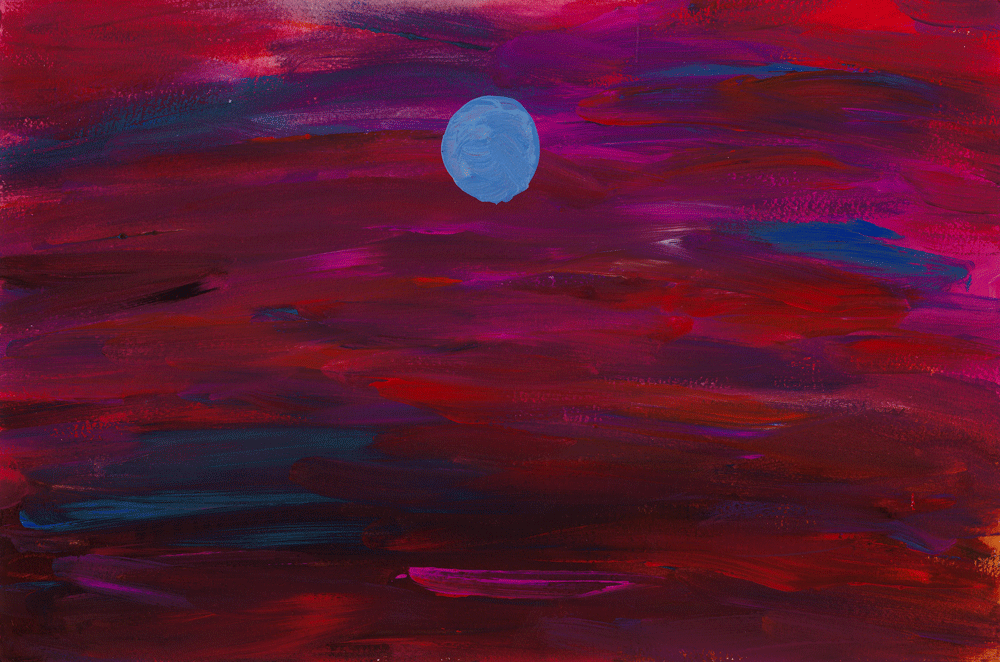
Artwork no. 14
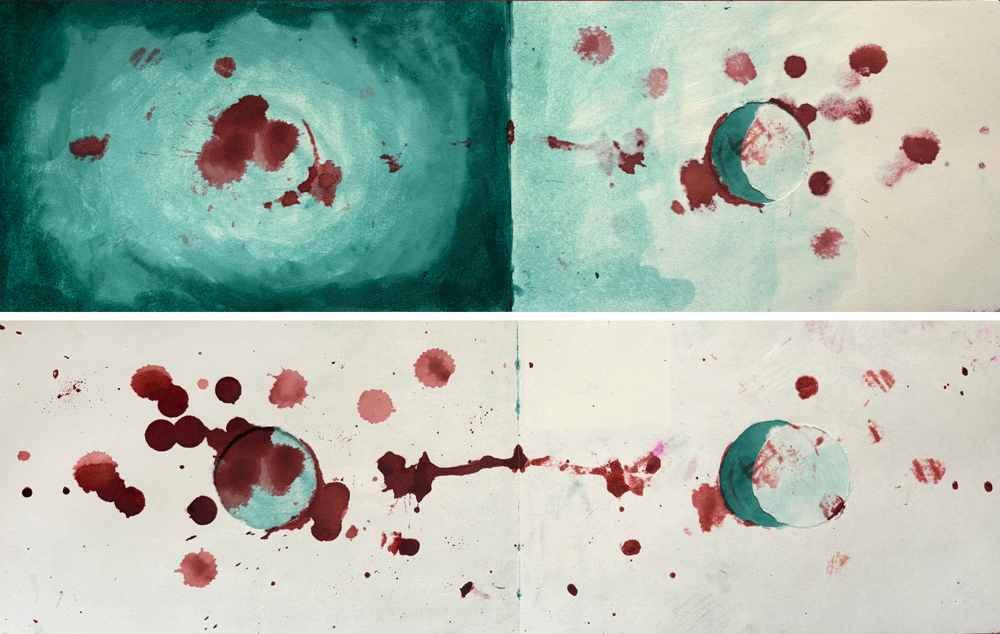
Artwork no. 15. Above – first page; below – second page
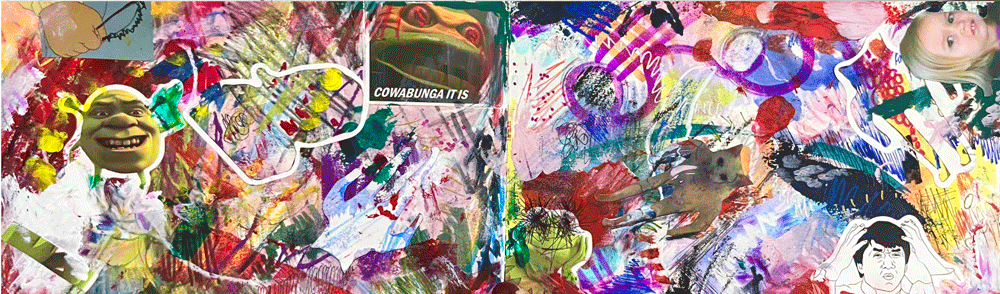
Artwork no. 16
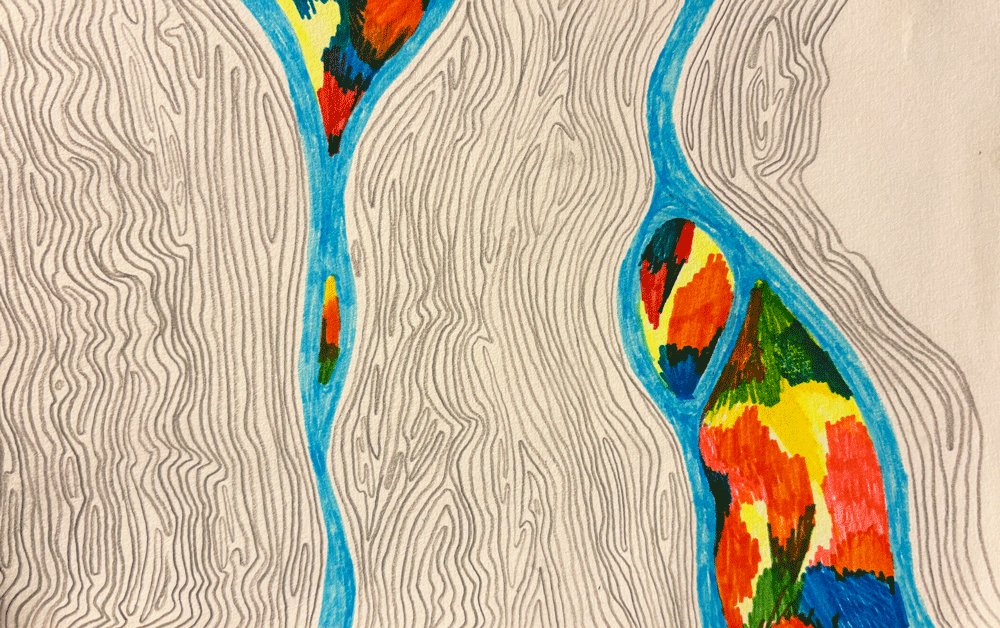
Artwork no. 17
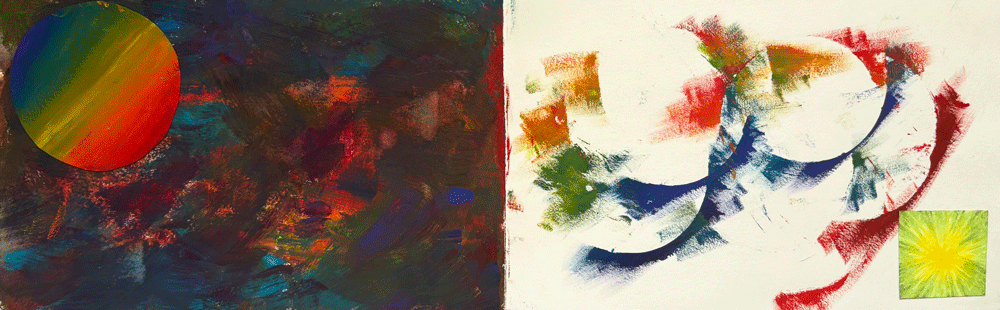
Artwork no. 18
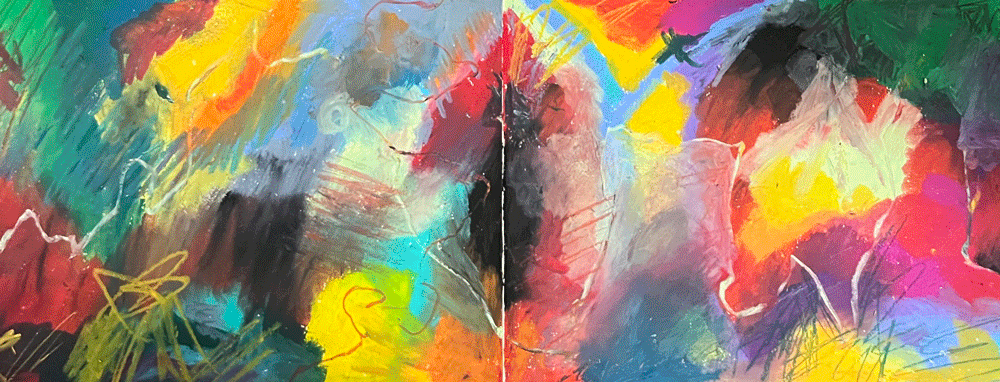
Artwork no. 19
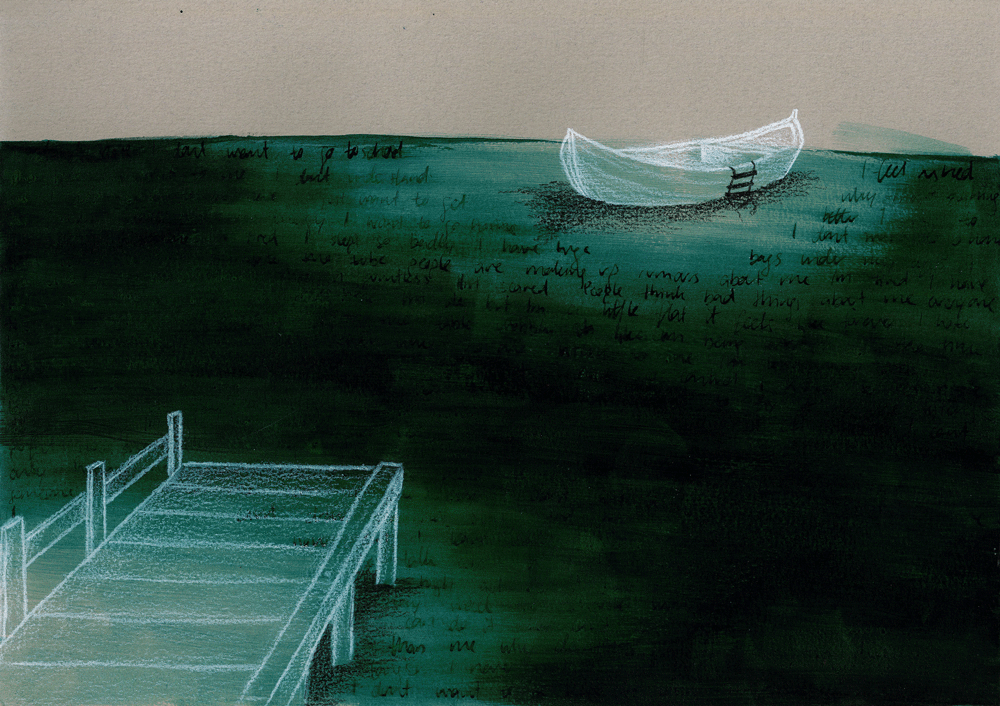
Artwork no. 20
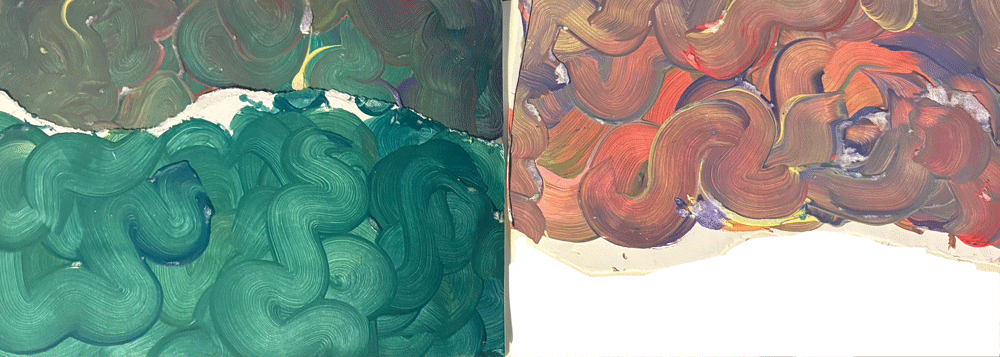
Artwork no. 21
Artwork no. 22
Artwork no. 23
Artwork no. 24
Artwork no. 25
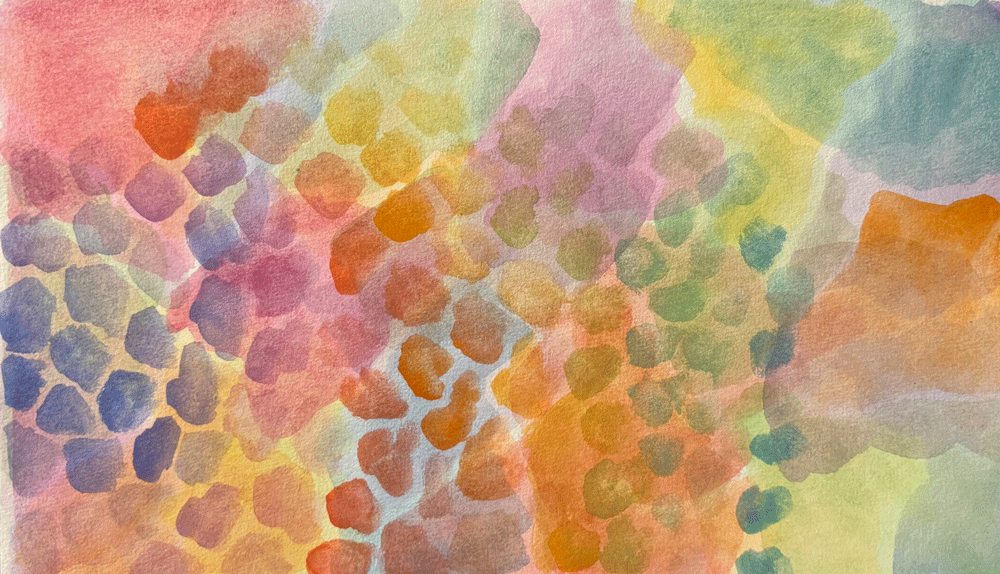
Artwork no. 26
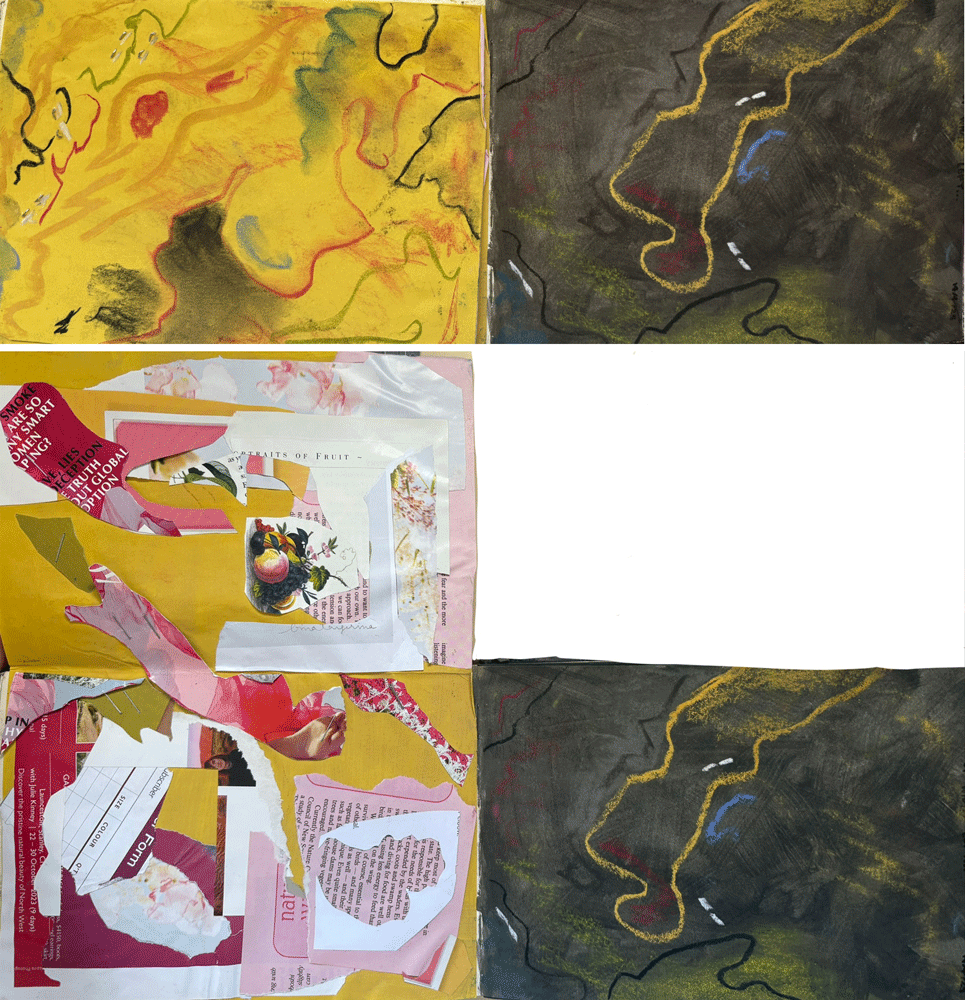
Artwork no. 27. Above – first page; below – second page
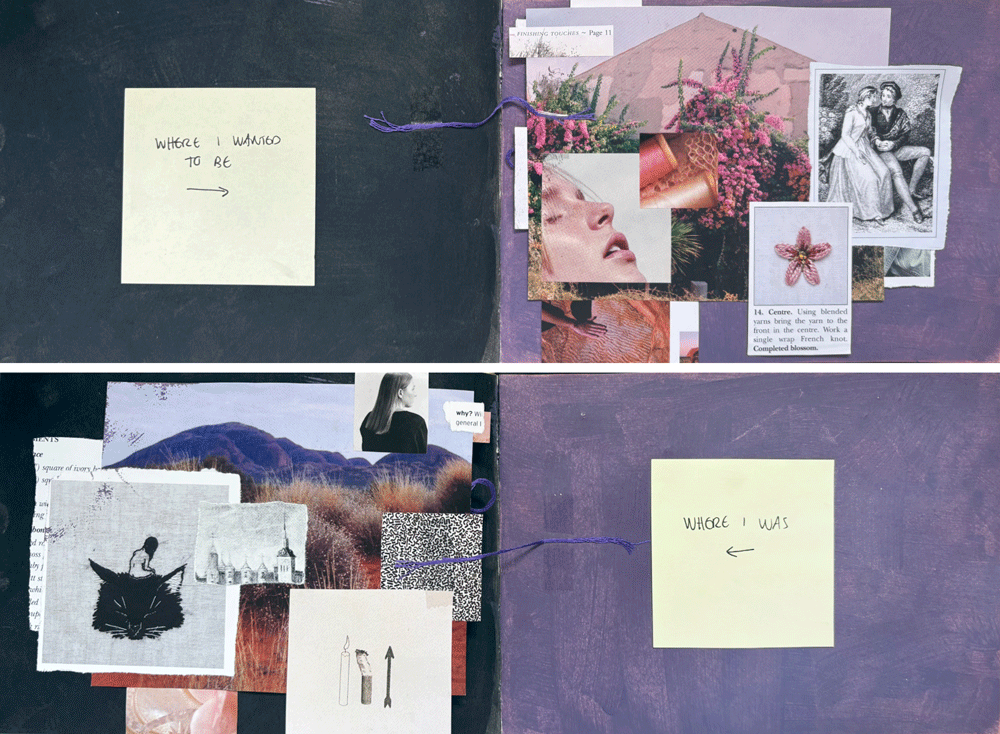
Artwork no. 28a and 28b
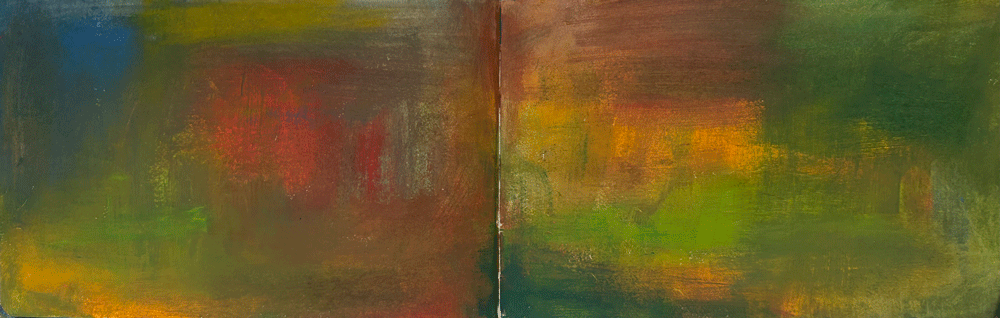
Artwork no. 29
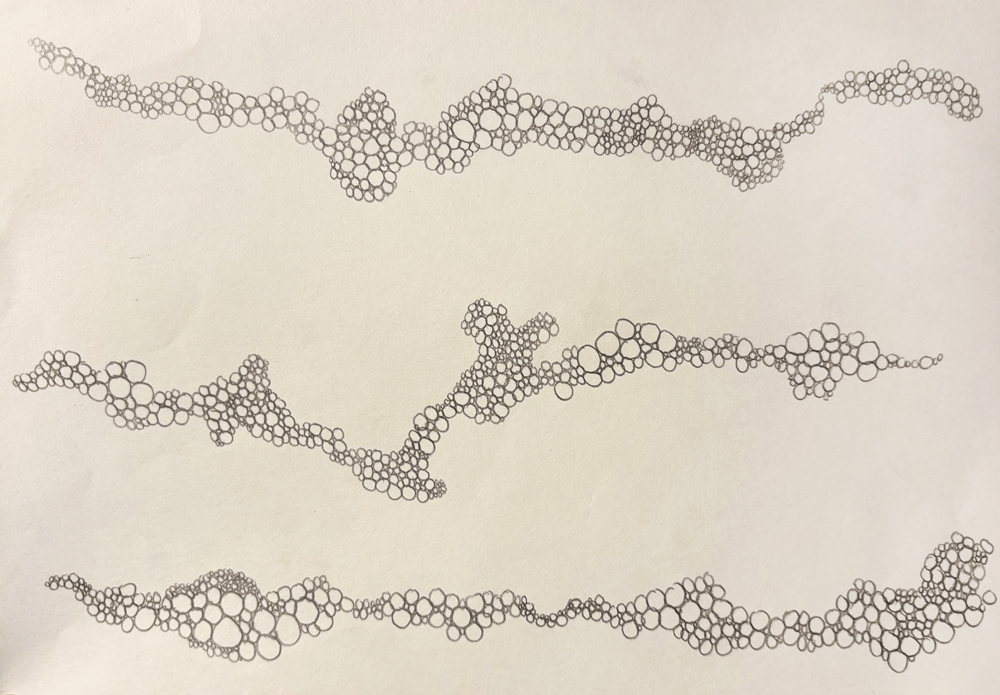
Artwork no. 30
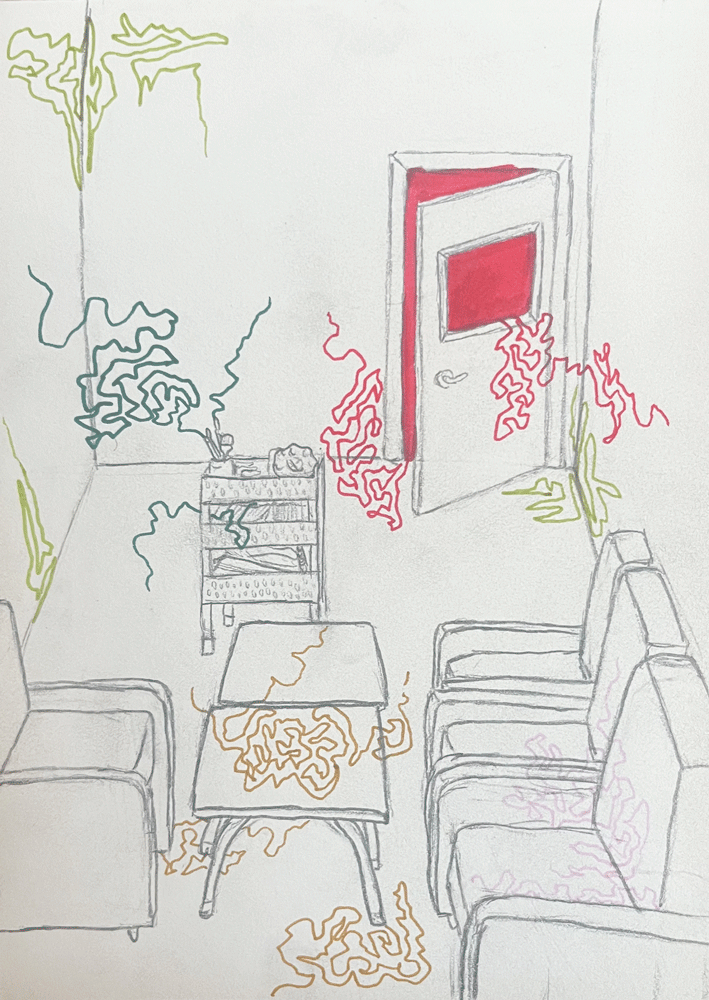
Artwork no. 31
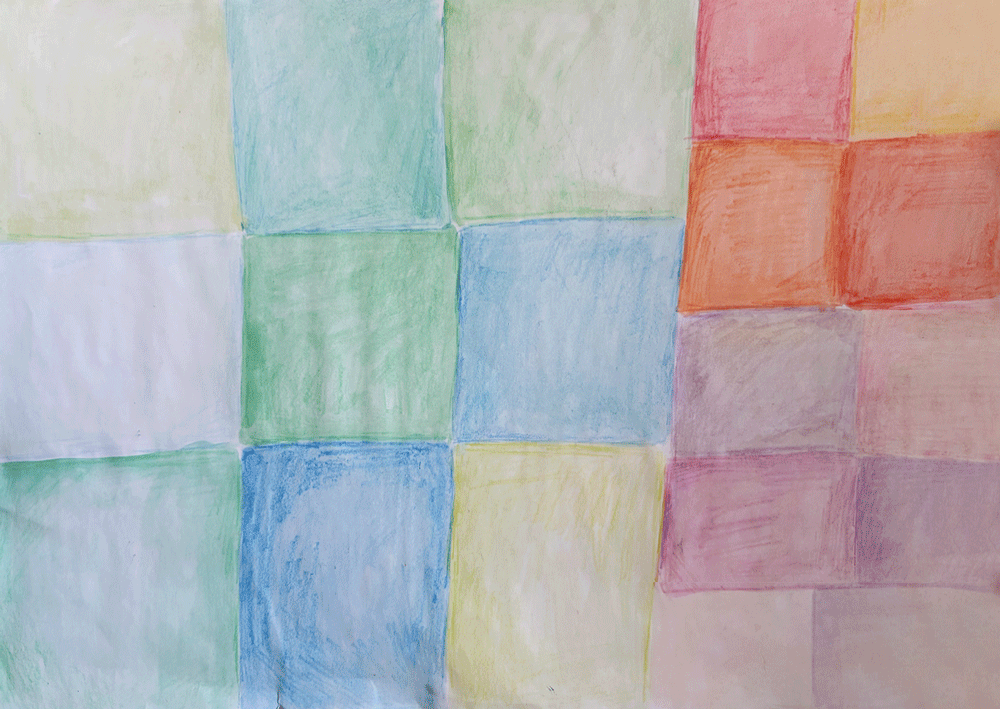
Artwork no. 32
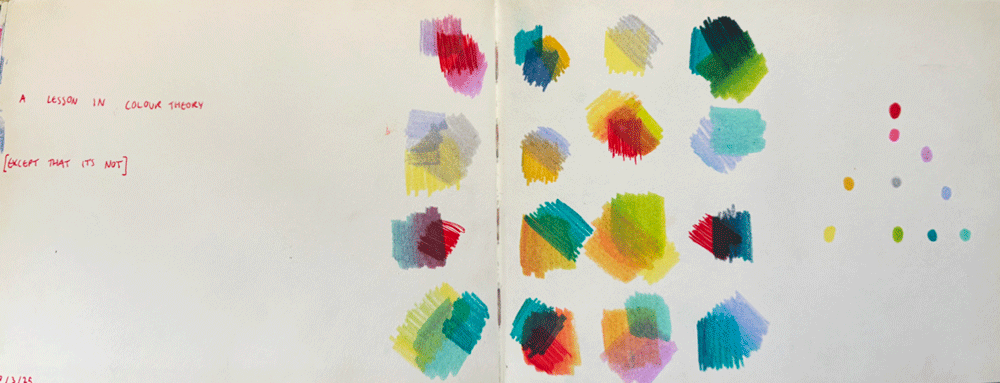
Artwork no. 33
Author

Cathryn Scarano
MAAT, BPysch, AThR, MACA
Cathryn is an emerging researcher and art therapist based in Sydney, Australia. She holds a Masters in Art Therapy and has experience working with people with complex mental health issues in community and in hospitals. This is her first academic publication and reflects her passion for clinical responsive art-making for art therapists.
Email: cathryn.scarano@outlook.com