

Open Access
Published: April 2026
Licence: CC BY-NC-4.0
Issue: Vol.21, No.1
Word count: 8,536
About the authors
Anarchival tremors: Glitch, haunting, and an ethic of care
Tatjana Jansen, Richard Wainwright, and Shannon Stevens
Authors’ note
First-person singular ‘I’ refers to Tatjana Jansen’s clinical and research voice. The glitchy text and anarchive framework employed here was co-developed by Shannon Stevens and Richard Wainwright in prior work. All authors approved the final manuscript.
Editor’s note
The proposition for a glitch-attuned ethics of care developed in this article is partly impelled by Tatjana Jansen’s current role with women in Gaza who are supporting traumatised school-aged children. The methodology is broadly applicable, while grounded in specific visual and textual exemplars of historical and current political, gendered, embodied, and epistemic violence. Intended to disrupt dominant assumptions rather than replace them with other truth claims, these ‘fragments’ of image and text are necessarily disturbing. They may affect readers differently, resonating with them or not, depending on their own experiences, intersectionality and positioning. JoCAT is committed to a decolonial ethos and to publishing challenging and thought-provoking material. We do not publish articles that express antisemitic, Islamophobic or other racist views. We seek to support diverse perspectives, amplify marginalised voices, and make room for scholarly debate, in order to contribute to theorisations and practices of CAT that respond to the complexities of our world. The ANZACATA Board takes no position on the views expressed in this article, noting that responsibility for all interpretations rests solely with the authors. The Board does not interfere in the editorial decisions of the Journal.
Abstract
In this article, I explore the implications of ‘glitch’, a rupture in systems of coherence and meaning, as both a theoretical and practical lens for creative arts therapies (CAT). Tracking arts-based methods, I weave together archival fragments and artworks with practitioner reflections. This discussion unfolds three constellations: Oceanic (and Other) Absences, which attends to colonial erasures and haunted matter; Gendered Silencing, which explores glitch as resistance within patriarchal archives; and Improvisatory Repair, which turns to embodied and therapeutic improvisation. Across these constellations, I theorise how glitches serve as potential sites of historical haunting, resistance, and anarchival emergence. Drawing on Avery Gordon’s notion of haunting and Legacy Russell’s glitch feminism, I position glitch as a haunting rupture, a spectral interruption through which silenced histories, affects, and identities reappear and reconfigure meaning. I conclude with a call for a glitch-attuned ethic of care in clinical and institutional settings.
Keywords
Glitch, haunting, anarchive, creative arts therapies, trauma, improvisation, ethic of care
Cite this articleJansen, T., Wainwright, R. & Stevens, S. (2026). Anarchival tremors: Glitch, haunting, and an ethic of care. JoCAT, 21(1). https://www.jocat-online.org/a-26-jansen
Introduction
Exploration of memory and the progression of experience over time is a central pathway to insight in psychodynamic therapy and many other models. Yet some therapies diverge from this linear experience, in particular, creative arts therapy/therapies (CAT) [1] and their embracing of non-linearity, ambiguity, fragmentation, and embodied expression. Through its intermodal, process-oriented focus, space for meaning emerges in CAT through sensory and imaginative processes versus a reliance on narrative clarity and ‘making sense’ of disorder: an honouring of the unfinished and the not-yet-articulated. This is echoed as well in body-based and trauma-informed approaches such as somatic experiencing, which privilege embodied knowing over cognitive interpretation.
The term ‘glitch’ is generally used in popular culture to refer to an unintentional error or malfunction within a technological system. What follows is the application of glitch as a ghostly, disquieting entity (Gordon, 2008); the ghost is a social figure or presence that signals the unfinished business of injustice. Within the context of CAT, glitch serves as a space of rupture, one that is both unsettling and generative if we allow ourselves to follow it. Throughout this article, glitch will be used to indicate the site of potential, opening up spaces for nonlinear becoming and creating liminal conditions for reimagining self, story, and relations. “The glitch is a passage through which the body traverses towards liberation” (Russell, 2020, p.19), a tear allowing the new to emerge.
To consider glitch in this way enters the territory of haunting. Both glitch and ghost announce what has been repressed, yet continues to act. Each unsettles the surface of order, drawing attention to what has been suppressed, forgotten. In what follows, glitch is approached as a haunting rupture and an anarchival act, a disturbance where fragments, affects, and memories begin to take shape.
Theoretical frame: Haunting and glitch
In CAT, haunting and glitch intersect to expand therapeutic practice beyond conventional understandings of trauma, expression, and healing. Haunting names the lingering, often non-verbal presence of repressed material – the ghosts that surface in creative acts and bodily gestures. Glitch as a structural and aesthetic rupture opens spaces for fugitive revelations, those unruly expressions that defy therapeutic expectation but carry transformative potential. In this space, Gordon’s (2018) fugitive imagination operates as a mode of sensing and creating otherwise – a practice attuned with the hidden and the inchoate. Together, these concepts invite creative arts therapists to be in dialogue with what is materially active, affectively charged, and insistently incomplete.
In earlier work, Wainwright and Stevens (2023) articulate glitchy text as a posthuman writing method that stages such ruptures directly in the form of an academic article; here I lean on that glitchy-text framework and transpose it into CAT as a clinical and institutional sensibility.
Haunting employed here as metaphor and method follows sociologist Avery Gordon (2008), who suggests that despite our best efforts, social and historical traumas do not simply disappear. We continue to be haunted by the ghostly aspects of what lingers and returns. In the context of CAT, such hauntings often surface through the body and materials, moments when affect and gesture slip outside of what can be consciously contained. Within this framework, glitches can be understood not merely as error or disruption but as fugitive acts – expressive ruptures in patterns of containment, whether personal, historical, or social. These are spontaneous, creative refusals of the rigid roles imposed by dominant orders. Fugitive imagination is a lens through which Gordon (2011) articulates imaginative practice, rooted in survival and what she describes as living otherwise, “a rebellion… a demand for a liveable future” (p.4).
In CAT, a painting that an adult client makes may evoke the memory of a forgotten trauma, the affective trace of unresolved social violence. The ghost’s sudden appearance in the artwork serves not just as disturbance, but as an ethical demand on the clinician to acknowledge and explore these lingering presences. In this sense, the ghost functions both as a haunting rupture and an anarchival act, a disturbance, that unsettles coherence and calls forth what formal narratives (theoretical or historical) attempt to contain or erase. The anarchival here does not signify absence or destruction but rather persistence; what continues to flicker, act, and trouble. This sensibility also gestures to the vitality of matter, the subtle liveliness that animates even what appears inert (Bennett, 2009).
To attend to haunting and glitch in this way is to cultivate a different kind of clinical sensibility, one that attunes to dissonance and what slips through the structure of narrative sense-making. A glitch-attuned approach invites the creative arts therapist to linger with disorder, to stay with the moment when form falters and something unbidden begins to make itself known. This orientation resists the impulse to explain too quickly; as well, it is a recognition of the creative process as an anarchival field where fragments, affects, and traces continue to move and insist on relation. Attending to these dissonant presences – what flickers, haunts, and resists containment – shapes a creative arts therapeutic stance. It is also a way of doing research, one that traces the glitch as both method and matter. Here, matter refers to the material and affective traces through which glitch manifests: the image, the gesture, or relational field where rupture takes form.
Methodological orientation
To follow glitch across therapeutic, political, and aesthetic terrains, I have gathered my inquiry into three constellations: Oceanic (and Other) Absences, Gendered Silencing, and Improvisatory Repair. These constellations are not fixed themes, but relational gatherings of fragments – artworks, archival traces, theoretical provocations, and practitioner reflections – that hold ambiguity rather than resolution. Their meanings emerge not from singular points, but their entangled proximities. This anarchival approach resists closure and invites a glitch-attuned ethic of care – one that involves a more sensorial, embodied mode of engagement. Reflexivity is central, as my own position as clinician-researcher-artist informs this “art-writing” (Warner, 2013, p.9) process. I work to recognise my ghosts and the spectres of whiteness (Van Den Berg & Allen, 2022); these are tethered to the tentacular web of troubling relations that matter now (Haraway, 2016), and the histories of loss that enter the CAT space.
Constellation one: Oceanic (and other) absences
In the first constellation, I turn toward the oceanic – the vast and unsettled waters where the afterlives of transatlantic slavery and colonialism continue to move. Mary Prince’s (Pringle, 1831/2023) autobiography, The Slave Ship (Turner, 1840), the haunted matter of the Nakba (1948), and the ongoing bombardment of Gaza each reveal how erasure endures: lives disappeared but not gone, histories submerged yet restless beneath the surface.
This constellation moves within an anarchival current, drawn to what official histories cannot hold and to the traces that continue to shift beneath them. Here, I follow Wainwright and Stevens’ 2023 articulation of glitchy text as a theoretical construct, using it to name the intra-subjectivity of language and image where text slips, distorts, and mirrors itself. The glitch also acts as a decolonial gesture – a refusal of linear history, a crack through which the unspeakable begins to sound. In these glitch moments, repressed violence insists on visibility and ghosts return, demanding witness.
Mary Prince’s pruned autobiography as textual glitch
When The History of Mary Prince, a West Indian Slave was published in 1831, it was touted as a firsthand account authored by Mary Prince. The story revolves around Prince’s early life in Bermuda (enslaved since her birth – c.1788), her abuse at the hands of multiple owners, and her eventual freedom from slavery in England, although not formally freed by her owner. Mary was illiterate, so in actuality her story was transcribed by Susanna Strickland, a white English writer, and later edited by Thomas Pringle, a Scottish abolitionist.
Can the voice of a colonised woman ever be truly heard when mediated by dominant structures (Spivak, 1988)? Or does Prince’s story disrupt the colonial literary structure? Are there glitch moments – for example, in her narration of suffering that alluded to sexual violence and was explicit in terms of economic exploitation, physical and psychological abuse? Is it a form of glitchy testimony under constraint, an error that speaks?
[The following pages are scattered with fragments (in red font) – objects retrieved or stumbled upon. Some are archival, some aesthetic…. my own felt encounters through matter and relation. Like a mudlark in the intertidal zone, I move through histories and textures, picking up what shimmers through the silt: forgotten things, partial things, what is not meant to be found. These fragments are not illustrative – they do not explain. Instead, they interrupt, echo, or resist, offering affective resonance over resolution. In this way, they move with an anarchival drift toward what persists beneath the surface. To mudlark in this context is to search through sedimented time with a porous attention, what Bennett (2009) calls an attunement to matter’s vitality. It is a way of being with broken voices and haunted matter – what returns, carrying the vibrancy of matter that is never inert (Bennett, 2009). Fragmentary presences appear through this work, set off from the main text. They carry the energy of the glitch: disruptive, unfinished, generative.]
Then, as if drawn from that same silt, the following text reveals itself in a local bookstore – no digging along muddy shorelines required – finding its way into my hands (Figure 1). I pause on the words “RELATED BY HERSELF”:
[Like the river unearthing its treasures, a lost story speaks to a legacy of invisibility, of missing people. Mary Prince is not quite missing, although I wonder how much of her story was accurately transcribed, “taken down from Mary’s own lips [and] pruned into its present shape” (p.vii): so said Thomas Pringle, who wrote the preface for this book when it was first published. (She is a ghost in my throat, a splinter in my chest.)
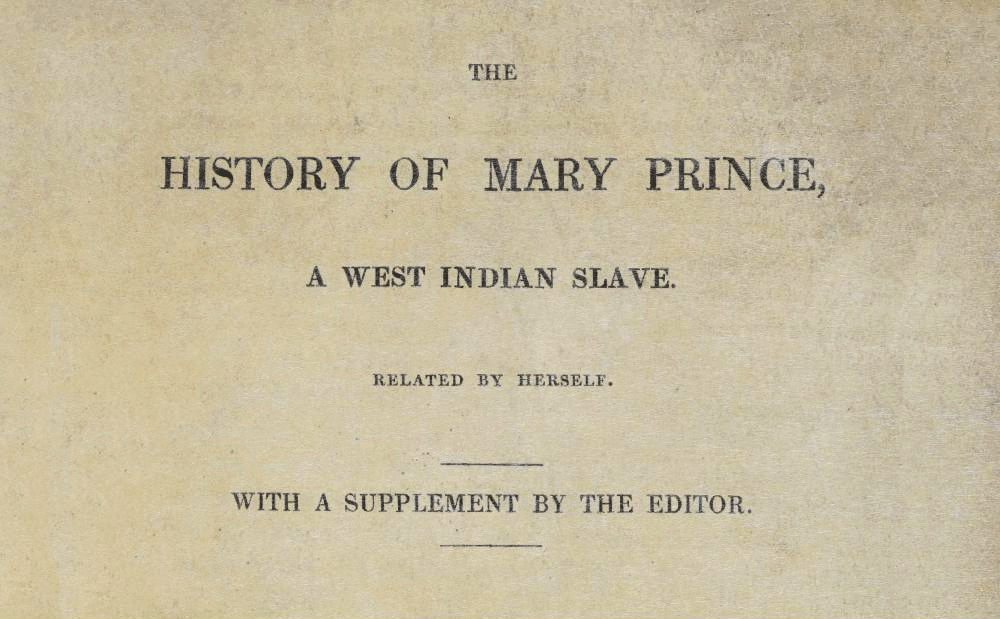
Figure 1. Cover design attributed to an early edition of The History of Mary Prince, a West Indian Slave (n.d.).
https://britishonlinearchives.com/posts/category/articles/419/an-assessment-of-the-history-of-mary-prince-as-an-abolitionist-text
Histories, individual and collective, are most often threatened by amnesia, silence, or in the case of Mary Prince, her ‘body’ and text the focal point of conflicting interpretations (including of course, my own, as a white, cisgender, middle-class woman). Prince’s narrative illuminates aspects about “the operations of power working across lines of gender and race… [and] the unmaking of [her] world” (Baumgartner, 2023, p.254), beginning at birth. I read it as a taxonomy of loss, bodies (and words) falling through the gaps and evading capture. And in tracing these and other stories, in outlining their shape, I want to hear, remember and hold delicately (and in the context of therapy, to bear witness to the disavowed, to believe) what might otherwise disappear out of our collective memories.]
Turner’s The Slave Ship – Visual abstraction, economic violence
J.M.W. Turner’s painting (Figure 2) is deceptively beautiful at first glance in terms of movement and colour, the original title carrying the horror of what we are viewing: Slavers Throwing Overboard the Dead and Dying, Typhoon Coming On (1840). And why were the enslaved thrown overboard? For insurance purposes, as the captain of the ship would only receive insurance money for those who were ‘lost’ at sea.
The vibrancy of matter does not extend equally. Turner’s The Slave Ship reveals how some bodies were literally and symbolically stripped of vitality – substitutable, disposable, and ‘insurable’ only in death. The new-materialist attention to matter’s vitality here is not to neutralise historical violence, but to acknowledge how material traces continue to act, as they carry memory, resistance, and demand.
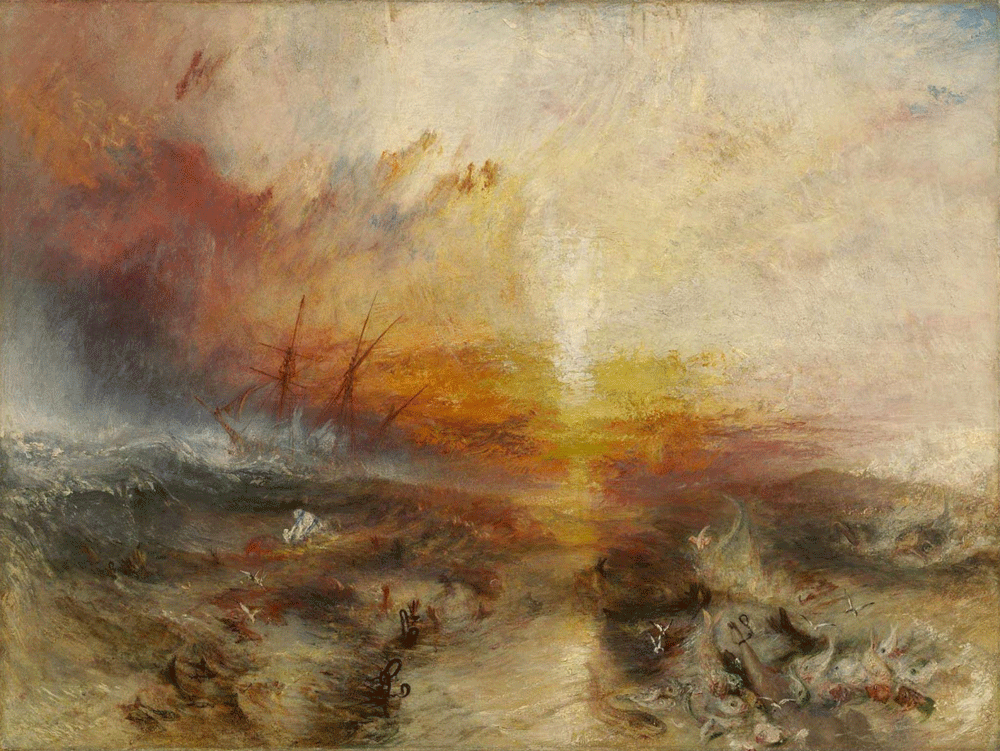
Figure 2. J.M.W. Turner, The Slave Ship, 1840, painting. Museum of Fine Arts, Boston. https://commons.wikimedia.org/wiki/File:Slave-ship.jpg
How does one disrupt the repetition of violences past? In the now – on and offline – the castoffs remain: the other(ed), the ‘castaway’, the persistently erased. The idealised notion that you can be whoever you want to be in the present still hinges on what Da Silva (2017) describes as “equation of value” (para.2) and ongoing patterns of privilege, many of which are primarily built upon race: “[f]or blackness refers to matter – as The Thing; it refers to that without form – it functions as a nullification of the whole signifying order that sustains value in both its economic and ethical scenes” (para.20).
[It is difficult not to ruminate on the importance of some bodies over other(ed) bodies (Figure 3). The repetition of settler-colonial violence and occupation of people, land, and the more-than-human kin – those whom TallBear (2011) names relatives, not resources, and whom Haraway (2016) calls companion species – becoming with us in entangled worlds. Yet, a Euro-Anthropocentric logic persists – a carte blanc(he), if you will, given/taken by various states to rob, violate, and exterminate.
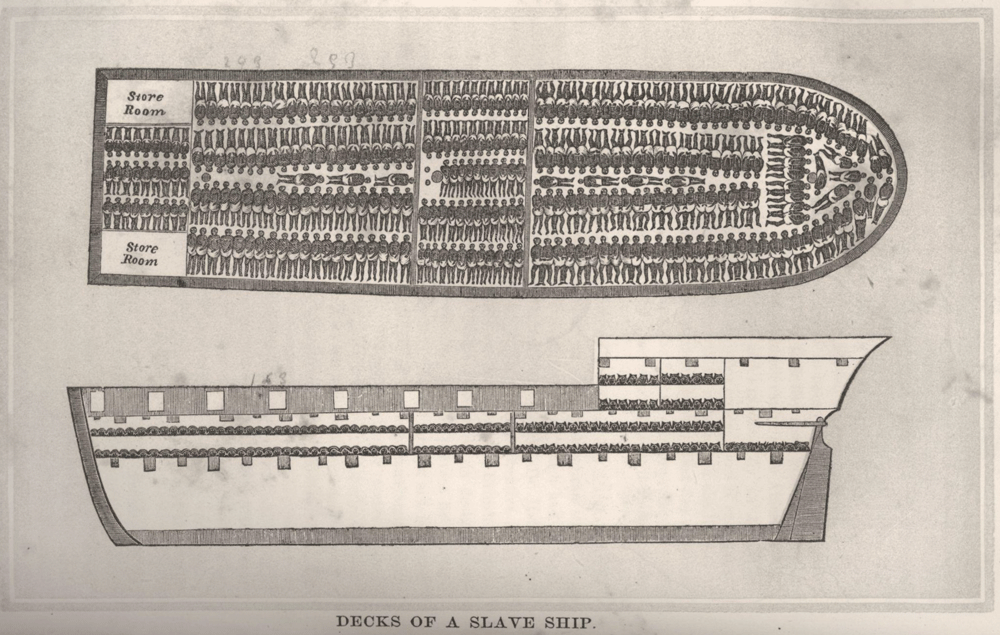
Figure 3. W.O. Blake, Decks of a Slave Ship, 1857, illustration. https://commons.wikimedia.org/wiki/File:HumanCargo.jpg
There are absences in the archives, “myriad silences and ruptures in time, space… ethics, research” (Sharpe, 2016, p.12). Yet, even within these silences, the anarchive stirs – matter remembering, refusing erasure.]
In Beloved (1987), Morrison’s dedication to “sixty million and more” refers to the estimated (and contested) number of Black Africans whose enslavement was shortened as they died as captives in Africa before they reached the coast, or as victims of transport during the now infamous Middle Passage, human cargo who would not survive the journey. During the American Civil War, African Americans who sought refuge behind enemy lines were described as contraband of war or confiscated property.
Gaza: What comes to view at its vanishing point
Violence can highlight the rupture and glitchiness that is the foundation of nation states, one that Tronto (2013) describes as a taken-for-granted position of privileged irresponsibility. Here, rupture is understood not only as a break or failure, but as a threshold – a site where suppressed histories and affects surface, making new relations possible. Current examples of glitchy interruptions include the unforeseen protests against the ongoing denial of the cartography of genocide in Gaza, combined with technological glitches of documented war crimes continuing to reveal themselves (despite attempts to suppress images, voices, stories, the mountain of evidence). The complicity of nation states in crimes against and beyond humans has been tracked by Goldsmiths, University of London’s Forensic Architecture Agency, a self-described investigative commons collecting spatial evidence across multiple sites of inquiry (Figure 4).
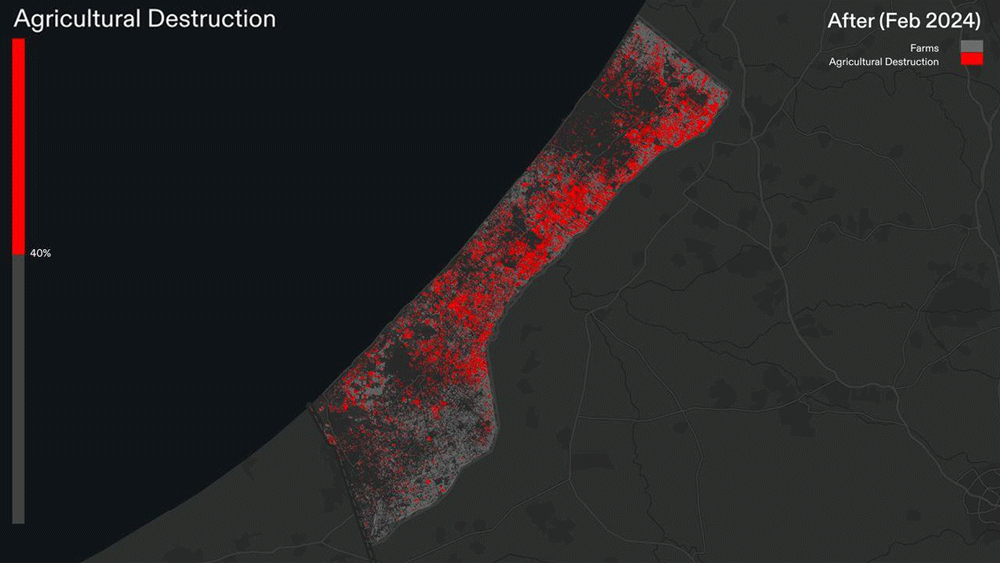
Figure 4. Forensic Architecture, Ecocide 6 – press pack, 2024, digital image. https://www.dropbox.com/scl/fo/k4lrc3dwey3aruqip5pdn/AL_e5CHiKKSThWul3cyRYQE/Images?dl=0&preview=Ecocide_2.jpg&rlk
In the short film Israel’s Ecocide in Gaza: 2023–2024, Abu Suffiyeh comments regarding the olive, pomegranate and citrus orchards that were flourishing on his farm: “There is almost nothing to recognise there. No traces of the land we knew. They totally erased it… There is no life there” (Ain Media Gaza, 0:08). The aerial photograph shows the systematic targeting of greenhouses by Israeli ground invasions as of February 2024. Since then, the continued onslaught by the Israeli military has utterly destroyed Gaza’s ability to feed itself.
The glitch is the potential site of ghostly liberation, an accidental deviation from the normal that highlights, makes apparent “infrastructural breakdown [and]… conditions of disrupted jurisdiction” (Berlant, 2016, p.394), turning us to an absence, a gap, towards a lack of acknowledgment of relentless violence across time. What ghostly and material presences continue to make themselves known that cannot be suppressed?
The Nakba (Figure 5) is a psychic force that continues to shadow the present. Arabic for ‘catastrophe’, the Nakba names the mass displacement of the Palestinians in 1948; it is a rupture that continues to reverberate through land, memory, and matter. And while Gaza’s skies are haunted by the ghosts of history and the buzzing of the drones, the ground itself – the rubble, the dust – seems still, yet it stirs. Matter moves in a “lively interplay of bodies, forces, and flows” (Bennett, 2009, p.3), a quiet persistence that resists disappearance. In Gaza, the ruins remember. Such remembering marks another kind of rupture – one that opens, however painfully, towards the possibility of relation and witness.
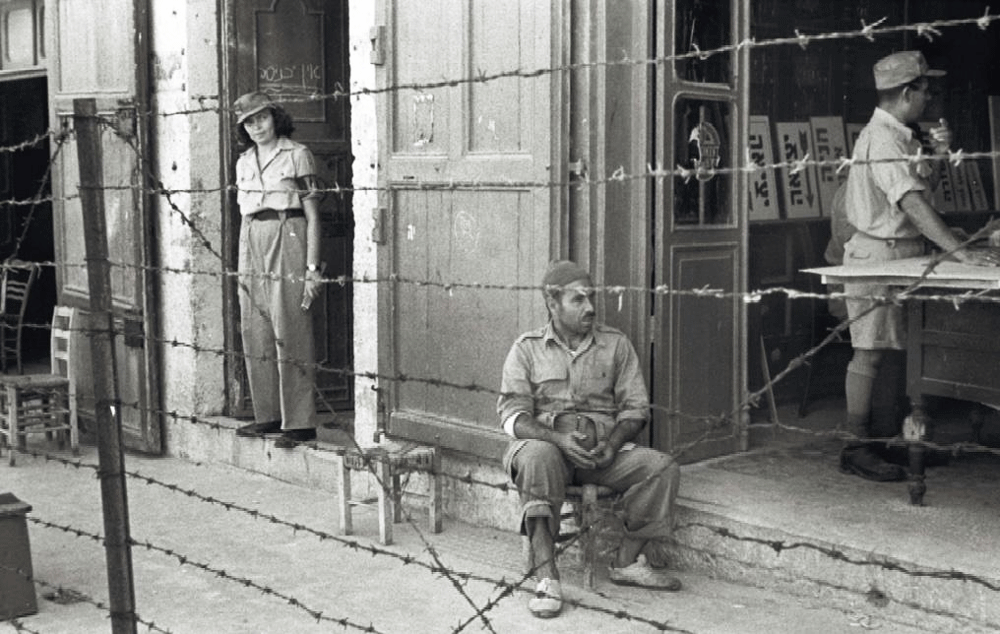
Figure 5. Barbed-wire marking the limits of the area designated for Arabs in Jaffa, 1948, photograph. Israel Defense Forces and Defense Establishment Archive, via Wikimedia Commons. https://w.wiki/_oK2Y
The photograph is not neutral; it belongs to the archive’s machinery, a record shaped by the same systems of control it seeks to reveal. The archive serves as a structured repository of documents and artefacts selected for their cultural value and significance. The archive is always biased (Figure 6). The archive is always incomplete. The archive is often precarious. The anarchive, by contrast, is what leaks and lingers – a restless current of fragments and gestures that slip through the seams of official history. Anarchive refers not to what is stored, but what continues to move; it is an ongoing process of relation and return.

Figure 6. Tatjana Jansen, October 7th, 2023, mixed media, 297 × 420mm.
Moved by an affective surplus (Manning, 2013), I go into my studio and paint. The gesture spills beyond intention as colour carries what cannot be named. As I stay with the ghostly and the silences that haunt (and escape) the archive, an entangled trace shaped by matter, memory, and loss emerges.
[What remains of the sea in the image, what light in the ash?
Turner’s waves burn gold as Gaza’s dust murmurs.
The archive cannot hold such motion; its walls are too parched.
In the studio, colour spills – no comfortable resting place.
The ruins hum with what is (never) finished.
Something stirs here. The scent of ash, the taste of salt.
It is the trace of what still moves (beneath).]
This small rupture between image and word opens towards glitch as an ethic of care: a practice of what exceeds form, what still trembles at the edges of recognition.
Clinical reverberations: CAT in the margins and what refuses to go away
CAT practitioners understand that the modes of expression can be “poetic, surreal, coded” (Gordon, 2018, p.98) to protect the client/artist. This can operate on the level of extreme traumas like forced disappearance and cultural erasure as well as chronic interpersonal traumas, where the social, ecological, and political environment actively suppresses disclosure (sometimes even from the self).
In the visual arts, examples may include fragmented bodies, distortion and absence (of hands, eyes, mouths, etc.), and obsessive repetition across the arts (i.e., visual, gestures, spontaneous and improvisatory re-enactments, the creation of dystopian worlds, etc.). In play, stories may emerge with distance to theme (i.e., precarious landscapes, volcanoes that can explode at any given moment, etc.). CAT practitioners work with clients in ways that honour the silences and gaps, and in cases where it is too dangerous to work theme-close (direct, focused), we stay theme-far (symbolic, metaphorical) (Knill & Eberhart, 2023). We follow our clients’ creative processes and respond with flexibility and attunement to what is emergent in the moment. And what escapes the order of discourse is the unconscious, the embodied. This embodied field is never singular. It folds within the porous ecotones of relation, between human and more-than-human, psyche and world.
Interim reflections on collective trauma and glitchy, archival repair
Archival stories can enter the therapy space if we orient towards them: revenants of past traumas, some oral histories known, others lost yet working their way down generations through epigenetic traces, even when nation-states have repeatedly attempted to erase or destroy material evidence. Glitchy disruptions are more likely to occur now in the digital era, where traumas and atrocities become harder to hide and silences can no longer contain them. In clinical supervision, one of my students is working with mothers and children in Gaza, where digital infrastructure – including digital and cellular internet access – is heavily restricted. Yet, even within these constraints, small acts of resistance persist; bodies remain visible, gestures circulate, imagination flickers.
War robs people of imaginative space – it becomes an underprivileged territory.
[And in my weekly work with women in Gaza, another window opens, another small trembling of possibility across dust and distance and the fragile threads of connection.
Since beginning to meet online with this small group, I’ve felt how fragile imaginative space becomes when the ground keeps breaking beneath them. I had offered a simple provocation, adapted from Thich Nhat Hanh’s A Handful of Quiet: Happiness in Four Pebbles (2012), for them to use with the children in a classroom setting: an invitation to imagine “calm like water.” At our next debrief, the women shared one child’s response, a seven-year-old girl who laughed, almost sing-songed, “The ocean has emptied out. There is no more water.” A bright voice carrying a truth too heavy for words – metaphor bending toward the material fact that water itself is now a scarcity.]
But within the glitch, imagination slips through the dust and signal loss, reconfiguring what can be seen or said when speech is surveilled and dangerous.
Such ruptures remind us that “[g]litch is the evidence that control is never complete… The glitch comes as a small revenge” (Cubitt, 2017, p.21). In CAT, the glitchy therapeutic spaces we occupy can open up possibilities for the expressions and reverberations of our clients’ fugitive imaginations. We play with the stories, as they move in and out of the archive, shifting each telling and retelling. Recognising and naming occur through archival structures, while therapeutic repair unfolds as an embodied and emergent process – the anarchive – where fragments, gestures, and affects begin to reconfigure meaning.
Constellation two: Gendered silencing
In the second constellation, I explore silencing through patriarchal systems, interrupted through medical and material glitches. The photographs of Augustine Gleizes leak more than they contain despite institutionalised attempts to catalogue her ‘hysteria’, while historical artefacts like the scold’s bridle literalise the silencing. Ethical questions abound for the creative arts therapist, especially relating to voice and power. As we navigate between hope and despair, glitch does not repair but calls for care-full witnessing, for holding what resists being named or restored. (And holding) what escapes.
Augustine’s image, repeatedly staged and photographed by Charcot at the Salpêtrière asylum, becomes an archive of containment, a choreography of possession, pain, and the medical gaze. Yet, within these images, something exceeds the frame – a twitch, a gesture that refuses to comply. This excess, this tremor at the edge of the image, is the glitch. It opens a minor space of agency within spectacle. In this sense, the photograph is not just a record, but a remainder, a haunted site where silencing and resistance coexist.
The photographs of Augustine Gleizes – Medical taxonomy vs exuberant surplus
“Haunting, in the specific way I used the term… is an animated state in which a repressed or unresolved social violence is making itself known, sometimes directly, sometimes not… it alters the experience of being in linear time…” (Gordon et al., 2020, p.339). Gordon, in conversation with Hite and Jara (Gordon et al., 2020), explains what she meant by the terms ‘ghost’ and ‘haunting’ – how we are called upon because these clamorous ghosts demand our attention through their exile, longing, their refusal to be denied and to settle into the past. Even as we step over the abject bodies, their ghosts continue to unsettle us. These are ghosts shaped by the violent forces that made them. Gordon (2008) detours into the field of psychoanalysis, tracking the mysterious ghostly absence of Sabina Spielrein from a photograph, concluding that “sociology needs a way of grappling with what it represses, haunting, and psychoanalysis needs a way of grappling with what it represses, society” (2008, p.60).
[The other(s) keep breaking and glitching through, making themselves known, despite efforts to repress them. Like a game of Whack-a-Mole – and of course, Spielrein’s name contains the word ‘spiel’, which translates from German to ‘play’ – repression of the colonised is an endless task. There is no way to stop it… such is the failure of psychoanalysis to “even reflect upon its role in structuring a discursive field where history like the woman does not exist, but the hysteric, who after all, was the inventor of the ‘talking cure’ repeatedly points to this lack” (Isaak, 1991, p.352). And in my own case, it was not a photograph that had its hold on me but a book (Figure 7), written by Gilbert and Gubar (2000). It prompted me to return to Jane Eyre (1846) and I became obsessed with Bertha, the (voiceless) archetypal madwoman in the attic.
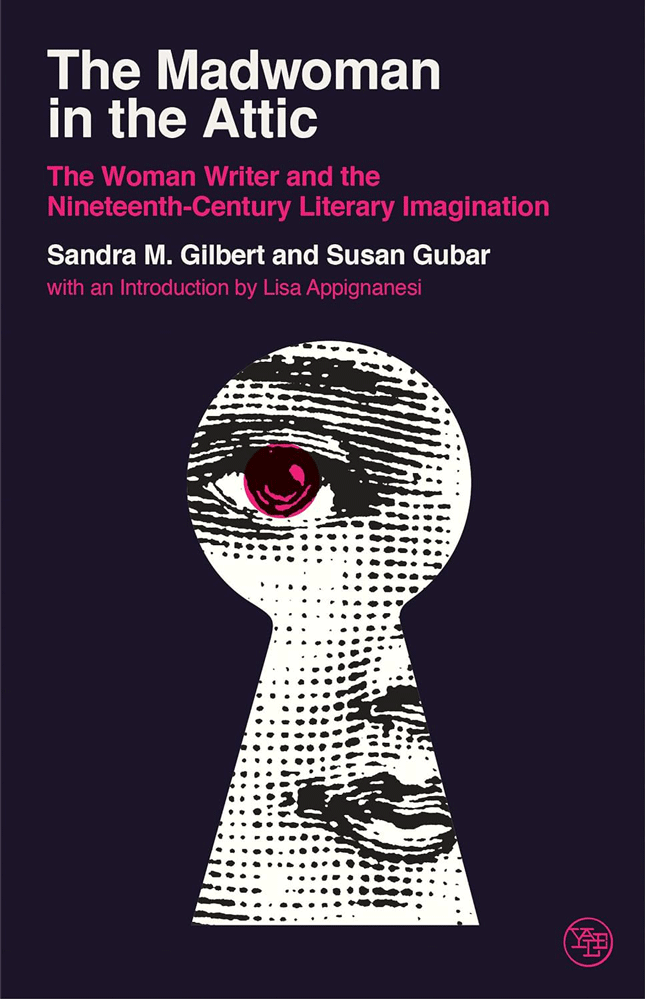
Figure 7. J. Cropp, Cover design for The Madwoman in the Attic, 2020, photograph. https://yalebooks.yale.edu/book/9780300246728/the-madwoman-in-the-attic/
Bertha was later fleshed out in Wide Sargasso Sea (Rhys, 1966), re-imagined as a Creole heiress, Antoinette Conway (Bertha of course, a more respectable – read British – name). I think of the madwoman as a fierce feminist symbol, a rebellious body who disrupted ideas of gender, sexuality, race, as well as my own literary and (future) therapeutic imagination.]
In the 1870s, more than 30 years before Spielrein was psychoanalysed by Freud, the neurologist Charcot had photographs of his patients taken, among them a woman named Augustine Gleizes (Figure 8). Charcot’s ‘medical pinups’ (Hustvedt, 2011a) from the Salpêtrière asylum in Paris show the diagnosed ‘hysteric’ in the first frame – titled Ecstasy – with her arms raised and hospital gown slipping off her shoulder (were these frozen, performative, or captured images?). Amongst other traumas she endured, Augustine disclosed that she had been sexually assaulted at 13 (Hustvedt, 2011b). We do not know much about the photographs themselves, and it would be too simplistic to cast Charcot as a villain here; he recognised the human suffering of the asylum in which he worked, a repository for the unwanted and those deemed incurable.
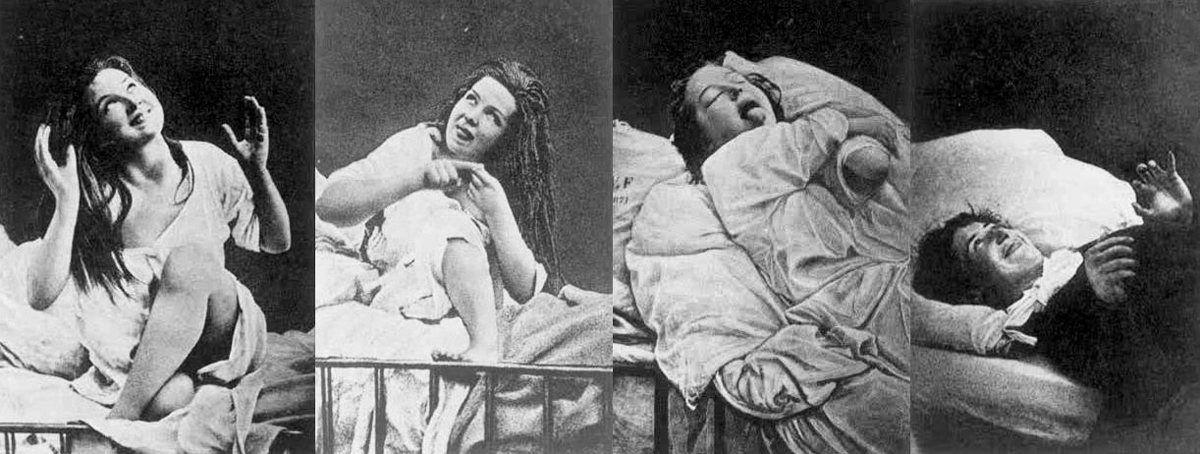
Figure 8. D.M. Bourneville and P. Régnard. Augustine, 1876–1880, photograph. https://commons.wikimedia.org/wiki/File:Hysteria.jpg

Hysteria for Charcot was a neurological disorder, versus madness, a diagnosis that hovered on the borderlands of somatic and psychosomatic disorders. There were eventually three volumes of photographs collected (Hustvedt, 2011b), the images moving beyond their visual iterations and into poietic responses and critical discourse. “The photographs in the Iconographie haunt its pages, the ghosts of women who refuse to be reduced to medical illustrations” (para.23). As Hustvedt suggests, the photographs resemble ghosts in that they are not-quite-dead.
To live, perhaps, means to haunt and be haunted – to exist within the in-between, where what has been silenced continues to move through us. Augustine operates as a photographic ghostly glitch, evidence of an other(ed) subject. Her story predates the origins of psychoanalysis and Freud’s arrival at the Salpêtrière in 1885; like trains of thought moving in different directions, Freud’s encounter with Charcot set the stage for his shift from neurology to psychology, train tracks briefly coming together, then parting again. And in the archives of psychoanalysis, we see a social script that pathologised, commodified, and consumed gendered (as well as queer and racialised) bodies.
[I want to break and enter into this world of shadow, land of the not-yet-lost, slide across its edges, and allow myself to be temporarily carried away by the flux of time… to listen to the ghosts and to bear the hollowed-out spaces of their passing. Time has already slipped through them (Figure 9), moments upon moments that have blossomed and fluttered away, evasive and light. Not lost to the ether, but lodged beneath it, where memory and the unsaid can still find their shape.]
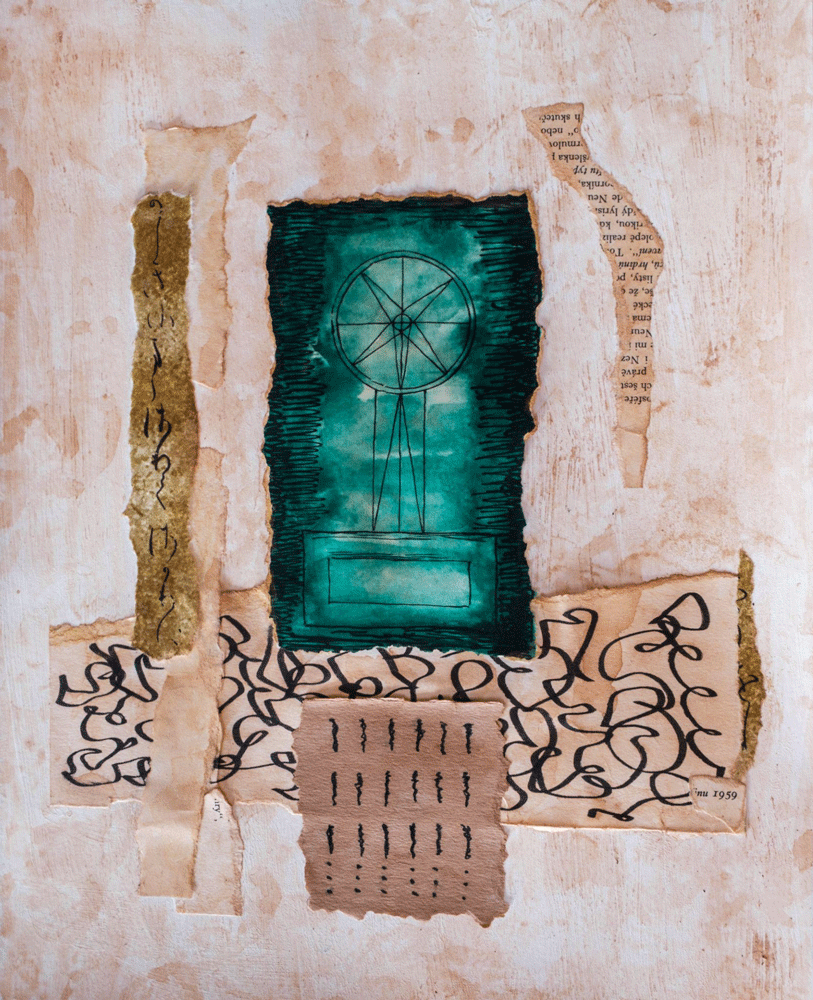
Figure 9. Tatjana Jansen, Ghostly impressions in the archive, 2024, collage, 420 × 297mm.
Russell, in her book Glitch Feminism: A Manifesto (2020), suggests that “to be recognized as a body that deserves to live, we must perform a certain self” (p.147). To refuse to do so trips the wires of what is enforced upon us; thus, we move to the spaces of the in-between (for example, a refusal of the gender binary), as sometimes our very survival depends on it; we glitch the system with our unruliness, our refusal to become the body that is marketed to us, defines, and confines us. According to Russell, glitch holds the power to subvert. It emerges when we navigate liminal spaces of the internet where we can network our shared resistance. “What is a body, therefore?” (p.67), she inquires, with ghosting a process through which we exit the economy of gender. Ghosting here is a kind of voluntary leave-taking or disappearance from a society where gender, race, and class operate as constructs rooted in colonial histories. In this way, glitch can be understood as a posthuman strategy of resistance, one that unsettles the borders of the human by revealing how bodies are already hybrid, interlaced with technology, affect, and history. It gestures towards a mode of becoming, moving through porous thresholds of identity and materiality. In doing so, glitch, like the ghost, signals the return of what has been erased or disavowed. Both mark the persistence of what refuses to disappear. Glitch is the digital eruption of ‘otherness’ – “a break from the system, a scream, a refusal to be silent” (Russell, 2020, p.11). For Gordon (as cited in Bhandar & Ziadah, 2020), the ghost is a real presence demanding its due. “Haunting and the appearance of spectres or ghosts is one way… we’re notified that what’s been suppressed… is very much alive and present… interfering precisely with those always-incomplete forms of containment and repression ceaselessly directed towards us” (para.10).
The scold’s bridle – material history of muzzling dissent
I first encountered the scold’s bridle (Figure 10) in a crime fiction novel by Walters (1994). This artefact – also called the witch’s bridle – was used for the most part on women to torture, silence, muzzle, and humiliate them. Sometimes women were leashed and walked by their husbands to bring them to heel. Most bridles had a flat piece of iron projected inwards meant to press the tongue down so it could not move.
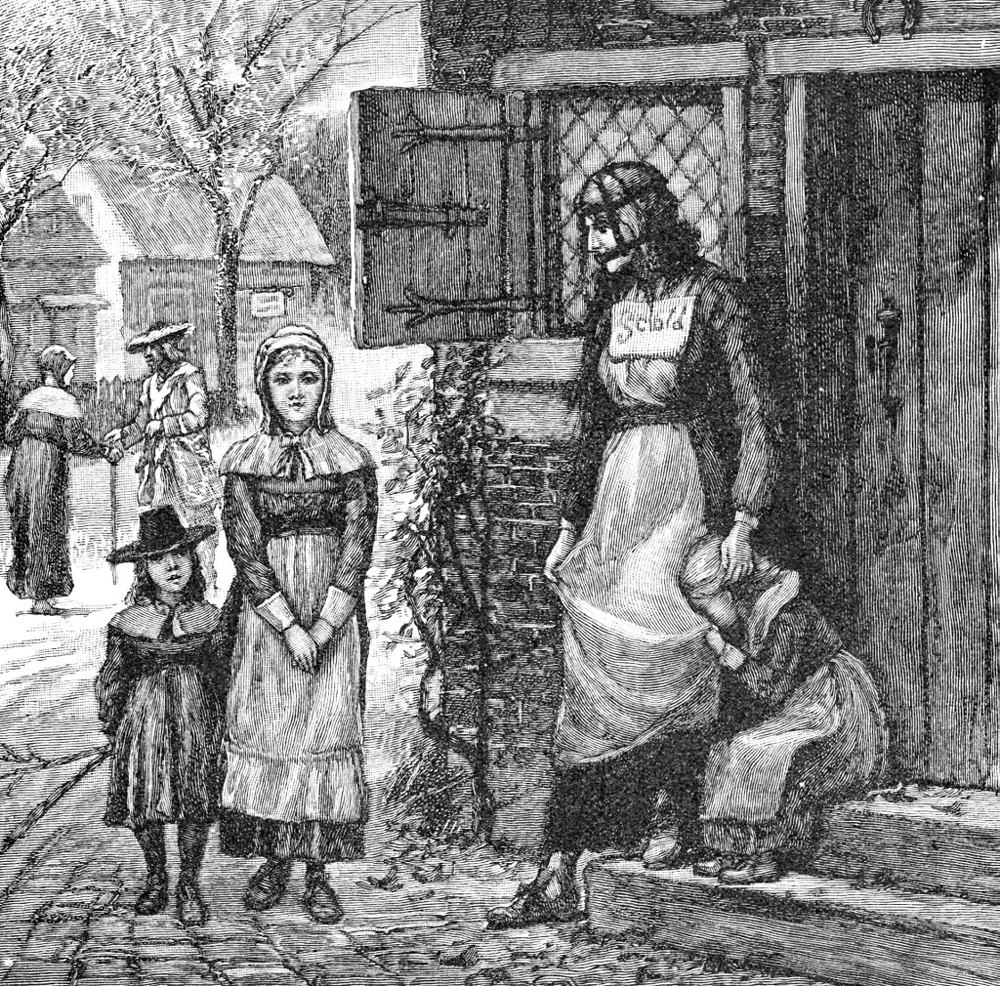
Figure 10. Bridle training device for women, 1885, lithograph. https://www.thevintagenews.com/2017/12/15/scolds-bridle/
[And here we have the potential origins of the expression ‘hold your tongue’ – perhaps a soupçon of improvement to poor Philomena of Greek mythology who had her tongue cut out to prevent her from speaking of the rape by her brother-in-law. She had her revenge, however, weaving a tapestry, the trauma story woven back in. What a glitchy moment indeed, the glitch not just computational, but as Russell observes, able to operate as an institutional (in this case, familial) structural break. Menkman (2011), in her glitch studies manifesto writes, “[t]he glitch is a wonderful experience of an interruption that shifts an object away from its ordinary form and discourse… But somewhere within the destructed forms of meaning, hope [may] exist… a triumphal sensation… more than just devastation” (pp.340–341). Philomena’s (singing) voice was returned to her when she was transformed into a nightingale, a bird known for what the poet Keats described as its haunting, immortal lament. Voice isn’t just a metaphor or concept of the self; it operates as a physical reality.]
The scold’s bridle serves as a reminder of gendered patterns of abuse; it speaks to the history of women’s oppression, rendered gagged and (at least partially) silenced. These are not natural silences, as Olsen (2003) writes, “…that necessary time for renewal, lying fallow, gestation, in the natural cycle of creation. The silences I speak of here are unnatural: the unnatural thwarting of what struggles to come into being, but cannot” (p.12). There are easier ways to silence others, particularly within the context of families – a whispered, “Don’t tell anyone” – a threat of greater harm to self (or others) is enough for those who have been abused to hold their tongue. Patterns are established in the form of stories and we expect them to recur… and, indeed, they do.
Embodied glitches in studio work
If glitch marks the site where systems falter, its reverberations are also felt in the body, in the studio and in the therapeutic space, when words fall away and unfinished gestures surface. Over the years, something that my therapist colleagues and I have encountered repeatedly in working with clients is how, by privileging multisensory and imaginal process work, experiences can emerge in image, gesture, etc., in completely unpredictable ways. As it relates in particular to childhood traumas that sit at the borders of a client’s memory – or perhaps are only felt and not fully graspable – an unbidden image can appear that will sometimes be too overwhelming. This may be for a variety of reasons, including not being resourced enough or living in precarious contexts. Combined with this, from a posthumanist vantage, materials figure as co‑constitutive agents rather than passive tools, offering their own qualities and resistances. Each pigment, sensor, or filament arrives with its own propensities, resistances, and rhythms, intra‑acting with the practitioner in a situated choreography of becoming. In CAT, inviting glitch means welcoming a generative stranger: its disruptive cadence unsettles the familiar and, in doing so, draws into view what had remained unseen.
Therapeutic stance: Balancing containment and permission
Turning toward the work of therapy also means attending to the conditions that hold it; this means attention to the balance between permission and containment that allows for rupture to unfold safely. In CAT, we stay in the imaginal and affective realm (E. Levine, 2004): “[t]he world of metaphors and images does not literally correspond to the real world… We play with these images, keeping them fresh and multidimensional” (p.181). Ambiguity and unpredictability in the play are core to the process, but this also means that the balancing of containment with ethics is a tightrope walk – where balance determines whether the therapeutic space becomes one of liberatory potential or unmoored risk. Ghosts always need to be conjured with care. As creative arts therapists, working with glitch demands our vigilance, as ruptures carry the possibility to be reparative or retraumatising. This ethical attentiveness becomes the threshold for practice, guiding how we meet glitch in the studio or therapy room, as sites of rupture and repair.
Constellation three: Improvisatory repair
In this final constellation, I turn to improvisation as a form of glitch-welcoming. Repetition and micromovements open the field of potential. In CAT, we engage with the half-formed thing versus the complete – attuned to what is moving in the moment.
Hauntings are not only psychological, but material – unfolding through the shifting interplay of bodies, objects, and atmospheres. Within this view, materials and forces are never passive; clay pushes back on the sculptor’s hand, while gravity and breath quietly choreograph the dancer’s movement. Such encounters remind us that creative process is never solitary but always relational – an intra-active field of motion and meaning (Barad, 2007; Bennett, 2009). In improvisation, this becomes a dialogue with matter itself, a poietic conversation where gesture, memory, and material co-compose repair. The body, like the artwork, listens and trembles, porous to what exceeds intention – entangled, responsive, alive.
Through repetition and engagement, glitch softens its sense of estrangement, becoming a space where what was once muted begins to tremble back into motion. Repetition moves within an anarchival current – a tide of fragments and gestures that refuse to rest, carrying traces of what was and what is still becoming.
Insistent repetition (and difference)
Stephen K. Levine, in ‘Expecting the unexpected: Improvisation in art-based research’, addresses the art of performance and the unexpected element, where “…someone falls down or a technical glitch occurs. Clowns call this a ‘gift from the gods,’ since it challenges us to be truly spontaneous in the moment without having prepared our response in advance” (2013, p.26). In research and in any arts-based response, Levine inquires, “How can we build upon what we know and still discover something new?” (p.26).
[I re-turn to an image (Figure 11) from ten years ago that was part of my dissertation research, a material “reading” of my life backwards. Figure 10 is a cut-up of the original image, companion to what I was writing about: mourning, trauma and the arts – themes that repeat for me (but are never quite the same).
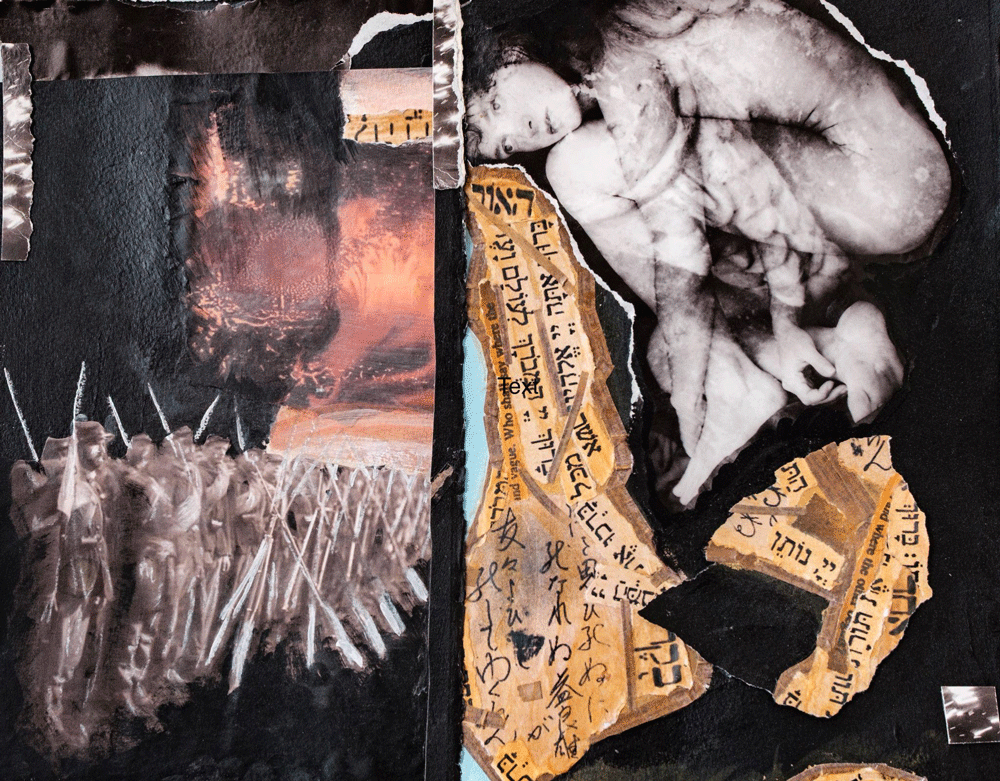
Figure 11. Tatjana Jansen, Grief and anger, twin companions, 2025, collage, 285 × 375mm.
A wound gives off its own light
surgeons say.
If all the lamps in the house were turned out
you could dress this wound
by what shines from it. (Carson, 2001, p.5)
I tear the image apart, salvaging what to include in this rendition; I tear and cut, tear and cut, tear and cut, the first cuts feeling like an assault on the much larger painting (that was). Eventually, I find my rhythm in the repetition; my emotions begin to shift, as I stay with this current piece, my attention held by it.]
When we are engaged in research, we do not return to what is known, but move through repetition as a creative act. As Deleuze (1994) argues, repetition is not the same, but the becoming of difference. Each occurrence reshapes the past and opens the future. To improvise in the Deleuzian sense is not about spontaneity alone, but to enter into the process of becoming. In the arts, we work with what arrives – summoning the other (and others) into relational intraplay, where meaning unfolds in the making (Fredriksen & Haukeland, 2023). Author Winterson (2011) has described words as living things (versus words for things), while philosopher Watts (1989) says that words are like organisms. This brings us back to Barad (2007), who sees words and things as entangled, with agency emerging through their relations rather than residing in isolated entities, stressing the more-than-human aspect of agency, such material or matter is not inert (Bennett, 2009). Matter is the “ever-hooded, tragic-gestured sea” of Stevens (1936), while for Ó Tuama (2023), “poetry itself as gesture, is not full, or empty. It – like a poem – is a made-thing. Something small and made that continues to make; it does not change the past, but it tries to make something now. Maybe it’s a seed” (para.6).
In her investigation of why she paints thousands of circles (Figure 12), Moran (2024) accesses beneath-the-surface-consciousness through repetition, describing these submerged states as a way to “explore childhood fears and anxieties, primarily focussing on themes of abandonment and the fragility of underlying human conditions. Engaging in repetitive tasks means that the mind is no longer concerned with physicality” (para.54). Her mind settles into stillness, transitioning from thought to embodied action.
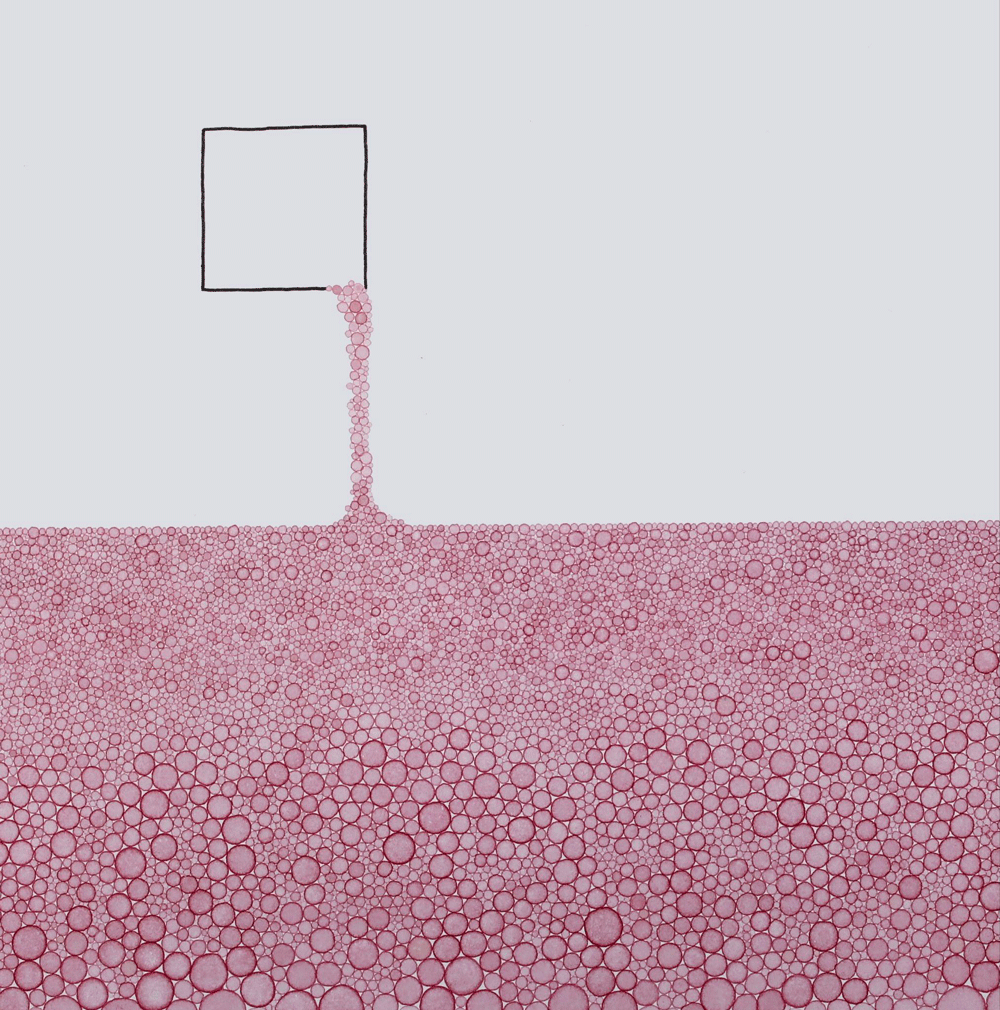
Figure 12. Leanna Moran, Window, 2016, watercolour, pen on paper, 150mm × 150mm. Reprinted with permission.
The role of repetition is something that researchers like Perry (2006), a child psychiatrist and expert in neurodevelopment, explore, with patterned, repetitive experiences described as essential for growth and change. Memory itself can also be a glitchy, nonlinear line, our powers of suppression evidenced in glitchy recollections of trauma, stories breaking through as “micro-stories, slips of the tongue, pulsating words, minor figures” (Soreanu & Minozzo, 2024, p.325). When we lean into these repetitions, we are turning towards what was previously woven out of our stories, now given a kinaesthetic and visual makeup.
Glitch in movement(s): Minor gestures and responses
Manning (2016) emphasises the vitality of the minor gesture within creative processes, as “the activator, the carrier… [it] invents new modes of life-living… creating a pulse, opening the way for new tendencies to emerge, and in the resonances that are awakened, potential for difference looms” (pp.8–9). Attuned to these pulses of emergence, the minor gesture invites sensitivity to variation and relational movement, foregrounding the subtle shifts through which experience takes form. A micromovement of difference – such as the stutter, the pause, the subtle tremor – opens up alternative modes of knowing and becoming, echoing the generative potential that glitching offers. Building on this, minor gestures and movements embody a glitch aesthetic within therapeutic practices. Such subtle interventions disrupt habitual patterns, activating new trajectories for expression and highlighting the dynamic inter/intraplay between individuals and their environments. Manning’s (2016) concept of “thought in the act” deepens this perspective, emphasising a dynamic process of creation and experimentation. Here, movement and minor gestures become essential elements of an ongoing, emergent process of knowledge production (and within the context of CAT, knowledge as self-knowledge, and the artfulness of shaping and making as inseparably entwined).
[Trace One from the archives (Figure 13) is a demonstration image, featuring Charcot lecturing his students on the topic of hysteria. I delight in the improvisatory nature of Marie Wittman, Salpêtrière’s other star patient, dubbed ‘Queen of the Hysterics’ (Didi-Huberman, 2003). Charcot employed medical and electrical metaphors to explain the nervous system, with an interruption, break, or ‘lesion’ impeding the flow of nervous currents; he theorised that a single traumatic event created a lesion that could short-circuit – glitch – the system (Didi-Huberman, 2003; Goetz, 2000).
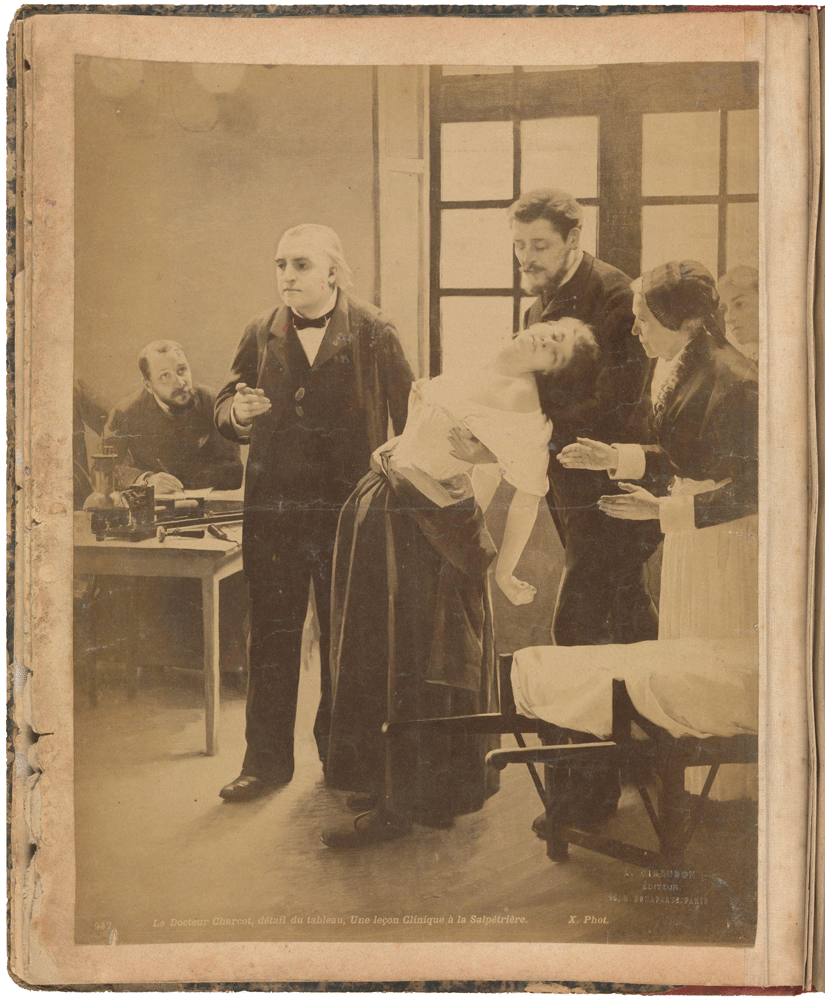
Figure 13. L. Igout, Album d'études – poses, 1880, lithograph. Retrieved from https://w.wiki/_oKyW
Wittman’s movements can be situated within Manning’s minor gestures as well as the framework for CAT; while Wittman’s body was subject to Charcot’s categorisations and medical spectacle, her gestures can be read as improvisations that overflow the scene of control, what Manning (2009) refers to as improvisational excess: movements that exceed intention, carrying the trace of relation and resistance. And in the case of constricted movements, how might Wittman’s performance(s) of hysteria have been read as an embodied acknowledgment of its affective power – a manipulation of the system by Wittman (and Gleizes), even as they were confined by it (Showalter, 1985)?
Trace Two is fabric as testimony (Figure 14) to the violent character of archival memory. Lorina Bulwer was incarcerated in what was described as the female lunatic ward of Great Yarmouth Workhouse in England for 17 years (Sen, 2024). While confined, she needleworked textile scrolls, some of which were 12 to 18 feet in length.
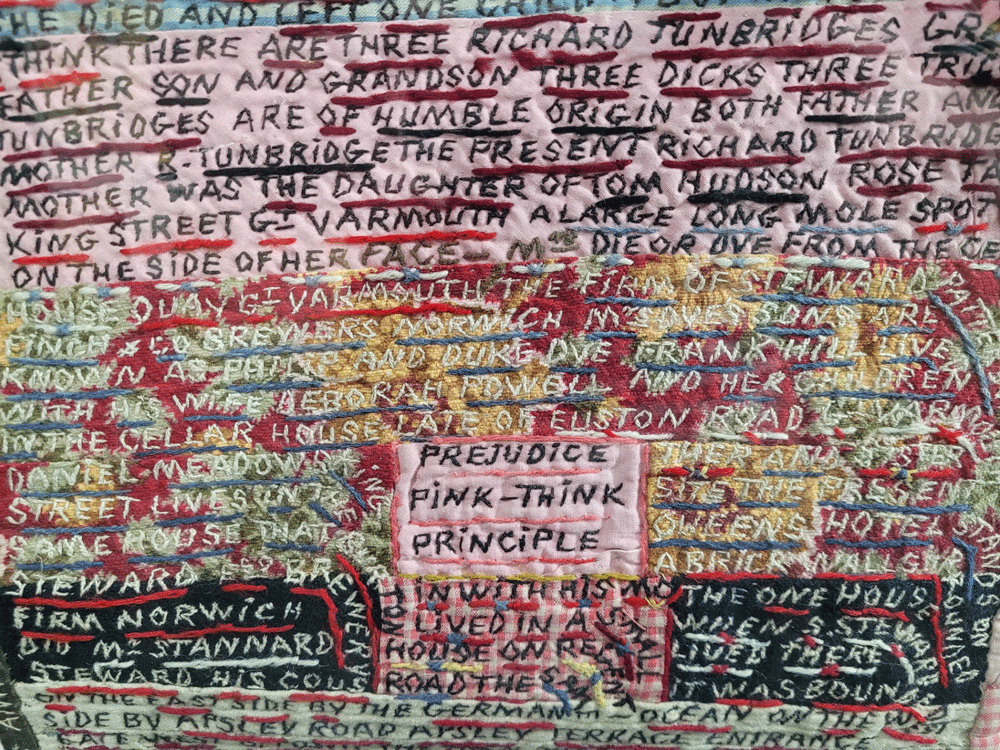
Figure 14. L. Bulwer, Needlework sampler, late 19th century, textile work. Retrieved from https://w.wiki/_oKGg
I see Bulwer’s labour of embroidery as minor gestures (despite their dimensions!), persistent forms of speech – reappropriated from feminine domesticity into a frantic channel of self-expression. And in the repetition of names, phrases, and grievances, an endless litany against the violence she encountered and attempts to silence her. Bulwer’s textile works burst out of the medicalised and social margins, generating an aesthetic, affective rupture: a fugitive poetics and ghostly insistence to reclaim agency.]
The gestures traced above move between what breaks and begins again, between rupture and reformation. Carrying this motion into the social field, Berardi’s writing (2024) offers a way to think about how connection slips and stirs back to life.
Desertion vs poetic reactivation of the social body: Berardi
This constellation turns to a slower, collective register, toward what happens when connection itself falters. Berardi’s notion of desertion names this psychic and social withdrawal; his idea of poetic reactivation gestures to how affect and imagination might stir again, within culture as well as the therapeutic encounter.
What causes us to fall apart/unravel? What holds us together? In the context of therapy, we slingshot back to some of these questions again and again, as clients come to us wondering at times if what they are experiencing, within and without, is irreparable, undoable. What enables us to live in a way that feels life-sustaining? What can we do to move us through such events/moments? Is there a ‘through’? Time is split into befores and afters of traumatic events, and unless the ground lies dormant like the winter of our grief – broken chrysalis, barren landscapes – the fact that the cherry blossoms may be exploding in a riot and burst of colour does not fit in the after we now inhabit. Or perhaps it is not the agony of a decimating trauma, but a slow seepage of disconnection with/from ourselves, others, and the world we inhabit. Berardi (2024) traces this to the latter part of the 20th century, where we saw the political promise of a better world receding (Figure 15), in part as a result of the ongoing defeats of liberatory movements, moving through “the era of sad passions” (p.84) and into the digital age. Happiness and connectivity seem increasingly elusive, this leak beginning to flatten and numb affect (his argument being that, particularly in youth, the result is not so much depression, but desertion in the form of withdrawal of psychological energy).
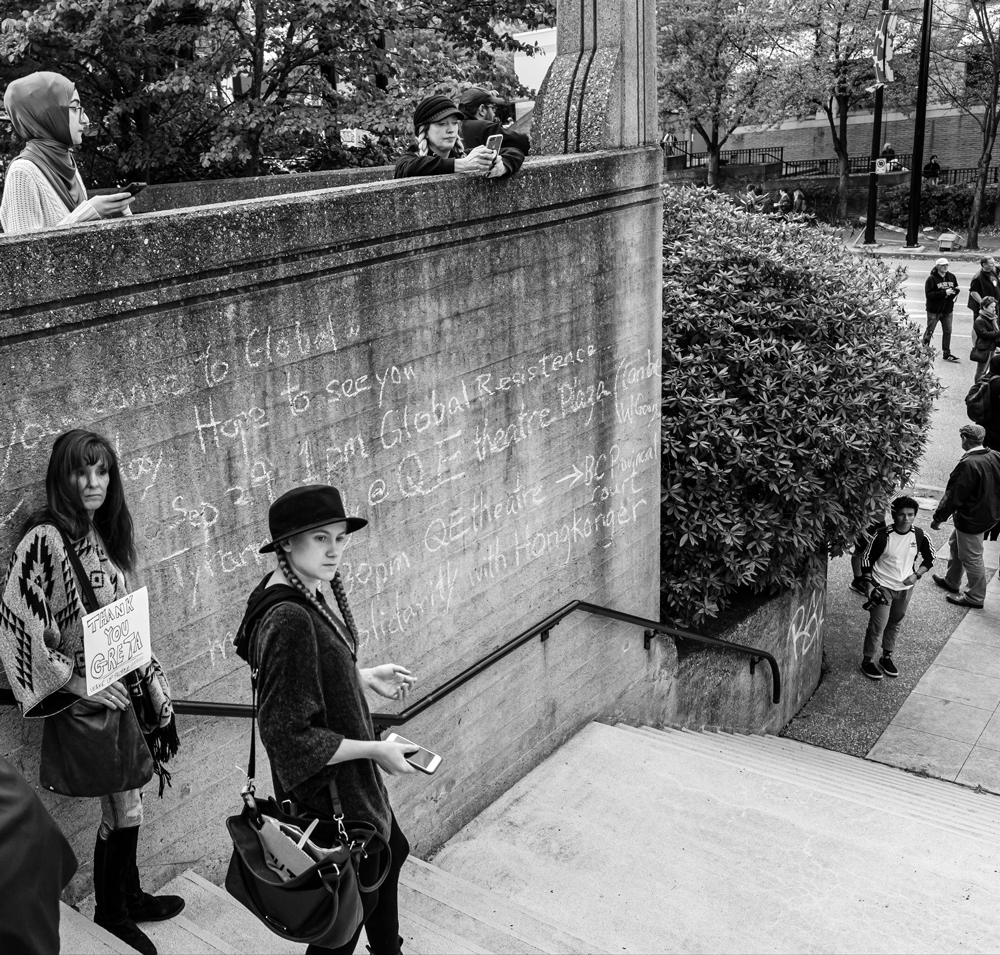
Figure 15. Steve Sakai, Thank you Greta, 2019, photograph, 270 × 350mm. Reprinted with permission.
If desertion is the rupture, reactivation is the possibility of what can follow – desertion is reactivation’s necessary prequel, a withdrawal from capitalist meaning-making and a refusal to perform normative roles. In glitch feminism, desertion unfolds digitally in the refusal of dominant codes of race, gender, and sex. Glitch, desertion, and reactivation – all create a pause in patriarchal and capitalist systems of control. “Poetry is the here and now of the voice, of the body, and of the word, sensuously giving birth to meaning” (Berardi, 2012, p.21). The goal then is to resensitise communication and reignite – poetically reactivate – the social body, which has been deactivated under neoliberal logics.
For CAT practitioners, poiesis is about being with the other, versus producing knowledge of the other (Game & Metcalfe, 1996). Both poetic reactivation and CAT are rooted in processes of relational awakening, creative gestures that resist psychic and social anaesthesia. In CAT sessions, clients are gently shifted away from habitual patterns; the arts open up a space for slowed attention, where the pause becomes a glitchy moment of aesthetic arrest. In this way, poiesis is both an aesthetic and ethical gesture of care, one that makes room for rupture, imagination, and co-presence. Similar to what Berardi articulates, poiesis resists capitalist utility; it is a form of expression that revives felt experience and restores a sense of being-together in shared time.
Summary of improvisation principles for clinicians
In CAT, improvisation is an aesthetic and ethical form of care, a poietic act (S. Levine, 2013); as clinicians, we don’t follow a script, as this can be bound up in goals of ‘fixing’ and production versus co-creation and presence. Instead, we practise aesthetic responsibility – to move with what stirs rather than control what emerges (S.K. Levine, 2013).
Poiesis works between human and non-human agents; the therapeutic process is never just between the client and therapist. To improvise means to pay attention to the materials, colours, sounds, space, etc., in shaping the unfolding of meaning; it is a shared act with a rolling crayon, a torn piece of fabric, resistance of oil pastels on textured paper, the acoustic patterns of a soundscape – each of these (and more) can initiate an emotional shift or a movement before articulation becomes possible. These non-human elements co-compose the therapeutic moment when we are ecologically attentive; we research through the materials, minor gestures arising from our response with/to the non-human. This is a co-creative encounter, where ethics and aesthetics are inseparable. Creative expression arises not in isolation, but in the intra-active ecologies of mind, environment, and society (Barad, 2007). Barad’s concept of intra-action describes how agency and meaning emerge through relations rather than within separate entities; human and non-human co-constitute one another within these entangled processes. A creaking floorboard, the warmth of the spotlight, these minor gestures participate in shaping how a body might move, feel, and respond (Figure 16). Each element contributes to an improvisational ecology where sensation, perception, and meaning take form together.
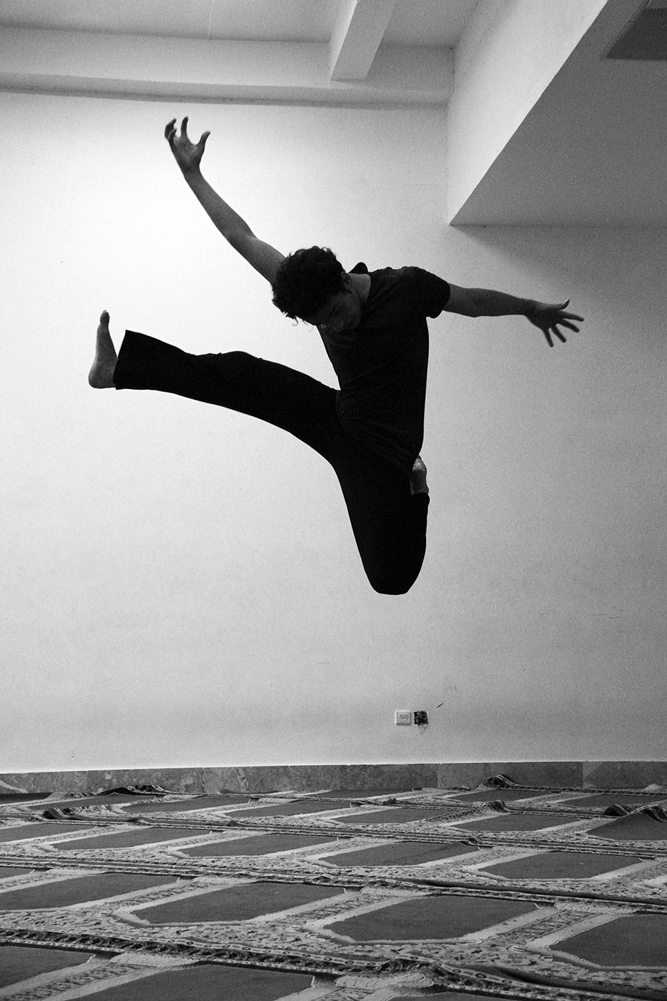
Figure 16. M. Meraji, Theatre Practice, Iran, 2012, photograph. https://w.wiki/_oGHx
Glitch aesthetics heightens our attention to the generative potential of the unknown. Minor gestures, ghostly micromovements, can reroute expectation, offering improvised pathways for feeling and relation. Our improvisations and joint choreographies become kinaesthetic gestures in a dynamic relational field.
Discussion: Toward a glitch‑attuned ethic of care
Therapeutic, institutional, and community practices shift when we begin to accommodate fragmentation and rupture as part of the process, not as something to be corrected. A glitch-attuned ethic of care embraces ambiguity, fragmentation, and instability, not as problems to be solved, but as conditions to be held with attentiveness. Improvisation in CAT models this kind of care, a presence that moves with rather than against the rupture. Care here is not about restoring coherence but staying with the break – what Haraway (2016) might call “staying with the trouble,” remaining with the messiness of what is unfinished – bearing witness, co-creating meaning, and allowing poetic reactivation to arise through shared vulnerability.
From symptom coherence to fragment literacy
CAT clinicians must become literate in the language of fragments – sudden shifts in media, unfinished, disjointed stories and torn images, stutters in gesture, etc. If, as therapists and clients, we move too quickly to coherence or closure, we risk foreclosing alternate ways of knowing, sensing, becoming. Fragment literacy involves an attunement to interruption, ambiguity, and rupture as meaningful in themselves. Glitch draws our attention to how interruptions make visible not just technological breakdowns, but also phenomenological fault lines that reveal alternative logics of perception and experiences.
[Recently I attended a performance by the dance theatre company Peeping Tom (https://www.peepingtom.be/en), in which the choreography disrupted movements with glitch-like effects: movements were rewound, looped, fast-forwarded, and abruptly stopped.
The sound of fear
scraping its nails.
along the edges
of a forgotten gesture –
breath caught
in the rewind
Bodies stuttered as fear (and perhaps memory) invaded the confined spaces. As audience members, we weren’t just watching trauma and conflict but were folded into its architecture – its ruptures, reverberations, and disorientations.]
Supervision and training that foreground micro‑breakdowns
In supervision, artistic and therapeutic holding is emphasised less as containment, but as co-regulated emergence. Students are encouraged to track what is felt and improvised in the context of CAT sessions, with the sensory and embodied, even when the material disorients or destabilises. Especially with newer clinicians, the language of directives gives way to provocations, inviting students to stay with disorientation and to cultivate capacities for uncertainty, responsiveness, and aesthetic sensitivity.
A glitch-attuned ethic of care in supervision resists traditional assessment models in therapy, where instability and ambiguity might otherwise be flagged as dysfunction. In CAT, these are signs of a client’s active engagement with complex material – material that may be entangled with animated objects, affective atmospheres, fictive imaginings, marginality, and traces of power’s presence. Rather than pathologising fragmentation, CAT clinicians are trained to co-create spaces where it can be held, witnessed, and worked with slowly, relationally, and creatively.
Institutional and material supports for safe glitching
From an integrative-relational perspective, safe glitching begins with the clinician. A glitch-attuned CAT practitioner becomes the pre-condition for co-creating spaces where rupture is not dangerous but invited – held with relational safety and artistic improvisation. This care is grounded in attentiveness, competence, responsiveness, and solidarity, which Tronto (1993; 2013) identifies as key ethical components of care. Solidarity here includes recognition of structural inequalities and collective entanglement that shape our therapeutic encounters. Here, care also aligns with what Barad (2007) calls response-ability, an ethical responsiveness arising from our mutual implication in these entanglements, rather than from distance or mastery.
From an institutional perspective, safe glitching necessitates a reckoning with the institutional shadows that haunt our practices, particularly those cast by diagnostic frameworks such as the Diagnostic and Statistical Manual of Mental Disorders, a means of locating pathology most often in marginalised groups (Ahmed, 2019). A glitch-attuned CAT therapist does not simply work within these structures, but actively refuses to uphold dominant narratives that foreclose multiplicity. This refusal, whether through queer, decolonial, disability, or justice-oriented frameworks, is itself an act of care.
Conclusion
Glitch, as traced across three constellations, is a haunting rupture – a spectral interruption through which suppressed histories, affects, and identities reappear and reconfigure meaning. Following Gordon (2008), such hauntings signal the unfinished business of injustice, reminding us that what has been repressed continues to act within the present. Through the anarchival drift of fragments and gestures, CAT practice attends to what persists beneath official narratives: the half-formed, the unfinished, the not-yet-articulated. In this light, creative work becomes an ethic of relation – a glitch-attuned care that moves with rather than against rupture: to stay with the break, bearing witness, co-creating meaning, and allowing poetic reactivation to arise through shared vulnerability.
For clinicians, this means cultivating fragment literacy and improvisational responsiveness; for supervision and training, shifting from corrective scripts toward attunement, to minor gestures and micro-breakdowns; and for institutions, creating conditions in which multiplicity is not pathologised, but held.
In CAT, glitch-attuned care becomes staying with the break, working with what stutters or resists resolution, and activating new forms of meaning that are partial, poietic, and alive. Glitch is not an error to be corrected, but a refusal – a feminist, queer, and decolonial disturbance in the system (Russell, 2020). This is not a care that restores order but one that remains with the unfinished; it listens to ghosts as the present wavers (Gordon, 2008) and holds space for fragments. CAT honours the glitch as portal (Figure 17), a minor gesture of interruption through which a liveable otherwise may begin to form.
“What is no longer there performs upon us and we perform on it. It bereaves us and we bereave it” (Mavor, 1995, p.4). We grieve for what is lost but also what was never allowed to be kept…
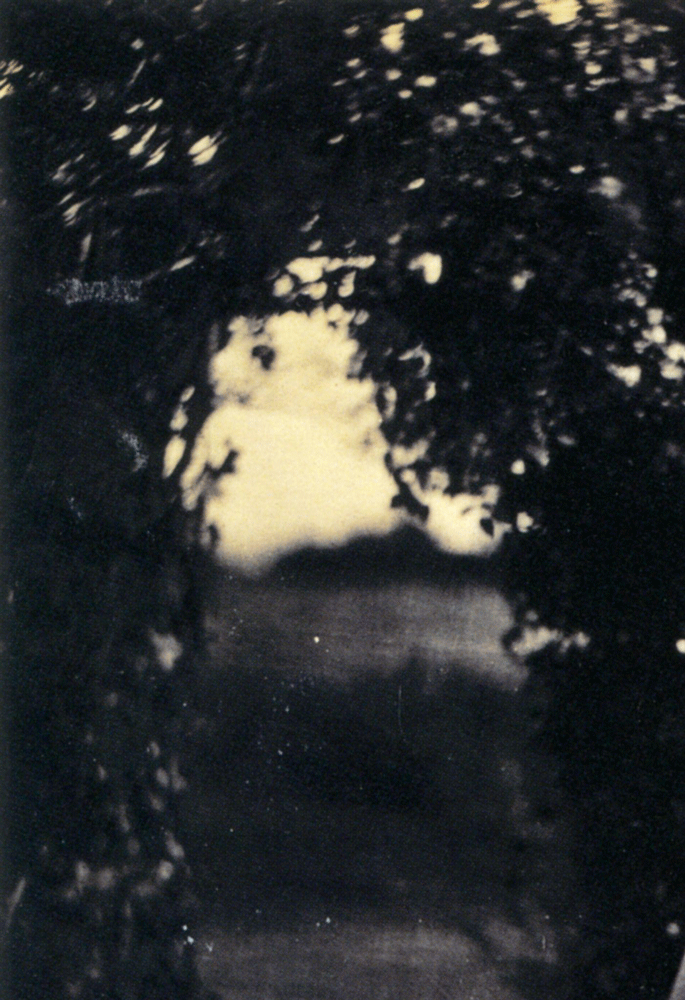
Figure 17. J.M. Cameron, The Gardener’s Daughter, 1867, edited photograph. https://w.wiki/EimL
I could not remember what I never knew
but through the margins.
and half-erased slips of paper,
something called.
Endnote
[1] In this article, creative arts therapies is used as an umbrella term for distinct arts-based disciplines such as art therapy, music therapy, dance/movement therapy, drama therapy, psychodrama, and poetry/bibliotherapy, whereas creative arts therapy refers here to intermodal or multimodal arts-based therapeutic practice. This latter usage overlaps with what expressive arts therapy literature more commonly names intermodal expressive arts therapy. [back to place]
References
Ahmed, S. (2019). What’s the use? On the uses of use. Duke University Press.
Ain Media Gaza. (2024). ‘No traces of life’: Israel’s ecocide in Gaza 2023–2024 [Video]. Forensic Architecture. https://forensic-architecture.org/investigation/ecocide-in-gaza
Barad, K. (2007). Meeting the universe halfway: Quantum physics and the entanglement of matter and meaning. Duke University Press.
Barbed-wire marking the limits of the area designated for Arabs in Jaffa. (1948). [Photograph]. Israel Defense Forces and Defense Establishment Archive. Wikimedia Commons. https://w.wiki/_oK2Y
Baumgartner, B. (2023). The body as evidence: Resistance, collaboration, and appropriation in the history of Mary Prince. Callaloo, 24(1), 253–275. https://doi.org/10.1353/cal.2001.0005
Bennett, J. (2009). Vibrant matter: A political ecology of things. Duke University Press.
Berardi, F. (2012). The uprising: On poetry and finance. Semiotext(e).
Berardi, F. (2024). Quit everything: Interpreting depression. Repeater Books.
Berlant, L. (2016). The commons: Infrastructures for troubling times. Environment and Planning D: Society and Space, 34(3), 393–419. https://doi.org/10.1177/0263775816645989
Bhandar, B., & Ziadah, R. (2020, September 2). Revolutionary feminisms: Avery F. Gordon. Verso Books. https://www.versobooks.com/en-ca/blogs/news/4842-revolutionary-feminisms-avery-f-gordon
Blake, W.O. (1857). Decks of a slave ship [Illustration]. The history of slavery and the slave trade and the political history of slavery in the United States. Wikimedia Commons. https://commons.wikimedia.org/wiki/File:HumanCargo.jpg

Bourneville, D.M., & Régnard, P. (1876–1880). Augustine [Photograph]. Wikimedia Commons. https://commons.wikimedia.org/wiki/File:Hysteria.jpg
Bridle training device for women. (1885). [Lithograph]. Vintage News. https://www.vintagenews.com/bridle
Bulwer, L. (late 19th century). Needlework sampler [Textile work]. Wikimedia Commons. https://w.wiki/_oKGg
Cameron, J.M. (1867). The gardener’s daughter [Edited photograph]. Wikimedia Commons. https://w.wiki/EimL
Carson, A. (2001). The beauty of the husband. Alfred A. Knopf.
[Cover design for The history of Mary Prince]. (n.d.). https://britishonlinearchives.com/posts/category/articles/419/an-assessment-of-the-history-of-mary-prince-as-an-abolitionist-text
[Cover design for The madwoman in the attic: The woman writer and the nineteenth-century literary imagination (2nd ed.)]. (2000). https://yalebooks.yale.edu/book/9780300246728/the-madwoman-in-the-attic/
Cubitt, S. (2017). Glitch. Cultural Politics, 13(1), 1933. https://doi.org/10.1215/17432197-3755156
Da Silva, D.F. (2017). 1 (life) ÷ 0 (blackness) = ∞ − ∞ or ∞ / ∞: On matter beyond the equation of value. E-flux Journal, 79, 1–10.
Deleuze, G. (1994). Difference and repetition (P. Patton, Trans.). Columbia University Press.
Didi‑Huberman, G. (2003). Invention of hysteria: Charcot and the photographic iconography of the Salpêtrière (A. Hartz, Trans.). The MIT Press.
Forensic Architecture. (n.d.). Ecocide 6 – Press pack [Digital image]. https://www.dropbox.com/scl/fo/k4lrc3dwey3aruqip5pdn/AL_e5CHiKKSThWul3cyRYQE/Images?dl=0&preview=Ecocide_2.jpg&rlk

Fredriksen, B.C., & Haukeland, P. I. (Eds.) (2023). Crafting relationships with nature through creative practices. Scandinavian University Press.
Game, A., & Metcalfe, A. (1996). Passionate sociology. Sage.
Gilbert, S.M., & Gubar, S. (2000). The madwoman in the attic: The woman writer and the nineteenth-century literary imagination (2nd ed.). Yale University Press.
Goetz, C.G. (2000). Charcot: Constructing neurology. Oxford University Press.
Gordon, A.F. (2008). Ghostly matters: Haunting and the sociological imagination. University of Minnesota Press.
Gordon, A.F. (2011). Some thoughts on haunting and futurity. Borderlands, 10(2), 1–21. https://www.jstor.org/stable/48782437
Gordon, A.F. (2018). The hawthorn archive: Letters from the utopian margins. Fordham University Press.
Gordon, A.F., Hite, K., & Jara, D. (2020). Haunting and thinking from the utopian margins: Conversation with Avery Gordon. Memory Studies, 13(3), 337–346. https://doi.org/10.1177/1750698020914017
Haraway, D. (2016). Staying with the trouble: Making kin in the Chthulucene. Duke University Press.
Hustvedt, A. (2011a). Medical muses: Hysteria in nineteenth-century Paris. Bloomsbury.
Hustvedt, A. (2011b, 1 May). The person attached to the limb. The Believer, 80. https://www.thebeliever.net/the-person-attached-to-the-limb/
Igout. L. (1880). Album d'études–Poses [Lithograph]. Wikimedia Commons. https://w.wiki/_oKyW
Isaak, J. (1991). “What’s love got to do with it?”: Woman as the glitch in the postmodernist record. American Imago, 48(3), 351–380.
Knill, P.J., & Eberhart, H. (2023). Solution art: A textbook of art- and resource-oriented work. Jessica Kingsley.
Levine, E. (2004). Tending the fire. EGS Press.
Levine, S.K. (2013). Expecting the unexpected: Improvisation in art-based research. Journal of Applied Arts and Health, 4(1), 21–28. https://doi.org/10.1386/jaah.4.1.21_1
Manning, E. (2009). Relationscapes: Movement, art, philosophy. The MIT Press.
Manning, E. (2013). Always more than one: Individuation’s dance. Duke University Press.
Manning, E. (2016). The minor gesture. Duke University Press.
Mavor, C. (1995). Pleasures taken: Performances of sexuality and loss in Victorian photographs. Duke University Press.
Menkman, R. (2011). Glitch studies manifesto. In G. Lovink & R. Summers Miles (Eds.), Video vortex reader II: Moving images beyond YouTube (pp.336–347). Institute of Network Cultures.
Meraji, M. (2012). Theatre practice, Iran [Photograph].Wikimedia Commons. https://collections.mfa.org/slave-ship
Moran, L. (2016). Window [Painting].Reprinted with permission. CC BY-NC-ND 4.0.
Moran, L. (2024). Why I paint thousands of circles. VIS – Nordic Journal of Artistic Research, 12(1).https://doi.org/10.22501/vis.2419148
Morrison, T. (1987). Beloved. Alfred A. Knopf.
Nhat Hanh, T. (2012). A handful of quiet: Happiness in four pebbles. Parallax Press.
Olsen, T. (2003). Silences (25th ed.). The Feminist Press at CUNY.
Ó Tuama, P. (2023, October 29). The poetry of gesture. Poetry Unbound. https://poetryunbound.substack.com/p/the-poetry-of-gesture
Perry, B.D. (2006). The neurosequential model of therapeutics: Applying principles of neuroscience to clinical work with maltreated and traumatized children. In W.T. O’Donohue & L.K. Gonçalves (Eds.), Working with traumatized youth in child welfare (pp.27–52). Guilford Press.
Pringle, T. (Ed.). (1831/2023). The history of Mary Prince, a West Indian slave. First Warbler Press.
Rhys, J. (1966). Wide Sargasso Sea. W.W. Norton.
Russell, L. (2020). Glitch feminism. Verso Books.
Sakai, S. (2019). Thank-you Greta [Photograph]. Reprinted with permission.
Sen, D. (2024). Lorina Bulwer (4th ed.). Red Herring Press.
Sharpe, C. (2016). In the wake: On blackness and being. Duke University Press.
Showalter, E. (1985). The female malady: Women, madness, and English culture, 1830–1980. Pantheon Books.
Soreanu, R., & Minozzo, A. (2024). Manifesto for infrastructural thinking: Living with psychoanalysis in a glitch. Psychoanalysis, Culture, & Society, 29, 323–342. https://link.springer.com/article/10.1057/s41282-024-00444-6
Spivak, G. C. (1988). Can the subaltern speak? In C. Nelson & L. Grossberg (Eds.), Marxism and the interpretation of culture (pp.271–313). University of Illinois Press.
Stevens, W. (1936). The idea of order at Key West. Poetry Foundation. https://www.poetryfoundation.org/poems/43431/the-idea-of-order-at-key-west
TallBear, K. (2011). Why interspecies thinking needs Indigenous standpoints. Fieldsights,Cultural Anthropology. https://culanth.org/fieldsights/why-interspecies-thinking-needs-indigenous-standpoints
Tronto, J.C. (1993). Moral boundaries: A political argument for an ethic of care. Routledge.
Tronto, J.C. (2013). Caring democracy: Markets, equality, and justice. New York University Press.
Turner, J.M.W. (1840). The slave ship [Painting]. Museum of Fine Arts, Boston. Wikimedia Commons. https://commons.wikimedia.org/wiki/File:Slave-ship.jpg

Van Den Berg, Z.D., & Allen, P.B. (2022). Specters of whiteness: Radical care for ghostly matters in art therapy. The Arts in Psychotherapy, 80, 1–6.
Wainwright, R., & Stevens, S. (2023). Glitchy text and anarchival practices: A posthuman approach to writing [Preprint]. Authorea. https://doi.org/10.22541/au.176099666.60192027/
Walters, M. (1994). The scold’s bridle. MacMillan.
Warner, M. (2013). Forms of enchantment: Writing on art and artists. Thames & Hudson.
Watts, A. (1989). The book: On the taboo against knowing who you are. Vintage Books.
Winterson, J. (2011). Why be happy when you could be normal? Vintage Canada.
Authors

Tatjana Jansen
PhD, MC:AT, RCAT, RCC-ACS
Tatjana is a Canadian art therapist, educator, and researcher whose work traces the quiet territories of grief, disenfranchised loss, and the hauntings that move through individual and collective life. She holds a PhD in Expressive Arts Therapy from The European Graduate School and has served as Executive Director of the Vancouver Art Therapy Institute for 14 years. For over three decades, her teaching and research have been shaped by arts-based inquiry, creative collaboration, and storytelling, exploring how aesthetic imagination, multimodal expression, and shared creative process open space for meaning-making, repair, and relational transformation.
Email: tatjanaejansen@gmail.com
Shannon Stevens
PhD
Shannon is an elementary-school teacher, arts-based researcher, and independent scholar based in Victoria, British Columbia. Her research asks how learning and change might be understood as closely tied to aleatory processes, and therefore how educators can set conditions in which learning events are not simply planned outcomes but are experienced as contingent, unfolding encounters. In her classroom practice and scholarly work, she experiments with forms that invite learners to meet these events as they emerge, attending to the subtle ways environments, bodies and concepts transform one another.
Richard Wainwright
PhD
Richard serves as faculty at the European Graduate School in Switzerland and as Research Director at the Vancouver Art Therapy Institute in Canada. Drawing on the work of Guattari scholar Simon O’Sullivan, his dissertation starts by proposing that glitchy text operates as a point of indeterminacy in writing practices. Glitches become moments in which habitual sense briefly falls apart so that something new, something genuinely different, might emerge. Across his research, teaching and supervisory work, he cultivates such aleatory events as generative interruptions within therapeutic, pedagogical and artistic processes.