

Open Access
Published: December 2025
Licence: CC BY-NC-4.0
Issue: Vol.20, No.2
Word count: 4,836
About the author
A retrospective review – Through the wheiao: Creating a cultural arts therapy identity through an autoethnographic lens
Robyn Angell-Morice
Ko Ngatokimatawhaorua/Mataatua/Te Arawa ēnei waka (I connect to these canoes)
Ko Te Ramaroa/Rākaumangmangā/Tauhara ēnei maunga (I connect to these mountains)
Ko Hokianga/Te Pewhairangi/Taupō-nui-a-Tia ēnei moana (I connect to these vast waters)
Ko Taumarere/Waitangi/Tauranga-Taupō ēnei awa (I connect to these rivers) Ko Rahiri/Te Kemara/Te Heu Heu ēnei tangata (I connect to these people)
Ko Ngāti Korokoro me Te Pouka/Ngare Raumati/Te Rangiita ēnei hapū (I connect to these sub-tribes)
Ko Pakanae/Te Tii/Waitetoko ēnei marae (I connect to these ancestral meeting grounds)
Ko Ngāpuhi me Tūwharetoa te iwi (I connect to these tribes)
Ko Joe Taimoko Angell rāua ko Nellie Cross ōku mātua (These are my parents) Ko Ropena Anahera tōku ingoa (My name is Robyn Angell)
Ngā mihi ki a tātou katoa (Greetings to us all)
Whakataukī (proverb)
Ka mimiti te puna i Taumarere ka toto te puna i Hokianga
Ka toto te puna i Taumarere ka mimiti te puna i Hokianga
When the spring at Taumarere is empty the spring at Hokianga overflows
When the spring at Taumarere overflows the spring at Hokianga is empty
(What affects one affects the other, a connection metaphor)
Abstract
This article is a chronological retrospective review of a senior Māori arts therapy trainee creating an arts therapy identity within kaupapa Māori and Pākehā (European) theoretical frameworks. I describe this process as one of transitioning through the stages of liminality – as passing through Te Wheiao – through “the dawn realm, the veil separating the worlds” (Baker, 2018, p.xxxi) – and becoming transformed. I present my formation of an arts therapy cultural identity and the related therapeutic approaches I have developed through an autoethnographic lens, using various strategies of narrative, observation and creative arts expression based on Māori concepts and ways of being (Pihama, 2001). The whakapapa (genealogy) – above maps the author’s connections and identity for the reader.
Keywords
Kaupapa Māori, kaupapa Pākehā, arts therapy identity, autoethnography, retrospection, liminality, transition, transformation, mana Wāhine, spirituality
Cite this articleAngell-Morice, R. (2025). A retrospective review – Through the wheiao: Creating a cultural arts therapy identity through an autoethnographic lens. JoCAT, 20(2). https://www.jocat-online.org/a-25-angell-morice

Recipient of the ANZACATA-JoCAT Author Support Bursary
Listen to the podcast
Introduction
I created an arts therapy identity over a five-year duration beginning in 2002 as a 52-year- old Māori arts therapy trainee and ending in 2007. I navigated the different stages of liminality and transformation. Explanation of these stages is given by Beaumont (2019), who says liminality is feeling between identities, and transformation is experiencing transformative growth and selfhood. I was on the threshold of transitioning from one identity to another, more fulfilling sense of self.
Barlow (1991) gives a Māori perspective. A state of wheiao can apply to educational achievements, as one is passing “from a state of ignorance to one of enlightenment and understanding” (p.185). As a metaphoric expression used in significant cultural rituals, wheiao is associated with birth, death, or the dedication of a carved house. The dedication is performed in the dark hours before dawn, as we believe the spirits of departed ancestors and the gods are present in the time of the wheiao before the sun rises, when they disappear. This is a type of liminality.
“Tihei mauri ora ki te wheiao ki te ao marama!” is a karanga (call) announcing a baby’s entry into the world from the dark void of the birth canal, out into the world of light, inhaling the breath of life (Barlow, 1991, p.184). Similarly, in death the spirit departs from the body and remains in the darkness of the underworld, before being guided by spirits back to the gods, a progression “through the wheiao to the world of light beyond, that is, into the spirit world” (p.184).
There is an echo across time and cultures between Barlow’s (1991) description of wheiao and parts of Beaumont’s (2019) description of stages of liminality. Barlow evokes “hanging between worlds” (p.66) and passing through “the dark night of the soul” (p.70). Transformation is understood in Barlow’s autoethnographic account as a movement “from darkness to light” (p.72) and “from death to rebirth” (p.76).
Although located in the different epistemologies of mātauranga Māori and Jungian analytic psychology, these explanations bring together the deeply personal and transpersonal dimensions I have experienced in creating a cultural arts therapy identity.
The knowledge and the differing cultural theoretical understandings and positions I encountered as an arts therapist in training have similarly brought insight and value to my self-development. I became aware of the struggles and possibilities that would eventually underpin my way of working therapeutically with others who are conflicted by a colonised religious upbringing versus Māori spiritual beliefs, who may be similarly seeking a common thread.
I viewed art and therapy as two separate fields of practice until I experienced what I later recognised as an existential moment: a discovery of meaning in my life. Born in 1948, my earliest understanding from hearing kōrero (talk) and observing use of the word ‘therapy’ was that it applied only to Pākehā, not Māori. I witnessed senior female whānau (family) members silently struggling with undiagnosed post-traumatic stress disorder (PTSD) related to grief, loss and separation, coupled with childhood sexual abuse. Many were self-medicating with alcohol. Suicidal ideation, domestic abuse and denial of dysfunctional whānau dynamics was rife, but hushed up and swept under the carpet. As a Māori, the term ‘therapy’ was a relatively unknown European concept to me, imbued with negative connotations of the need to ‘fix’ mate hinengaro (mental illness). This was often associated with whakamā (shame or embarrassment), depending on the context in which it was used. As Sachdev (1990) explains, “whakamā is a psychosocial and behavioural construct in the New Zealand Māori… it is an important construct in order to understand… the behaviour of the Māori in cross-cultural settings, and the clinical presentations of some Māori patients” (p.433). I refer in particular to the women who chose to suffer in silence rather than seek help from a therapist, highlighting an era of social conditioning that shamed and rejected anyone with perceived mental health issues, and foregrounding the risks of incarceration in the mental institutions of the time.
A Māori autoethnographic perspective
In recent years, autoethnography has gained a widespread following across numerous fields of research. Gray (2011) encourages researchers “to start with their own lived experiences as a way of uncovering new ways of knowing and understanding wider cultural beliefs” (p.67). Pihama (2001) says that telling her story as a Māori woman writer is important, and that stories “need to be told, in whatever form” (p.38). The importance of Māori women telling our stories motivates my writing. There is by now an emerging body of literature highlighting the autoethnographic experiences of arts therapists. For example, Gray (2011) argues that autoethnography is a useful methodology, and advocates for the use of reflective writing, art, symbols, metaphors and self-reflection. Gray suggests that self-knowledge derived from personal and cultural insights brings valuable perspective to one’s work as an arts therapist, as opposed to more traditional research methodologies based on a generic ‘one-size-fits-all’ approach. More recently, arts therapists-researchers-educators have taken up arts-based autoethnography as part of their call for “less dissonance between what we research and how we research it” (Green et al., 2022, p.59).
However, as a Māori trainee creating an arts therapy identity in the early 2000s, such perspectives were not available to me, and I observed a noticeable gap in culturally relevant literature. Arts therapy as a profession was a new concept in Aotearoa New Zealand in 2002. Whitecliffe College of Arts and Design in Tāmaki Makaurau Auckland was the first institute to offer an arts therapy master’s degree course. While studying at Whitecliffe, I was employed as a centre coordinator for a private mental health service. Colleagues cautioned me about ‘giving away’ too much cultural knowledge. They didn’t want non-Māori services accessing culture-based funding, with the rise of Māori-led therapeutic initiatives evolving.
This article seeks to fill the gap in literature written from a uniquely Māori autoethnographic perspective. I traverse the stages of liminality over a five-year timeframe, sharing personal knowledge as a Māori arts therapist. I identify how liminality was precipitated by an existential crisis that compelled me to turn inwards, and to engage with profound spiritual symbols that came to life through the sensory experience of my art-making. I describe how transitioning from self-exploration to an experience in my clinical year at Whitecliffe – of offering art therapy to a Māori woman I will call ‘Terina’ – consolidated my emerging professional identity while precipitating further examination of my own personal, familial and cultural trauma, in turn leading me into a deep transformation. My process is reflected in the cultural symbolism, metaphors, pūrākau (myths), legends, beliefs, values, artworks and defining moments I draw on throughout these explorations. I share my way of knowing as a Māori woman, reflected in artistic symbolism, metaphors and Māori stories, using intuition and personal beliefs for inspiration. Bringing this knowledge to my work with Terina was a highlight in my career.
Existential crisis – pre-liminal stage
Art was not my preferred expressive medium prior to utilising it as therapy – music was. In 1997 the urge to create spontaneous art was strong, and led me to paint pictures in watercolour on paper. My paintings were rife with spiritual symbolism: stick figures ascending a stairway to the heavens, eagles soaring and fish swimming, all indicators of seeking a higher meaning to life (see Figures 1 and 2). My creative explorations led to a desire to create an arts therapy identity. As Corey (2001) explains, “a strength of the existential approach is that it enables clients to examine the degree to which their behavior is being influenced by social and cultural conditioning… it may be difficult to separate individual freedom from the context of their family structure” (p.163). These words caused me to reflect on the existential crisis I faced in 1997.
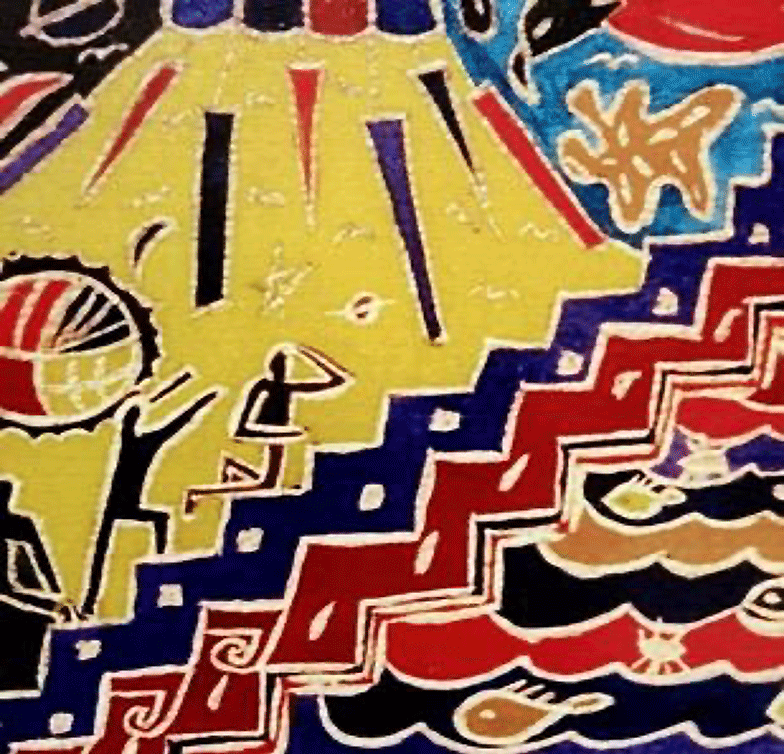
Figure 1. Robyn Angell-Morice, Untitled, 1997, watercolour on paper, 95 × 125mm.
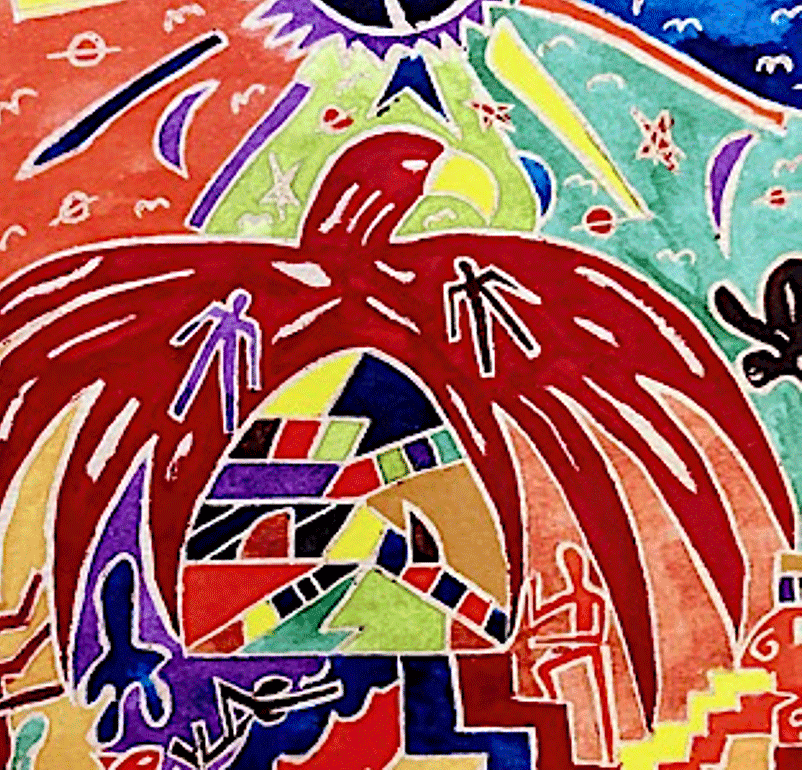
Figure 2. Robyn Angell-Morice, Untitled, 1997, watercolour on paper, 95 × 125mm.
The existential crisis felt as though it was slowly diminishing my wairua (spiritual essence within). Interference from whānau, vitriolic verbal attacks and problems in my marriage prompted me to disengage from the unhealthy cycle I was entrenched in. I left the family home and everyone thought I had lost my mind. In fact, my mind was strengthened by the decision and clearer than it had ever been. I enrolled in a religious studies course at Waikato University from 1998 to 2001. In 2000 I wrote a dissertation on atua wāhine (female goddesses), influenced by Aroha Yates-Smith’s thesis Hine! E Hine! Rediscovering the feminine in Māori spirituality. Yates-Smith (1998) advocates for the restoration of mana wāhine (female empowerment) through uplifting and reclaiming atua wāhine in Māori cosmological mythology. Yates-Smith argues that the demonisation of Māori myths and legends by colonial missionaries diminished the mana (status) of atua wāhine and, consequently, Māori women in general. Before colonisation, Māori creation stories were passed down by great orators who could chant and recite Māori connection to the atua (gods, supernatural beings) from a cosmological beginning. They provide a wealth of knowledge on atua wāhine, with tribal variations.
Prominent heroines featured in Māori mythology are Papatūānuku (earth mother), Hineahuone, the first female figure, formed from sacred clay taken from Papatūānuku, and Hinetītama. Hinetītama is the daughter of Hineahuone and Papatūānuku’s son Tānenuiarangi, aka Tāne, who formed an incestuous relationship with Hinetītama.
Hinenuitepō is the goddess of the afterlife and personification of Hinetītama, who retired in shame to the underworld to greet her deceased descendants after discovering Tāne was both her father and lover. Each goddess lived her own story of love, betrayal, abuse, loss, grief, separation, tragedy, birth, death and trauma. I could relate to their stories and the organic connection to both the spiritual and physical realms, nature, birth and death.
Atua wāhine display valuable qualities and strength of character in their exploits, becoming role models for the generations of wāhine Māori to follow. This view is supported by renowned wāhine Māori academic Linda Tuhiwai Smith (Pihama, 2001). Smith gives credence to the spiritual aspect of atua wāhine, affirming that these stories must be reclaimed and elevated within Māori knowledge.
Liminal interim stage
Weary and depleted of kaha wairua (spiritual strength) from study and unhealthy whānau relationships, my inner self prompted me to create art again. Working on a large canvas with dark-coloured soft oil pastels, I experimented with colour using only my hands, fully engaging in the sensory feel of soft pastel spreading smoothly from heightened energy warming my fingers. After building up multiple layers of suffused illuminated hues and mixed shades, I opened the portal to a transpersonal experience. Random disturbing images appeared, eerily reflecting aspects of my shadow self. As I continued, seeking something reflecting a godly spirit and channeling that into my art, I materialised a whaea tipuna tuatahi (great-grandmother) (Figure 3). It was later that the connection and its significance came to light.
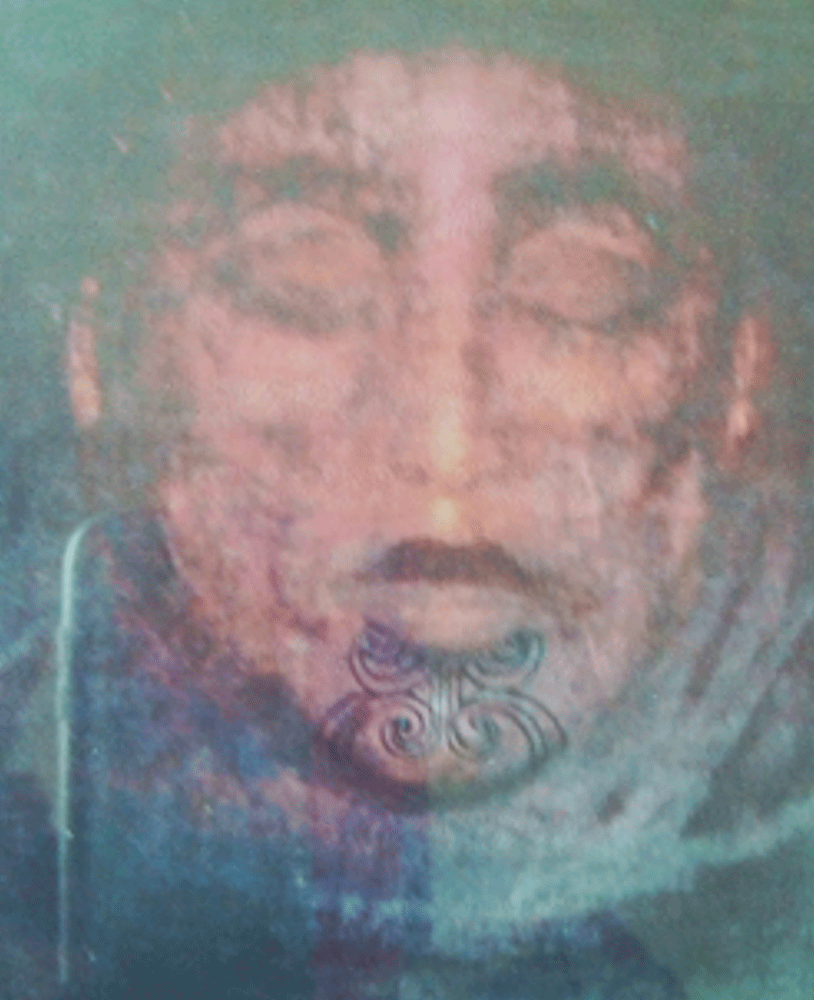
Figure 3. Robyn Angell-Morice, Whaea tipuna tuatahi (great-grandmother), 2000, soft oil pastel on canvas, 500 × 300mm.
In the weeks following, my husband and others made reference to the male image of Jesus and were intimidated, exclaiming, “the eyes are open and following me!” She was my maternal great-grandmother from Tūwharetoa-Taupō (tribal area), a strong female figure, eyes closed and wearing a moko kauae (female chin tattoo). I had never seen her in the flesh (nor in a photograph), but later, when comparing my artwork to a photo of her, complete with moko kauae, I was able to confirm the connection. I was then compelled to create another picture. The image that emerged was symbolic of my Māori/Danish maternal grandmother, who died aged 33. She is buried in the Bay of Islands, not at her hapū (birthplace) in Taupō. Through art-making, I gained insight into the reunion of my great-grandmother and her daughter beyond this life and felt their presence watching over me. This strengthened my resolve to stay firmly focused on remaining at university. I graduated with a Bachelor of Arts (Religious Studies) in 2001, with my first mokopuna (grandchild) by my side. My mokopuna’s birth, together with images of tīpuna wairuatanga (ancestor spirituality) in my art, was the catalyst for me to be the constant in his life and surround him with whānau support.
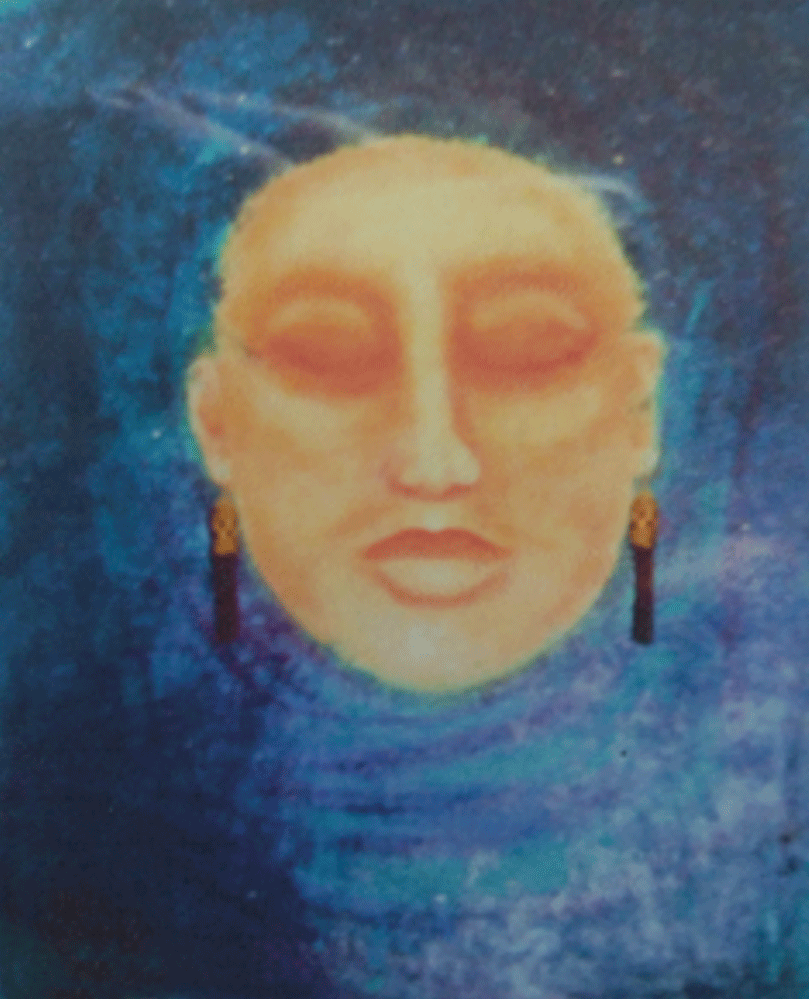
Figure 4. Robyn Angell-Morice, Whaea tipuna (grandmother), 2000, soft oil pastel on canvas, 500 × 300mm.
Having graduated from the BA, I continued to strengthen my cultural identity through training to be an arts therapist. Given my age and upbringing, I did not (as yet) comprehend the depth of symbolic and metaphoric messages within spontaneous art-making, nor understand its value within a therapeutic context. If viewed through ethnographic eyes, the products of my art-making may have been considered ‘works of art’, but to me they confirmed the spiritual presence of both my grandmothers in my life.
I was unexpectedly supported in an in-depth exploration of the transformative power of symbols by the work of 19th-century Swiss psychiatrist Carl Jung (1980; 1990), the founder of analytical psychology and a major influencer of modern Western psychological thought. His insights sharpened the focus on conscious and unconscious thought, and the impact and influence it has on the human psyche. His ideas on collective consciousness recognise the value of spirituality, religion, archetypes, myths, legends, art, symbolism and dreams in maintaining psychological health and well-being. Jung’s maturation and individualisation theory considers the process of self-actualisation to be a spiritual task. Jung (Jung & Shamdasani, 2009) undertook his own process of self-exploration and self-actualisation through art, in a process that arguably has some parallels with contemporary arts-based autoethnography.
As a Māori trainee creating an arts therapy identity through a Pākehā theoretical framework, my bicultural worldviews were challenged. Expanding my theoretical knowledge enhanced my understanding of both cultural positions.
Liminal transition stage
Nevertheless, all the literature, case studies, workshops and witnessing of clients’ processes during my foundational years of arts therapy training did not give me a true sense of how deeply arts therapy could release unspoken layers of dormant trauma until I undertook a case study during my year of clinical training in 2007. I experienced a personal encounter with transference and vicarious trauma that shone the light on arts therapy for me, at a deeper level of the psyche. It unravelled layers of my own trauma, held and contained in artworks created seven years earlier, in 2000. Both the client and myself intuitively gained strength from a shared cultural identity. We healed and reclaimed our dignity through the process of art-making; the client using art in therapy and myself using art as therapy.[1]
While I was facilitating art as therapy in the trainee years working alongside service users diagnosed with long-term mental illnesses, issues of transference and countertransference were manageable, until I undertook this six-week case study as part of a clinical ‘add-on’ year in 2007. Terina (a pseudonym to protect her identity) was diagnosed with bipolar disorder in her 20s. At the time of the referral she was in her 30s, and had been re-diagnosed with post-traumatic stress disorder. Being Māori, Terina did not think she had a mental illness, but believed a mākutu (curse) had been put on her by whānau members. This resonated with me. When I was growing up, my father told me stories about his experiences with mākutu, matekite (visionaries) and tohunga wairua (spiritual scholars) as a boy growing up in the Hokianga (Te Hiku o te Ika Far North). I took these matters seriously.
Terina’s story was horrendous: incest, domestic violence, death, grief, loss, homelessness, suicidal ideation, and gang-related violent sexual battery. The latter incident was disclosed during our fifth session and was my first experience of vicarious trauma. The impact was instant, physically and emotionally touching me at the core of my being, generating a piloerective reaction. In other words, it was literally ‘hair-raising’. Terina appeared dissociated, judging by her blank facial expression, forcing me to maintain composure while masking internal (but empathetic) turmoil. In a guest blog post by Bonnie Bright (2017) on Pacifica Post, featuring an interview with Jungian analyst Donald Kalsched, the latter states, “trauma is an injury to the capacity to feel” (para. 1). He is suggesting the psyche goes into a state of self-preservation, as a defence against the atrocities experienced in the person’s life. This is an accurate way of describing Terina’s demeanour.
With no previous clinical experience of vicarious trauma, I decided to do a traditional grounding ritual with Terina before finishing the session and driving home. The grounding ritual began by using wai (water) for spiritual and physical cleansing, reciting karakia (prayer), sprinkling water over our heads, and washing our faces. This was followed by something to eat and drink. I checked Terina for the ‘thousand-yard stare’ (a blank stare associated with a post-traumatic response) (Willmott, 2020). I suggested any issues that had resurfaced as a result of our six weeks working together could remain safely contained in her art folder and be left in my care. I unloaded the lingering heaviness into a chaotic mandala drawing, which temporarily held the complex feelings I felt until later. I shared the experience in group supervision, discussing the case and participating in a containment sealing exercise, which helped counterbalance the negative emotions I was carrying .
Liminal transforming stage
Indirectly experiencing secondary trauma from exposure to Terina’s disturbing account of sexual battery was a key defining moment in the transformative stage in creating an arts therapy identity for me, and a personal lesson in setting strong energetic boundaries. When I recalled and examined my reaction, a dormant memory of an attempted sexual attack I experienced as a 19-year-old resurfaced. To process the memory, I created a box from cardboard as a container for some journalling and artwork that expressed fear, self-blame and shame, for putting myself at risk in that situation. Sealing the box securely with a lid and layers of wrapping paper, tape and string helped to relieve myself of unhealthy feelings attached to the memory. Disposing of the box with a karakia (prayer) and burning it was a resolution; I let it go and moved on.
Prior to our last session, before my departure for Australia, I confirmed Terina’s wrap around services were in place and a social worker support network was available. I reviewed transcripts and artworks gathered in previous sessions. Terina had recognised her personal and cultural strengths, and embraced intrinsic qualities inherited from her kuia (grandmother), imbuing them into her psyche. She drew her ‘ideal Self’, symbolic of a wahine toa (strong woman). This was in direct contrast to the disempowering image she had of herself initially – fearful, scared, shamed, angry, hurt. Her drawing was a positive statement of self-empowerment.
Terina’s self-portrait filled the entire piece of paper: a solid stance, strong and confident, with a proud wide-eyed gaze. She wore a top knot with a large heru (ornamental Māori comb) in her hair, a moko kauae on her chin, and a pounamu (greenstone pendant) around her neck. She portrayed a balanced combination of feminine and masculine qualities. Her clothing was adorned with a symbolic koru design representing spirituality, new life, growth, strength and peace. Terina had found her ‘goddess within’ and was able to own her most authentic self. Affirmations written on her picture included “survivor, wahine toa, cultural strength, forgiving, self-respect, insight, role model, spiritual beliefs, fearless”.
I could see a serendipitous connection between the significance of Terina’s self-portrait and my paintings made seven years earlier as a trainee clinical arts therapist. Terina had clearly demonstrated a reclaimed cultural identity. No longer hiding from the world, she was proud to hang her self-portrait up, as a visible reminder of her immense strength.
In Rubin (2001), Jung suggests that “the central archetype... called the Self, is of special importance in healing. It has a regulating, stabilizing function, compensating for any imbalance that might arise. It could also be called one’s inner wisdom and guide” (p.15). Developing an awareness of ‘the Self’ helped transform Terina’s thought patterns. She stopped ruminating about a soul-destroying past and moved from a self-debasing mentality to seeing herself as a survivor. Through art therapy, Terina was able to express unspoken frustration, sorrow, anger and pain, release unhealthy pent-up feelings through tears, and use her new-found resources to build inner strength and empower herself. Completing her artwork was a profound moment for both of us. Both of our personal artworks displayed moko kauae as an acknowledgment to our respective whakapapa, and our respective grandmothers.
Post liminal stage, retrospection
Creating an arts therapy identity was built on the foundation I created in the transitional stage as a student in the Whitecliffe College of Arts and Design MA Arts Therapy course from 2002. Working as a coordinator in a mental health day centre led and managed by service users (and practising kaupapa Māori models of health) was rewarding and educational. Service users shared their lived experiences and perspectives of reality with me.
Māori models of health formed the basis of my work. Mason Durie’s (1985) well-known model, Te Whare Tapa Whā, uses a symbolic whare (house) as a metaphor for the human form. The four taha (sides) are represented by hinengaro (the psychological, mental), tinana (the body, physical), wairua (soul, spiritual) and whānau (support systems, family health). If one taha of the house/body is weakened, the whole structure is affected. Attention to each of the separate aspects, as part of a holistic approach, is necessary.
Similarly, Rose Pere’s (1997) model Te Wheke uses a symbolic octopus as a metaphor for whānau ora (family health) in its widest sense. The interdependence of each tentacle and the head of the octopus illustrates a communal support system that is holistic. Pere builds on Durie’s Te Whare Tapa Whā model, adding concepts such as mauri (life force), mana ake (one’s identity), hā a koro ma, a kui ma (breath of life from ancestors), and is favourably considered by many as a culturally appropriate model.
At the time they were conceived, Te Whare Tapa Whā and Te Wheke provided service users caught in a cycle of ‘revolving-door syndrome’ (repeated presentation to mental health services), dependent on drugs, in supported accommodation and disconnected from whānau, with the family connection they lacked. In 1998, following the closure of draconian mental institutions in Aotearoa, the day centre gave service users a reason to get out of bed, and provided structure to their week. As a coordinator and trainee arts therapist, initiating an arts therapy programme diverted service users’ attention away from habitual coffee drinking and chain smoking of cigarettes, to daily engagement in the arts. Over time, the coffee and cigarette breaks decreased as their concentration and enjoyment in intuitive art-making increased. During the art-making sessions, service users aired their frustration at being ‘over-analysed’ (by mainstream health professionals) and viewed their time in the centre as a refuge away from clinical settings.
The arts programme became popular. It allowed service users to work on developing artistic skills, and building confidence and self-esteem. Their finished artworks were displayed on the walls of the centre, acknowledged and valued. Positive feedback was received from viewers. The organisation’s cultural advisor felt the art programme offered service users the opportunity to release “emotions, stresses, and [get] pain out”, identify triggers, and develop strategies to improve their psychological health (Mihaka, personal communication, March, 2005).
Halfway through 2007, I joined my whānau in Australia and completed the clinical year working as a diversional therapist in a rest home. After graduating, I facilitated arts therapy groups with women and children in a women’s health organisation as an arts therapist/project worker. I worked in the mental health, multicultural and Indigenous programmes. All of the programmes had a focus on addressing issues of dual diagnoses related to mental health problems, alcohol and drug use, and domestic violence. During 2014, in collaboration with an in-house counsellor and with a financial grant, I co-facilitated an arts psychotherapy group made up of ten women from the domestic violence programme. Group participants reported positive outcomes, and we were successful in raising the profile of arts therapy within the services.
Soon after, I retired and returned to Aotearoa for the birth of my eighth mokopuna. In 2019, just prior to the 2020 Covid-19 lockdown, I moved back to Australia.
Conclusion
This article evolved from a draft submitted to ANZJAT in 2019. The editors, after it was peer reviewed, accepted it subject to major changes and provided a lot of feedback. This allowed me the time and reflective space to refocus and correct the chronological order of events from the first draft. In reviewing the draft, I had not expected to undertake a ‘review’ of my past life as an arts therapist, nor had I expected to disclose personal issues, but I found myself doing both. My initial focus was more on the client in my case study, Terina, than on my own process, but as I began to move toward an autoethnographic approach, this article took on a life of its own. Writing this article compelled me to revisit historical events in my life that resurfaced from the images in my artwork, evoking a time stored away deep within my psyche, but not fully forgotten. The images of my whaea tīpuna (ancestors), contained on canvas, had been waiting for the right moment to reveal their unified spiritual presences, connecting me back to my core values as a reminder of where I came from. Moana Jackson, esteemed lawyer, activist and advocate for Indigenous rights in upholding te Tiriti o Waitangi, says, “if we are spiritual people, and I believe we are... the spirit is the base of our dreams... for if we conduct research in a dreamless world we do not create a vision of hope for our mokopuna” (Pihama, 2001, p.43). This quote spoke to me on many levels.
I had a spiritual awakening with the birth of my first mokopuna in August 2000. He was the catalyst for change needed to heal fractured family relationships, as his welfare took priority. Later that year, I created the artworks of my maternal grandmothers, healing my wairua (spirit) and giving me insight and clarity. My spiritual beliefs embrace both Māori and Pākehā concepts of wairuatanga (spirituality). It is a cross-cultural worldview that connects me, through whakapapa, from a cosmological beginning, descended from the gods, unwavering belief in Ihowa (supreme God), te Wairua Tapu (the Holy Spirit), to the Christian faith, belief in Ihu Karaiti (Jesus Christ) who left us the Comforter/Helper/Holy Spirit as referred to in the Holy Bible (John 14:26).
Pihama (2020, p.360) articulates how mana wahine theory is about “reclamation, resistance and resurgence simultaneously”. Through undertaking this retrospective review of the liminal process of becoming a senior Māori arts therapist, I have come to understand myself as part of this wider movement. I can more clearly align my story to the strong voices and images of Māori women featured in this article, acknowledging atua wāhine, whaea tīpuna, mana wāhine, mana wairua, mana Māori, along with many significant others, past, present and future (beyond the scope of this article to list), who have taken up te wero (the challenge) in reclaiming our voices with action through collective self-agency. The emergence of te ao Māori (Māori world) practices and values in kaupapa Māori ways of working are, and will continue to be, integrated into kaupapa Pākehā ways of working, because the need is there. To other Indigenous wāhine arts therapy trainees, your story counts, bring your uniqueness to your work, inclusive of cultural aspects, and share it!
Developing an arts therapy identity through a deeper holistic cultural lens made meaning of why I was doing it. Personal insights into my own unhealed trauma brought awareness of possible common threads between client and therapist. These experiences contributed to my own development as an arts therapist, facilitating art as therapy and art in therapy groups. It renewed my perspective and respect for the arts as a healing modality in a rewarding profession, enhanced by both Māori and Pākehā cultural positions and further strengthened in kaupapa Māori ways of working, inclusive of taha wairua (the spiritual side).
This article documents a personal account of my experience as a Māori arts therapist. It is shared in the hope of normalising Māori approaches to arts therapy and encouraging other Māori arts therapists to share their experiences.
Endnote
[1] The tension and continuum between art psychotherapy and art as therapy is a major theme in the arts therapy literature of the past 50 years that is too extensive to summarise in this paper. Christine Phang’s (2025) recent exploration of the lifelong role of the art therapist’s art-making in navigating personal and professional identity, including the importance of art-making for processing vicarious trauma, resonates with the distinction I am making here.
Acknowledgements
Grateful thanks to Dr Douglas Pratt, Religious Studies, for allowing my mokopuna into the lecture room on occasions, and Dr Aroha Yates-Smith for inspiring my interest in Māori spiritual beliefs, while at Waikato University in Kirikiriroa Hamilton, Aotearoa. My gratitude to the following people in the MA Arts Therapy course at Whitecliffe College of Arts and Design for guiding, encouraging and urging me on to graduation: Caroline Miller, Maureen Woodcock and Pam Young. To ANZACATA and the editorial committee of JoCAT for granting me a bursary. I am humbled to be the first recipient from Aotearoa to receive one, at the ripe old age of 76, korōria ki te Atua (glory to God). Extra acknowledgements go to the following: Vic Segedin, JoCAT coordinator, peer reviewers, copyeditors, for their perseverance and commitment to the kaupapa (principle) of support, tēnā koutou. I am grateful to Associate Professor Sheridan Linnell and Dr Anna Reeves respectively, for your skilful interpreting and mentoring skills, I leave you both with a whakataukī (proverb) by Pat Rosier (1988, pp.24–27) “Me aro koe ki te ha o Hine-ahu-one” (“Pay heed to the dignity of women”). This quote goes to the heart of what I have tried to achieve in my article, and gratefully, with all your combined extensive insights, knowledge and input, it has unfolded to over exceed my expectations and for that I will be forever thankful. Ngaa manakitanga kotou katoa..
My eternal aroha (love) to the following long-departed: my parents, who shaped my values and beliefs, breaking the cycle of abuse they endured in their childhoods. To Dad, an ordained kaikarakia (lay minister) for the Māori Anglican Church and with a rich legacy recorded in stories of the 28th Māori Battalion veterans deployed to Crete during World War II. To my gracious mother, for quietly imparting her strong Christian beliefs, and whose invaluable whakapapa connections contributed to the theoretical framework for this article. Aunty Lorna, a generous soul, who shared many intimate hours of kōrero (talk) on personal whānau stories with me, and my brother Pastor Mike, a discerning soul who lifted my wairua, clearing negative energy surrounding me through whakanoa (exorcism) in dark times. Manaakitanga (blessings) to those in the present, spouse Rusty Morice and whānau, who collectively, in some shape or form, fuelled the flame to write this article. To my mokopuna, this article is my legacy to you – learn from it and be mindful of the words written by Sufi poet Rumi, “the soul has been given its own ears to hear things the mind does not understand”. Ngā mihi koutou katoa (thank you all).
References
Baker, M. (2018). He ariariatanga whakangawari no te Maori i tua o te arai: He rangimarietanga i tua o te arai (A theory of Maori palliation: A peaceful journey through the veil). PhD dissertation, University of Auckland. https://researchspace.auckland.ac.nz/items/40999a0c-0a3b-4815-802c-27f054a05af3
Barlow, C. (1991). Tikanga whakaaro: Key concepts in Māori culture. Oxford University Press.
Beaumont, S.L. (2019). From liminality to transformation: Creating an art therapy identity through myths, metaphors and self portraits. Canadian Art Therapy Association Journal, 31(2), 61–83. https://doi.org/10.1080/08322473.2018.1525667
Bright, B. (2017, May 24). Trauma and the soul: Psychoanalytic approaches to the inner world. An interview with Jungian Analyst Donald Kalsched [Guest blog post]. Pacifica Post. https://info.pacifica.edu/trauma-and-the-soul-psychoanalytic-approaches-to-the-inner-world
Durie, M.H. (1985). A Māori perspective of health. Social Science Medicine, 20(5), 483–486. https://doi.org/10.1016/0277-9536(85)90363-6
Corey, G. (2001). Theory and practise of counseling and psychotherapy (6th ed.). Wadsworth/Thomson Learning.
Gray, B. (2011). Autoethnography and arts therapy: The arts meet healing. ANZJAT, 6(1), 67–80.
Green, D., Levey, A., Evans, B., Lawson, W., & Marks, K. (2022). The arts of making-sense in uncertain times: Arts-based research and autoethnography. In H. Kara & S-M Khoo (Eds.), Qualitative and digital research in times of crisis (pp.59–77). Policy Press. https://doi.org/10.56687/9781447363828-007
Jung, C.G. (1980). The collected works of C.G. Jung: Volume 12. Psychology and Alchemy (2nd ed., trans. G. Adler & R.F.C. Hull). Princeton University Press.
Jung, C.G. (1990). Man and his symbols. Arkana.
Jung, C.G., & Shamdasani, S. (2009). The red book = Liber novus (1st ed.). W.W. Norton & Co.
Pere, R.T.P. (1997). Te wheke: A celebration of infinite wisdom (2nd ed.). Ao Ako Global Learning.
Pihama, L.E. (2001). Tihei mauri ora: Honouring our voices: Mana wahine as a kaupapa Māori theoretical framework [Unpublished doctoral dissertation]. The University of Auckland.
Phang, C. (2025). The role of art-making in navigating the art therapist’s personal and professional identity. International Journal of Art Therapy, 1–7. https://doi.org/10.1080/17454832.2025.2463367
Pihama, L. (2020). Mana wahine: Decolonising gender in Aotearoa. Australian Feminist Studies, 35(106), 351–365. https://doi.org/10.1080/08164649.2020.1902270
Rosier, P. (1988). Me aro koe ki te ha o hine ahu one: Pay heed to the dignity of women. Broadsheet, 159, 24–27.
Rubin, J.A. (2001). Approaches to art therapy. Routledge.
Sachdev, P.S. (1990). Whakamā: Culturally determined behaviour in the New Zealand Māori. Psychological Medicine, 20(2), 433–44. https://pubmed.ncbi.nlm.nih.gov/2356267
Willmott, G.S. (2020). 1000 yard stare stories: Stories of PTSD throughout the ages. Crabtree.
Yates-Smith, G.R.A. (1998). Hine! E Hine! Rediscovering the feminine in Māori spirituality [Unpublished doctoral dissertation]. The University of Waikato.
Author
Robyn Angell-Morice
MA ATh(Clin), BA Religious Studies
Commencing her arts therapy career in Aotearoa, Robyn was employed in community mental health settings as a centre coordinator and art therapist. She worked with people from different cultural backgrounds transitioning from mental institutions and reintergrating back into the community. In Perth, Robyn worked in a women’s health service, coordinating art therapy groups for women and their children from multi-cultural backgrounds. Before retiring, she collaborated with an in-house counsellor and with a substantial grant, co-facilitated an art psychotherapy group of ten women from the domestic violence programme. The participants involved provided positive feedback that successfully elevated the profile of arts therapy within the service.