

Open Access
Published: April 2026
Licence: CC BY-NC-4.0
Issue: Vol.21, No.1
Word count: 1,722
About the reviewer
Cite this reviewHoweler, K. (2026). Book review: Treatment Approaches for Body Image in Art Therapy, edited by Eileen Misluk-Gervase, Heidi Moffatt, and Taylor McLane. JoCAT, 21(1). https://www.jocat-online.org/r-26-howeler
Book review
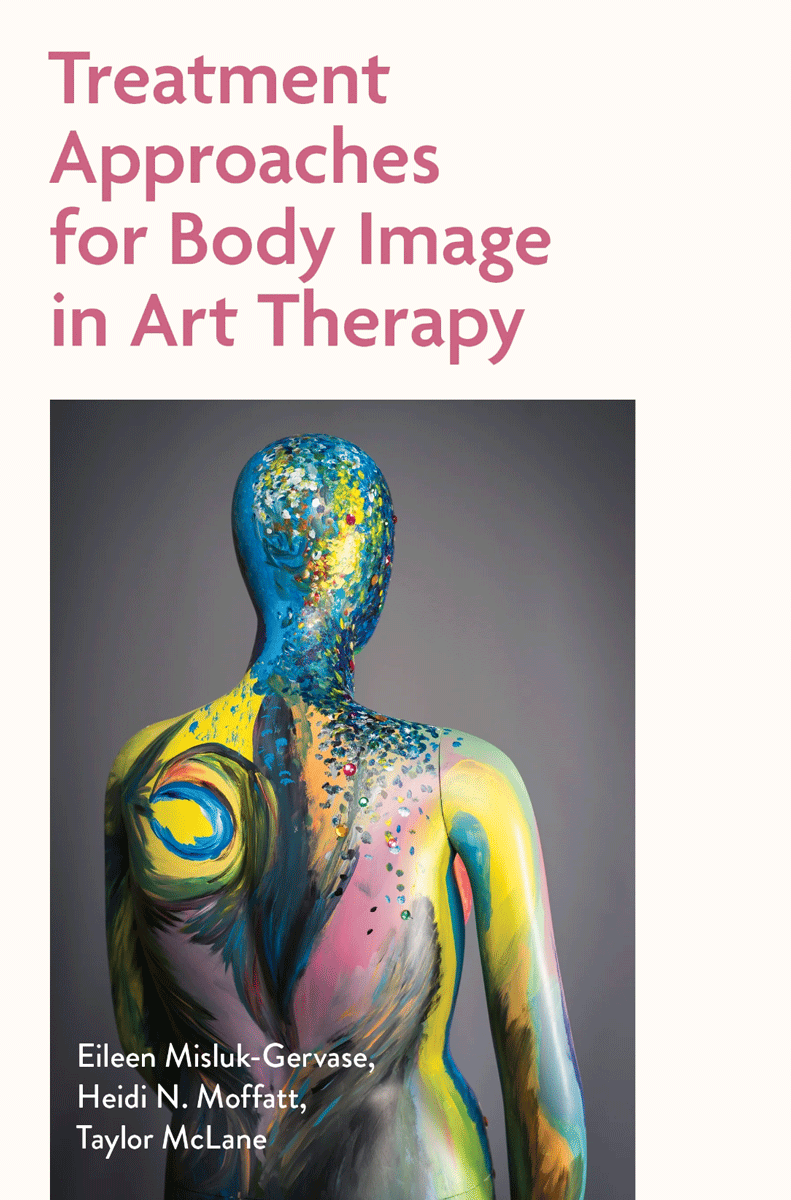
Treatment Approaches for Body Image in Art Therapy, edited by Eileen Misluk-Gervase, Heidi Moffatt, and Taylor McLane
Publisher: Jessica Kingsley
Published: August 2025
ISBN: 9781839978845
Reviewed by Kimberly Howeler
Introduction
Treatment Approaches for Body Image in Art Therapy, edited by Eileen Misluk-Gervase, Heidi Moffatt, and Taylor McLane, offers a comprehensive exploration of art therapy interventions for body image concerns across diverse clinical populations. Structured as separate research papers rather than a sequential narrative, the text allows the reader to navigate directly to chapters most relevant to their needs. Each contributing author brings specialised expertise to their respective chapters, organised into three primary sections: eating disorders, trauma, and medical diagnoses.
The editors acknowledge a critical gap in existing literature, emphasising the need to expand research beyond the predominant demographic of white, cisgender females. This limitation has historically constrained understanding of how body image concerns affect individuals across different cultural backgrounds, gender identities, and life experiences. Talwar’s (2010) intersectional framework for art therapy specifically identifies how race, class, gender, and sexuality intersect to create unique experiences of embodiment and marginalisation, highlighting the critical need for research that addresses these previously overlooked populations. The text advocates for a more inclusive scope of inquiry that better represents the full spectrum of human identity.
Traditionally, body image has been narrowly conceptualised through the lens of weight and size within dichotomous thinking of positive versus negative perspectives. However, this collection challenges such reductionist views by presenting body image as a complex, multifaceted construct extending beyond physical appearance. The authors examine how limited conceptualisations fail to capture the intricate ways individuals perceive and relate to their embodied selves.
Central to the text is society’s profound impact on body image formation and its effects on mental health. By broadening the scope beyond conventional concerns of weight, food intake, and social comparison, this collection equips readers with nuanced understanding of embodiment and its therapeutic implications within art therapy practice. While the collection achieves its goal of broadening discourse around body image, the presentation of material varies considerably across chapters, with some offering deeply integrated art therapy frameworks whilst others provide more foundational overviews that occasionally feel supplementary to the core research.
Body image, eating disorders and arts therapy
The text begins by examining how embodiment and body image disturbances manifest within eating disorder populations, establishing foundational neuroscience perspectives that inform art therapy interventions. The first section examines body image, eating disorders, and arts therapy through three interconnected papers that establish both theoretical foundations and practical applications. The authors recognise body image as inherently multidimensional, encompassing both physical and psychological dimensions. This understanding becomes particularly significant when considering how caloric restriction affects reward circuitry and brain structure, directly impacting the brain’s functionality and capacity for active thinking. The concept of interoceptive awareness, how the brain and body relate and respond to surrounding stimuli, emerges as crucial to understanding the embodied experience of individuals with eating disorders.
The discussion examines how body image aligns with societal and cultural norms as a means of establishing belongingness, with individuals holding multiple identities facing increased vulnerability. This intersectionality fundamentally alters body attributes throughout diagnosis and treatment. Contemporary influences such as social media perpetuate narrow body ideals whilst pro-eating disorder content increasingly blurs boundaries with fitness content, creating additional challenges for marginalised individuals who may develop eating disorders as coping mechanisms.
The text transitions into rigorous neuroscience research, moving beyond general psychological inquiry to incorporate medical perspectives. The chapter on neuroscience-informed art therapy achieves balance, presenting current research whilst acknowledging the infancy of this investigation into body image and eating disorders from a neuroscience perspective.
Art therapy’s unique capacity to address body image through multiple sensory modalities, being visual, tactile, proprioceptive, interoceptive, nociceptive, and motor skills, is thoroughly examined through material use and somatic working. This aligns with Hinz’s (2020) Expressive Therapies Continuum framework, which posits that engagement across kinesthetic, sensory, perceptual, affective, cognitive, and symbolic levels facilitates comprehensive therapeutic processing and integration of embodied experiences. The authors emphasise scaffolding skills to gently introduce body image work into sessions. Practical directives are offered alongside client examples, demonstrating how visual representation closes therapeutic loops through material engagement. Critically, directives focusing on how the body feels rather than appears align with neuroscience research addressing clients’ perceptions of bodily dysfunction.
Embodiment, trauma and arts therapy
Building upon foundational understandings of embodiment, the second section explores how traumatic experiences fundamentally disrupt body image development and the capacity to live fully within one’s body. Comprising six papers, this section addresses diverse populations, including individuals with PTSD and complex PTSD (C-PTSD), sex trafficking survivors, intimate partner violence survivors, veterans with amputations, and those navigating the peri-partum and postpartum period, whilst considering both heterosexual and queer perspectives. Each chapter clearly articulates its specific population group, providing focused research applicable to distinct clinical contexts.
The section establishes foundational understanding of how adverse childhood experiences (ACEs), including sexual abuse, family violence, substance use, mental health issues, and incarceration, impact adult body image development and increase risk of chronic conditions. McDonald (2008) notes that “traumatic memories are retrieved as sensory and affective elements” (p.102), creating somatic responses that affect regulation and dissociation, ultimately impairing an individual’s ability to fully engage in life-enhancing experiences. The authors distinguish between having a body versus living in a body, recognising this as the most salient issue affecting adolescents and young adults.
Understanding how trauma impacts the brain becomes essential for supporting clients effectively. Art-making emerges as a fundamentally beneficial and cognitively necessary communication tool, particularly given disruptions in encoding and retrievability of traumatic memories. Van der Kolk’s (2014) seminal research demonstrates that traumatic memories are stored in subcortical, non-verbal brain regions, making verbal therapies insufficient for trauma resolution and necessitating body-based, expressive interventions that access implicit memory systems. Where trauma leaves clients feeling powerless and vulnerable, arts therapy supports reclaiming control, decision-making, and autonomy. The authors promote collage as an accessible starting point for trauma clients, being non-threatening and easier to master, thereby reducing resistance.
The section emphasises that cognition, emotion, and physical experience comprise body image, with survivors of sexual trafficking and abuse often internalising beliefs that their needs do not matter, accompanied by shame and self-blame. Survivor-informed, culturally competent, trauma-informed, and strength-based care becomes paramount. Importantly, talk therapy alone cannot wholly meet survivors’ needs; experiential and expressive treatments prove necessary for advancement and post-traumatic growth. Malchiodi’s (2020) framework for trauma and expressive arts therapy reinforces this position, emphasising that brain, body, and imagination must be engaged simultaneously in the healing process to address the multidimensional nature of traumatic embodiment. The text highlights updated terminology and the importance of allowing individuals to self-identify using their preferred language, whether as victims, survivors, overcomers, or thrivers, acknowledging how labels impact self-esteem and help-seeking behaviours.
Body perception, medical diagnosis and arts therapy
The final section extends the exploration of embodiment by examining how medical experiences and diagnoses reshape individuals’ relationships with their bodies across developmental stages and gender identities. This section includes four papers examining how medical experiences fundamentally alter embodied sense of self. Children hospitalised face multiple professionals examining their bodies through procedures, imaging, hospital gown changes, and bathing, rendering the child’s body simultaneously hypervisible yet intangible, directly impacting body integrity and well-being. Embodiment, being how persons experience the world through body-centred intelligence including breath, movement, impulses, sensations, and emotions, becomes disrupted through hospitalisation.
Children perceive hospitalisation as loss of control, loss of healthy and resilient self, and loss of energetic self. Children’s developing brains, which lack full cognitive understanding, remain unaware of how feelings and emotions occupy space within the body, making play and creative arts developmentally appropriate tools for regulation, communication, practice, and mastery. Spontaneous drawing offers crucial choice within settings where autonomy is severely limited. Adolescents face compounded tribulations, navigating body image expectations from technology, social media, and society alongside medical treatments, challenges amplified by evolving technological landscapes that shape contemporary adolescent identity formation (Orr, 2012).
Research demonstrates that mindfulness-based art therapy, open studios, body-mind models, phenomenological approaches, and brief art therapy interventions successfully address stress, distress, depression, anxiety, and emotional challenges whilst reducing pain and providing safe spaces to process change, re-story losses, and enhance future perspectives. The section also addresses male body image, significantly impacted by social media and cinematic representations promoting hypermasculinity whilst rejecting vulnerability. Pope et al.’s (2000) research on male body obsession reveals that societal expectations of hypermasculinity and emotional stoicism create significant barriers to men’s disclosure of body dissatisfaction, resulting in clinical underestimation of male body image disturbances and inadequate therapeutic responses. Medical conditions affecting masculinity, such as prostate cancer, intensify self-consciousness and avoidance. Art therapy effectively matches how men process information through both verbal and non-verbal mediums whilst creating new processing pathways.
Conclusion
Treatment Approaches for Body Image in Art Therapy successfully consolidates individual research papers into a cohesive reference text that promotes art therapy as an effective psychological modality. Whilst extensive information on body image occasionally becomes repetitive, and some chapters offer art therapy responses that appear foundational rather than deeply integrated, the collection’s strength lies in its solid research foundation and attempt to bring together diverse populations. Each author maintains their distinct voice and research focus whilst contributing to a unified understanding of body image disturbances beyond conventional arts therapy discourse.
The text emphasises process over product whilst acknowledging the expressive value of completed artworks, providing supported directives and case studies for practitioners. Though authors occasionally present conflicting opinions on specific interventions, such as body tracing, these differences reflect varied therapeutic goals rather than contradictions. The text makes a significant contribution to the field by consolidating population-specific research that has historically remained scattered across various publications. As Huss and Sela-Amit (2019) note in their overview of art therapy and body image, the field requires both theoretical frameworks and practical applications that address the complexity of embodied experience across diverse contexts; a need this collection begins to address, though variable depth of art therapy integration suggests ongoing development is needed to fully realise trauma-informed, embodiment-focused practice across all clinical contexts.
This text serves as a valuable resource for art therapy students seeking foundational understanding of body image across populations; experienced clinicians working with eating disorders, trauma, or medical settings who require evidence-based intervention strategies; and clinical supervisors supporting practitioners in developing trauma-informed, culturally competent approaches to body image work.
References
Hinz, L.D. (2020). Expressive therapies continuum: A framework for using art in therapy (2nd ed.). Routledge.
Huss, E., & Sela-Amit, M. (2019). Art therapy and body image. In D.E. Gussak & M.L. Rosal (Eds.), The Wiley handbook of art therapy (pp.406–415). Wiley Blackwell.
Malchiodi, C.A. (2020). Trauma and expressive arts therapy: Brain, body, and imagination in the healing process. Guilford Press.
McDonald, M.J. (2008). The nature of epiphanic experience. Journal of Humanistic Psychology, 48(1), 89–115. https://doi.org/10.1177/0022167807311878
Misluk-Gervase, E., Moffatt, H., & McLane, T. (Eds.). (2024). Treatment approaches for body image in art therapy. Jessica Kingsley.
Orr, P.P. (2012). Technology use in art therapy practice: 2004 and 2011 comparison. The Arts in Psychotherapy, 39(4), 234–238. https://doi.org/10.1016/j.aip.2012.03.010
Pope, H.G., Phillips, K.A., & Olivardia, R. (2000). The Adonis complex: The secret crisis of male body obsession. Free Press.
Talwar, S. (2010). An intersectional framework for race, class, gender, and sexuality in art therapy. Art Therapy, 27(1), 11–17. https://doi.org/10.1080/07421656.2010.10129567
van der Kolk, B.A. (2014). The body keeps the score: Brain, mind, and body in the healing of trauma. Viking.
About the reviewer

Kimberly Howeler
BVA, AThR
Kimberly (she/her) is the founder of Found Objects Creative Therapies, a private practice based in Melbourne's western suburbs. She brings broad clinical experience working with individuals across their lifespan in diverse clinical and community settings. Her therapeutic work addresses mental health presentations, including trauma, alcohol and other drug (AOD) recovery, experiences of homelessness, family and intimate partner violence, and adjustment to neurological conditions such as stroke, Parkinson's disease, and dementia. Kimberly also facilitates group-based interventions in aged care facilities and with veteran populations. Her clinical interests include body image, trauma-informed practice, and the intersection of embodiment and creative therapies.