

Open Access
Published: December 2025
Licence: CC BY-NC-4.0
Issue: Vol.20, No.2
Word count: 1,142
About the reviewer
Cite this reviewSchild, N. (2025). Podcast series review – FAT Moon podcasts. JoCAT, 20(2). https://www.jocat-online.org/r-25-schild
Podcast series review
FAT Moon podcast
Producer: Greene Moon Studios
Available: On major streaming platforms, including Apple Podcasts, Spotify, and Pocket Casts
Greene Moon Studios: www.greenemoonstudios.com
Reviewed by Niki Schild
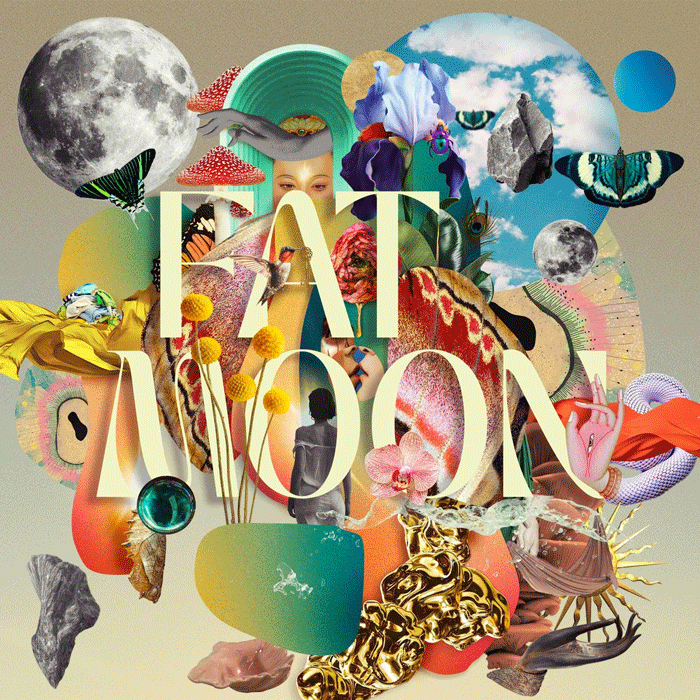
FAT Moon podcast is hosted by Kirsty Greene, an art therapist based in Naarm/Melbourne, Australia. Four seasons have been released since its launch in June 2023, with a fifth beginning in October 2025. Positioned as a profession-facing resource, the podcast is recognised by ANZACATA as a source of Continuing Professional Development (CPD). Accompanying text states the show’s intention to explore “...our peers’ pathways, professions and interests in methodologies while building bridges between our disciplines, settings, experiences and cultures” (Greene Moon Studios, n.d.) within the community of creative therapists, which is Greene’s chosen umbrella term for the practitioner cohort being addressed. This wording implies the inclusion of a range of therapists working with creative methods and orientations in addition to those trained in art/s therapy.
Scope and structure
Each episode features a different guest drawn from an international pool of practitioners – some prominent in the professional community, others less so – and invites them to outline aspects of their practice and their experience in this field. Guests come from a variety of disciplinary backgrounds within creative arts therapy, with role titles including art therapist, music therapist and drama therapist, as well as art psychotherapist, sensorimotor art therapist, and expressive arts therapist. Additionally, we find a few guests with other professional titles such as psychotherapist. One episode to date features a guest from a distinctly different field of practice, namely ANZACATA CEO Kate Dempsey (S3 E9), whose inclusion is clearly relevant.
Episodes follow a consistent interview format in which guests outline their pathways, roles and professional interests, with the set of interview questions recurring across episodes. Some guests provide very succinct answers; in these cases, a more exploratory interviewing method could potentially have elicited more detailed answers. Other guests provide substantial responses that include a mix of vivid anecdote and expansive narrative, and require minimal elicitation from the interviewer in order to do this.
Despite this variation in modes of responding, thematic patterns emerge across episodes. One prominent example is the perception of creative arts therapy work as intrinsically rewarding. Greene’s recurring question, “What do you enjoy about your work?” tends to be met with warm enthusiasm, foregrounding a shared sense of vocational satisfaction that may reflect a broader narrative within the profession.
The apparent collective subtext of experiencing emotional and creative fulfilment alongside clinical purpose in arts therapy work is reflected in parts of the literature. For example, a recent study from Portugal (Machorrinho et al., 2025) highlights a “dimension of alignment, compatibility, and harmony between personal and professional life” that supports “a unified sense of self in professional identity” for arts therapists, noting that strong professional communities are necessary to consolidate this.
Greene seldom highlights such themes explicitly, resulting in moments where individual comments appear more siloed than the broader profession-wide patterns they represent. Yet for some listeners, this may also open space for independent reflection, allowing them to constellate their own understandings across episodes.
Style and tone
Overall, the show has a warm and approachable (rather than academic) tone. Gestures are occasionally made to an underlying playfulness, as captured in the show’s evocative yet somewhat mysterious title, the meaning of which is not stated in the show notes or opening remarks. In one episode (S4 E1), Greene explains that the ‘FAT’ of FAT Moon can be read as an acronym (‘for art therapists’). This information is given in response to a question from her guest, Florida State University professor Dave Gussak – a rare instance of bidirectional conversation in the show.
Greene’s relatively scripted interview approach undeniably limits opportunities for spontaneous conversational exchange. As a result, material raised sometimes feels underexplored, particularly when guests do not assume responsibility for in-depth exploration. However, this is not necessarily a flaw. While a more emergent, conversational interviewing style could at times yield insight at greater depth, it could also detract from the concise, professional orientation of the show, for which the interviewing style is effective. Further, some listeners may appreciate the on-rails approach to interviewing, which provides an efficient and somewhat standardised structure that is easy to follow and keeps episodes to a user-friendly length.
Audience considerations
Listeners’ experience of the show is likely to vary depending on individual expectations about the podcast medium. Those who engage primarily for structured information may find the format well suited to their preferences. In contrast, listeners accustomed to more dialogical or personality-driven podcasts may experience the interviews as somewhat reserved in tone and content. Despite this, the series rewards sustained engagement: listening across multiple episodes provides a broad, contemporary overview of creative arts therapy practice internationally, grounded in everyday work realities rather than more abstract discourse.
The show is highly suitable for students and early-career practitioners seeking to understand the scope of the field beyond their training environment, as well as more established therapists seeking to connect with a range of current perspectives. It may also benefit colleagues in adjacent professions – such as psychotherapy, counselling, psychology, occupational therapy or education – who work alongside creative arts therapists and wish to deepen their understanding of arts-based therapeutic processes. Listeners can employ the podcast strategically for reflective practice – for instance, by noting points of resonance or dissonance with their own therapeutic approaches, or using specific episodes to stimulate supervision discussions.
Professional development value
By offering workplace-specific examples that invite reflective consideration of one’s own assumptions, beliefs and aspirations, the podcast aligns with understandings of CPD as potentially including informal, practice-embedded processes. As Alsop (2013) describes, healthcare practitioners inevitably participate in “communities of practice” that function simultaneously as communities of learning, where competence is shaped through shared narratives, mutual engagement and openness to new ideas. FAT Moon podcast can be understood as contributing to such a community by gathering the experiential knowledge of practitioners and making it available for collective reflection.
As such, the podcast’s value as a CPD tool is in its supplementation of more structured learning activities with an informal, asynchronous connection to the broader field. After graduation, exposure to diverse workplace contexts often narrows as professional demands intensify. Greene’s intention to counteract this narrowing is articulated in the episode with Gussak, where she describes the podcast as a means to remedy this detachment from the community of practice. In this regard, FAT Moon Podcast is effective: it offers access to a wide range of practitioner perspectives, workplace settings, and theoretical orientations, forming an accessible archive that complements formal CPD pathways.
Conclusion
In its combination of medium, purpose and professional relevance, FAT Moon podcast occupies a distinctive place within the broad community of creatively oriented therapists, with particular relevance to those in the region serviced by ANZACATA, which is geographically removed from the larger and more established communities of practice internationally. Greene has created a user-friendly resource that contributes to a sense of professional community and shared insight into the varied modes of practice in the contemporary creative arts therapy landscape.
References
Alsop, A. (2013). Continuing professional development in health and social care: Strategies for lifelong learning. John Wiley & Sons.
Greene Moon Studios. (n.d.). FAT Moon podcast: About. Apple Podcasts. https://podcasts.apple.com/nz/podcast/fat-moon-podcast/id1695379732
Machorrinho, J., Prado, L., & Duarte Santos, G. (2025). Professional development of creative arts therapists: Foundations, experiences and paths. The Arts in Psychotherapy, 96, 102358. https://doi.org/10.1016/j.aip.2025.102358
About the reviewer
Niki Schild
M-CAT, AThR
Niki is an arts therapist trained in the Master of Creative Arts Therapy (Dance Movement Therapy) at the University of Melbourne, currently working in private practice as a member of Rainbow Muse Collective. As a multiform artist, she is involved in various collaborative projects including a touring music and performance ensemble, a bimonthly artist-run community gathering, and interdisciplinary practice-based research. Niki also has a degree in philosophy, and gets excited about plants.