

Open Access
Published: December 2025
Licence: CC BY-NC-4.0
Issue: Vol.20, No.2
Word count: 1,433
About the reviewer
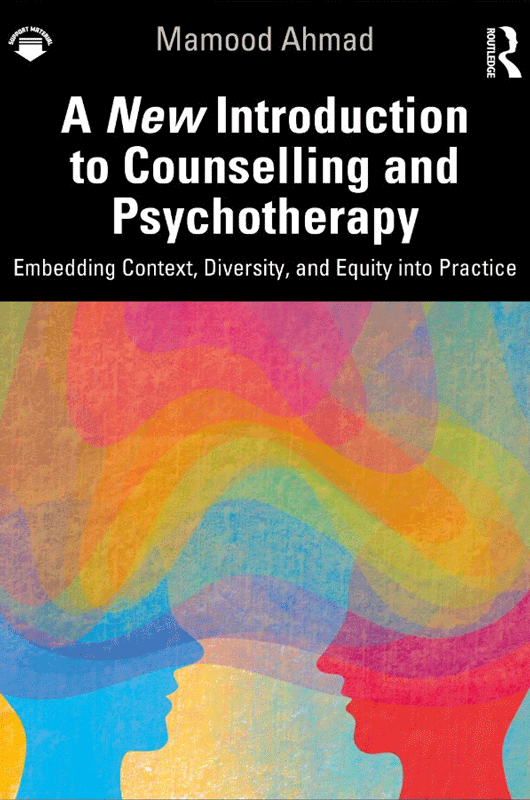
Cite this reviewAly, N.O. (2025). Book review – Context as constitutive: A critical creative arts therapist appraisal of curricular reform in counselling and psychotherapy. JoCAT, 20(2). https://www.jocat-online.org/r-25-aly
Book review
Context as constitutive: A critical creative arts therapist appraisal of curricular reform in counselling and psychotherapy
A New Introduction to Counselling and Psychotherapy, by Mamood Ahmad
Publisher: SAGE
Published: September 2025
ISBN: 9781032805931
Reviewed by Noha O. Aly
Introduction: Why general texts are essential to CATs
While creative arts therapies (CATs) often prioritise modality-specific literature focused on art, drama, or music, Mamood Ahmad’s A New Introduction to Counselling and Psychotherapy demands attention from CAT practitioners, as it directly addresses a critical structural gap in training: the failure to adequately embed client context, identity, and power dynamics into core curriculum. Ahmad’s proposal for an ‘equity-by-design’ framework, which positions the client’s social, cultural, and embodied reality as constitutive of distress and healing, provides a crucial scaffold for CAT educators. This model fundamentally aligns with the arts-based ethos, where non-verbal, embodied, and symbolic processes are inherently used to explore these very dimensions of identity and trauma (Malchiodi, 2020). This review offers a critical appraisal of Ahmad’s work, centring the unique perspective of a culturally diverse art therapist to assess how his blueprint can be best adapted for a contemporary, ethically responsible Australian context.
Appraisal of structure and core contribution
Ahmad’s book is directed at institutional leaders and curriculum designers, offering a roadmap for systemic reform rather than focusing on discrete therapeutic techniques. Its principal achievement is the systemic integration of ethics, theory, and organisational standards into a single, coherent educational model. The text moves logically through a whole-practice framework, proceeding from the analysis of mental health’s structural root causes and professional values into relational skills, identity theory, and, finally, implementation. This structure transforms aspirational ethical commitments into actionable curriculum design. Ahmad demonstrates how issues such as class, neurodiversity, and race must be woven into every lesson, not relegated to optional modules, providing a phased blueprint for transition supported by practical tools such as competency mapping and classroom activities.
The book’s greatest strength lies in its profound redefinition of therapeutic competence, based on three core mandates:
Context as constitutive: Ahmad insists that context is constitutive, treating client worldviews, embodied histories, socioeconomic position, and neurodiversity as vital data at every stage of clinical work. This focus on the client’s lived reality and embodied experience is a foundational principle of creative arts therapies theory, which asserts that the body is a primary site of psychological and social processing (Harris, 2017).
Expanded relational competence: Relational competence is extended beyond traditional constructs to explicitly include systemic power dynamics and intersectionality. Ahmad recognises that clients often approach therapy with mistrust rooted in past institutional or identity-based harm, extending the concept of transference to acknowledge societal and pre-rupture dynamics. This mandates humility, repair, and contextual empathy as central clinical skills.
Advocacy as obligation: Ahmad reframes training as a site of social change, arguing that advocacy and equity are professional obligations. Therapists and training organisations are urged to actively address access, structural barriers, and community engagement as core ethical responsibilities. By challenging therapy’s own classist and neuronormative assumptions and framing harm as accumulative, embodied, and perpetual, Ahmad provides a rigorous foundation for equity-informed practice.
Limitations and the CAT gap
While Ahmad’s whole-person framework is comprehensive, a crucial limitation for the creative arts disciplines is the lack of explicit arts-based illustrations showing how these rich contextual concepts translate into non-verbal and embodied ways of knowing. The perspective of the creative arts therapist aligns deeply with the book’s core premise: clients’ cultural memory, embodied experiences, and intergenerational narratives frequently surface through their artwork before they are verbally accessible. If the curriculum is truly to integrate embodied harm and identity development, the training must offer embodied tools to process that data.
Creative and Experiential Therapies (CETs) are uniquely suited to exploring intersectionality, belonging, and racial stress because imagery and symbol often provide a safer space to process identity conflicts and internalised oppression than words alone (Ramadan, 2024; Junge, 2010). The value of CETs for vulnerable populations, such as individuals with disabilities, further highlights the need for non-verbal approaches that empower participant voices (van Laar et al., 2025). The lack of non-verbal pedagogy risks making the material too intellectually dense for novice learners, potentially leading to detached analysis that bypasses the emotional and relational reality of systemic experience. To mitigate this, experiential modules are key. To bridge this gap, the introductory Orientation Phase (Chapter 15) could be adapted to include non-verbal directives, ensuring that abstract concepts of identity are grounded in accessible, experiential learning. Furthermore, training must explicitly teach how to attune to this non-verbal communication as a form of deep contextual empathy, acknowledging that silence and ambiguity in art therapy mirror the layered and unresolved nature of complex identity, offering space for complexity rather than premature cognitive categorisation (Kaplan, 2018; Dumaresq, 2023).
Personal and cultural reflections: Intersectionality in practice
Reading Ahmad’s book felt both validating and catalytic. As a hijabi Muslim art therapist with a specialisation in culturally sensitive intimacy and sexual well-being, the ‘whole-person’ emphasis resonated deeply with my everyday practice. Clients’ cultural memory, embodied experiences, and intergenerational narratives frequently surface in their artwork before they can name them verbally. The book’s insistence that context is central echoes what I see in clinical encounters – art-making frequently reveals worldview, relational scripts, and community grief in potent, visual form.
The book sharpened practical ideas I want to implement. The orientation phase could become an arts-based “worldview mapping” exercise where students draw or collage their positionality, then reflect in supervised pairs. Similarly, relational rupture-and-repair concepts could be explored through paired clay work to embody boundary negotiation and containment skills. Such experiential modules would make conceptually rich material more accessible and reduce the risk of intellectual overload.
Navigating systemic and cultural trauma
My community work over the last two years – supporting families affected by conflict in the Middle East and communities impacted by hate incidents such as the Christchurch terror attack – has highlighted urgent, context-specific needs that the book only lightly touches. Families I work with carry communal grief and heightened mistrust; therapeutic responses require discreet, culturally respectful containment, community outreach, and collaboration with faith and community leaders. This urgency is magnified by the increase in Islamophobia observed globally and within Australia, creating an environment of perpetual anticipatory stress for Muslim clients. This pervasive, identity-based threat demands that therapists understand how systemic racism and anti-Muslim prejudice create pre-rupture in the therapeutic alliance and how they compound trauma responses (Ramadan, 2024). Clinicians must be taught to acknowledge these external structural forces explicitly, rather than individualising distress rooted in systemic oppression.
My specialisation adds another dimension: clinicians need culturally attuned pathways to support intimacy and sexual well-being that preserve privacy and dignity. This means training modules must teach clinicians how to navigate modesty, confidentiality, and family dynamics in ways that respect religious teachings (e.g., Islam’s emphasis on wellness and dignity) while challenging restrictive cultural taboos that often enforce silence about sexual matters.
The ethical burden of access and funding
Finally, a candid operational note: art therapy in Australia commonly operates as private-fee work and is not routinely bulk-billed as some allied health services are. Training programmes and service planners should therefore include practical guidance on accessible service models – sliding scales, community partnerships, and funding pathways – so that equity in access is not merely an ideal but a tangible reality (van Laar et al., 2025).
Practical recommendations for CAT educators
To maximise the book’s impact and usability in Australian CAT training, the following adaptations are crucial:
Arts-based pedagogy for context: Embed practical, creative exercises (e.g., visual worldview maps, paired clay rupture-and-repair) to ensure students embody complex contextual concepts and avoid intellectual overload.
Multicultural case vignettes: Develop anonymised case examples from diverse diasporic, multilingual, and religious minority communities that explicitly illustrate arts-based interventions mapped to Ahmad’s competencies.
Specific trauma training: Include explicit modules on anti-Islamophobia practice, collective grief, and working with clients carrying systemic mistrust and pre-rupture rooted in targeted discrimination.
Culturally attuned pathways: Develop short units on culturally sensitive sexual health and intimacy work that explicitly differentiate between religious ethics and cultural taboos, covering language, consent, and confidentiality within faith-based frameworks.
Funding and service-planning modules: Include mandatory units on creating affordable service models and navigating Australia’s funding landscape to ensure equity is actionable at the point of service delivery (van Laar et al., 2025).
Conclusion
Mamood Ahmad’s A New Introduction to Counselling and Psychotherapy is a significant and timely contribution, providing a robust scaffold for systemic curriculum reform. Its principal achievement is the systemic reframing of client context as foundational, offering a practical roadmap that helps training providers turn ethical commitments into curricular reality. While the text requires localised adaptation – specifically, the integration of arts-based pedagogy, deeper cultural specificity around issues such as Islamophobia, and explicit attention to the Australian funding reality – it is essential reading for educators, supervisors, and services aiming for meaningful reform toward equitable, contextually responsible practice.
References
Dumaresq, E. (2023). Fun, fitness, and relaxation: Using participatory research to explore dance/movement therapy with women navigating the criminal justice system in Australia. American Journal of Dance Therapy, 45(2), 248–272. https://doi.org/10.1007/s10465-023-09386-5
Harris, A. (2017). Art therapy and the social action continuum. Taylor & Francis.
Junge, M.B. (2010). Diversity and culture in art therapy. Jessica Kingsley.
Kaplan, F.F. (2018). Art therapy and the neurosciences: Cautions and convictions. Jessica Kingsley.
Malchiodi, C.A. (2020). Trauma and expressive arts therapy: Brain, body, and imagination in the healing process. Guilford Press.
Ramadan, K. (2024). From victimhood to mobilization: Stories of Muslim women activists in London, Ontario responding to the Afzaal family murders [Master’s thesis, Carleton University]. ResearchGate. https://doi.org//10.13140/RG.2.2.15199.06564
van Laar, C., Bloch-Atefi, A., Grace, J., & Zimmermann, A. (2025). Empowering voices – Learning from NDIS participants about the value of creative and experiential therapies: A mixed methods analysis of testimonials and academic literature. Psychotherapy and Counselling Journal of Australia, 13(1). https://doi.org/10.59158/001c.128556
About the reviewer
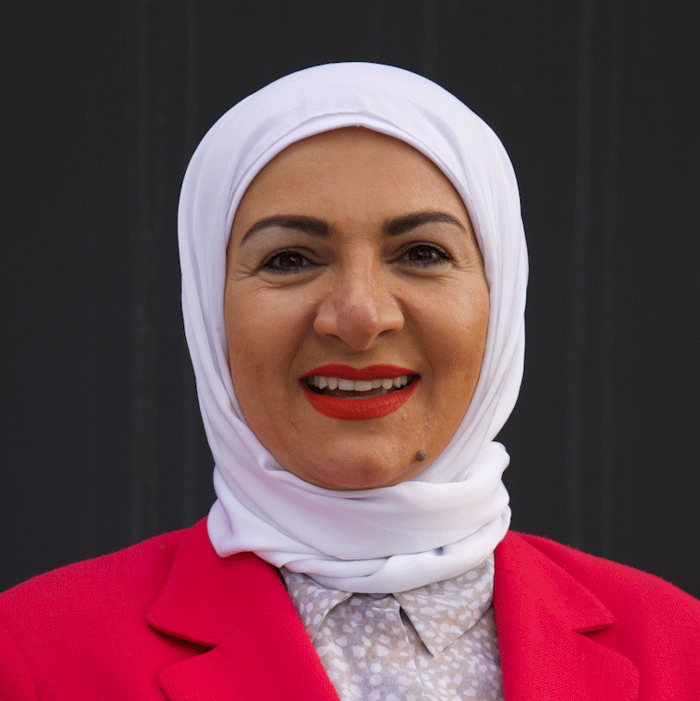
Noha O. Aly
MAT, AThR
Noha is a masters-qualified art therapist, ANZACATA-registered practitioner, and casual academic at La Trobe University. She also works as a subcontractor with Victoria Art Therapy, supporting NDIS participants with complex needs. With a Certificate in Sex Therapy (ISEE, USA), Noha specialises in culturally responsive care, designing programs for multicultural organisations and addressing intimacy and relational well-being. A professional visual artist, she blends clinical expertise with warmth and a playful spirit, creating safe spaces where creativity becomes a catalyst for healing, connection, and personal growth.