

Open Access
Published: December 2017
Licence: CC BY-NC-4.0
Issue: Vol.12, No.1
Word count: 5,085
About the author
Kaupapa Māori arts therapy: The application of arts therapy in a Kaupapa Māori setting
Anita Vlasić Manaia
Abstract
This paper presents a case study of Kaupapa Māori arts therapy, which can be described as arts therapy practice conducted under Māori concepts, philosophies and belief systems, or a Kaupapa Māori setting. As an arts therapist with ancestral links that are Tainui, Dalmatian and Scottish, and a passion for working with colonised people, Kaupapa Māori arts therapy concepts and philosophies resonated with me. Kaupapa Māori arts therapy provides a process for strengthening identity and building resilience using indigenous knowledge. Amongst other things, Kaupapa Māori arts therapy observes tikanga Māori (protocols), and makes use of Māori concepts, philosophies, tools and models in conjunction with Western arts therapy methods. It is an effective therapeutic process that is distinctly Māori, but also has relevance to other Indigenous peoples.
Keywords
Arts therapy, identity, Kaupapa Māori, Indigenous Knowledge Systems [1]
Cite this articleVlasic Manaia, A. (2017). Kaupapa Māori arts therapy: The application of arts therapy in a Kaupapa Māori setting. JoCAT, 12(1). https://www.jocat-online.org/a-17-vlasicmanaia
Introduction
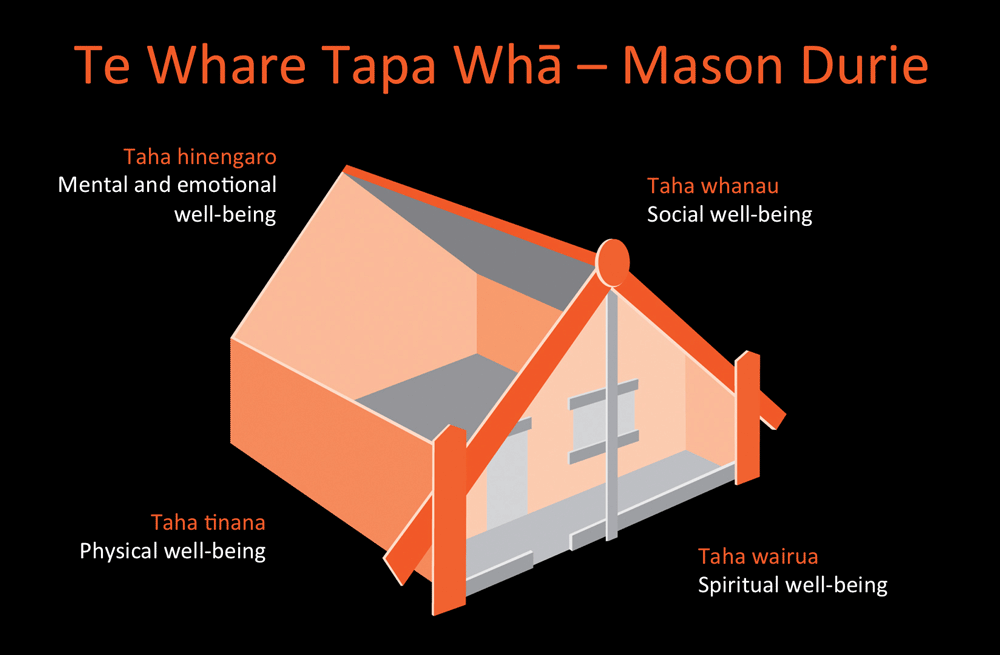
Kaupapa Māori arts therapy is an emerging practice. It is a form of arts therapy that I have developed in collaboration with my clients and that I describe for the first time in this article. It is arts therapy conceptualised within a Māori worldview and works with Māori models of health such as the four-sided construct of Māori well-being, Te Whare Tapa Whā [2]. Kaupapa Māori arts therapy can only be understood in relation to a definition of Kaupapa Māori within the context of the history, development and current practices of Kaupapa Māori health services.
Kaupapa Māori
Kaupapa Māori is quite simply ‘a Māori way’ of doing things, and is based on Te Ao Ma-ori, a Māori worldview (Smith, 1999). Smith (2004) describes Kaupapa Māori as:
Related to ‘being Māori’;
Connected to Māori philosophy and principles;
Taking for granted the validity and legitimacy of Māori;
Taking for granted the importance of Māori language and culture; and
Concerned with the ‘struggle for autonomy over our own cultural well-being’.
Kaupapa Māori in Health Services
According to the Ministry of Health (1996), Māori health service organisations have been in existence for over 50 years, but their number increased dramatically following the privatisation of the New Zealand health sector in 1990s. The Ministry of Health defined such organisations as ‘by Māori for Māori’ health services, targeted at addressing the specific health needs of Māori (Ministry of Health Policy Guidelines, 1996). They have since evolved into Kaupapa Māori health services, which can be accessed by anyone, and they continue to operate like this today.
The integration of Kaupapa Māori and arts therapy
Arts therapy is a form of psychotherapy that uses creative modalities including visual art-making, drama, and dance and movement to address, inform and improve physical, mental and emotional well-being and to build connections with individuals, families, groups, communities. It is a process that allows the therapist and the client to develop, through the arts, an interpersonal relationship with clear boundaries and shared objectives (Malchiodi, 2014).
Approaches that connect people with their culture and their communities help to develop a secure cultural identity and increase the potential for change. Psychological treatment and bicultural therapy therefore work in tandem, side by side, and each mutually enhances the other for the benefit of Maori clients. (2012, p.22)
One of the primary goals of Kaupapa Māori arts therapy is to strengthen identity using Māori values, principles, customs and protocols.
The case study
Overview
Waireti is a staff member at a Kaupapa Māori health organisation which delivers a range of support services. A serious allegation was made against her, which was investigated and eventually proven to be untrue. The accusation caused extreme stress for her, and for the organisation, and placed her in a difficult and isolated situation. A client referral was made for me to work with Waireti by the Chief Executive Officer (CEO), who asked me to help Waireti manage this very difficult and stressful situation.
I was asked to provide some self-care exercises and activities for Waireti and other staff pending the outcome of an employee investigation.
Assessment
The presenting issues were stress and anxiety. The situation was exacerbated by an inability to access other work-based support services due to the pending investigation. The goal was to support and then integrate Waireti safely back into her workplace.
Process
Waireti and the rest of the staff had already received some education about arts therapy, so that they could understand it better as a profession. They were quick to accept and embrace the concepts and philosophies, which was not surprising, given the commonalities mentioned above between arts therapy and a
Māori worldview. They had also witnessed a range of positive outcomes from previous arts therapy programmes with their clients. Consequently, Waireti was willing to participate in an arts therapy process. Waireti and I had worked together before. We had already developed a positive relationship and a mauri,
or synergy, had already been established.
Art expression is one way to communicate narratives without words. In many cases, it becomes the opportunity to tell one’s story without the parameters, restrictions and judgments of language. It is this core experience found in creative endeavours that tells us art’s purpose is not merely to exemplify internal conflicts but is actually to provide a way to continuously reinforce our own self-empowering, life-affirming capacity for resilience. (2012, p.31)
Waireti’s life story
Waireti was born in 1957 to a father of Scottish descent and a Māori mother. She had three siblings, including an older sister and two younger brothers. Her parents separated, and her mother was often ill, so she and her siblings were cared for by others. When Waireti was 7 years old her mother passed away. Her father took the children to Auckland. Many people offered to support him as a single parent.
Her father decided to seek employment out of Auckland, and allowed his children to remain with the family that were supporting him while he set up a home for all of them. During this time the family supporting the children placed them into the public system, and became their primary caregivers. The only way the girls would be returned to their father was if he provided a woman caregiver to support them, which he managed to do. The girls were ready to be returned to their father in the school holidays, December 1969. Waireti thought that her dream of them all living together had finally come true, but it turned into a nightmare. On the 6th of December 1969, her father died at sea. No one let her know. She found out the next day in a report on the front page of the New Zealand Herald.
Her caregivers were “slave drivers and abusers”. She had no choice but to live with the situation. Finally, when she was a little older, her release papers were signed. Freedom was bliss, but there were no guidelines. There were only constant reminders that “you are nothing not anything at all”. With the belief that she came from somewhere, she decided to search for her late mother’s people, and discovered that she had descended from the tribes of Nga-ti Hine and Nga-ti Kahu. She had a sense of belonging, but did she have a purpose?
Her life lessons became her training ground. She no longer saw difficulties in opportunities, but opportunities in difficulties. She no longer dwelt on sorrowful events, but used the experience to help and support others. This gave her a growing sense of self-awareness, and she was grateful to everyone who helped her on her pathway. She was no longer a slave but doing a service. “I work with people who have a parallel history to my own. Allegations were made against me and although they are not true,
I was stood down until the investigation was over. During this time, I felt isolated and alone. Arts therapy has been a gift for me.” (Waireti, personal communication, 2016)
Kotahitanga: Individual and collective strengths intervention using Māori myth
Our first session involved all the staff, including Waireti, because the situation had affected them all. I made a centrepiece using a large candle and woven mat which I placed in the middle of the room.
Land, water, and air are essential ingredients of life, to be respected, cherished, and sustained. Everything in the Māori world has a life force, the mauri, and contamination or degradation of natural resources is seen to damage and diminish the life force, and affect the well-being of people. Traditional Māori values contain the common Māori belief that all biophysical things and sites, plants, trees, animals and human beings have a certain amount of tapu, mana, and mauri. (1988, para.1)
Session two: Whare Tapa Whā self-care mandala
The second session was a one-on-one session to examine what Waireti needed. The goal was to identify and establish self-care strategies and develop personal strengths. The directive was to draw a circle on the page and create an image to represent what she might need at that moment in the four cornerstones of health: Hinengaro (Mind), Tinana (Body), Wairua (Spirit) and Whānau (Family). I explained the concept of Whare Tapa Wha- as a holistic approach to well-being from a Māori worldview through these four dimensions of mind, body, spirit and family (see Appendix 1). I asked Waireti if she was alright with me doing this activity alongside her in order to encourage and support her participation and she was happy for this to occur.
Session three
The investigation had been completed prior to our beginning this session. Waireti had been reinstated, and was cleared to go back to work. I contacted her, and discussed doing this session at her work place, to help support her reintegrating back into her work role. We talked about how this session might help disperse some of the possible awkward energy at work.
Session four
This was our final one-to-one session, and Waireti asked that it be held away from work. We met at a venue that she chose. I set up our session space, I lit the candle in the middle of our centrepiece, and we started.
From darkness came the light. From the light came beautiful colours. The birth of the rainbow. From the rainbow came vision. This vision awakens illusions that become one’s reality. It awakens the oneness that lies within. Use the gifts bestowed upon you with great love (Waireti, personal communication, 2016).
Session five: Collecting kōhatu
Waireti and I, along with two clients of the organisation, went on a trip to collect kōhatu at a beach. I noticed that Waireti was very enthusiastic about the benefits of this for clients and staff. One of the goals of this journey was to reintegrate Waireti back into the work environment by taking a positive journey with clients of the organisation before new clients were admitted into the residential care house where she worked. It was considered a viable process for cleansing negative energy. The organisation accepted our proposal to do this, and agreed to provide transport for the journey. They could see the benefits for Waireti, the other clients and the rest of the staff as well.
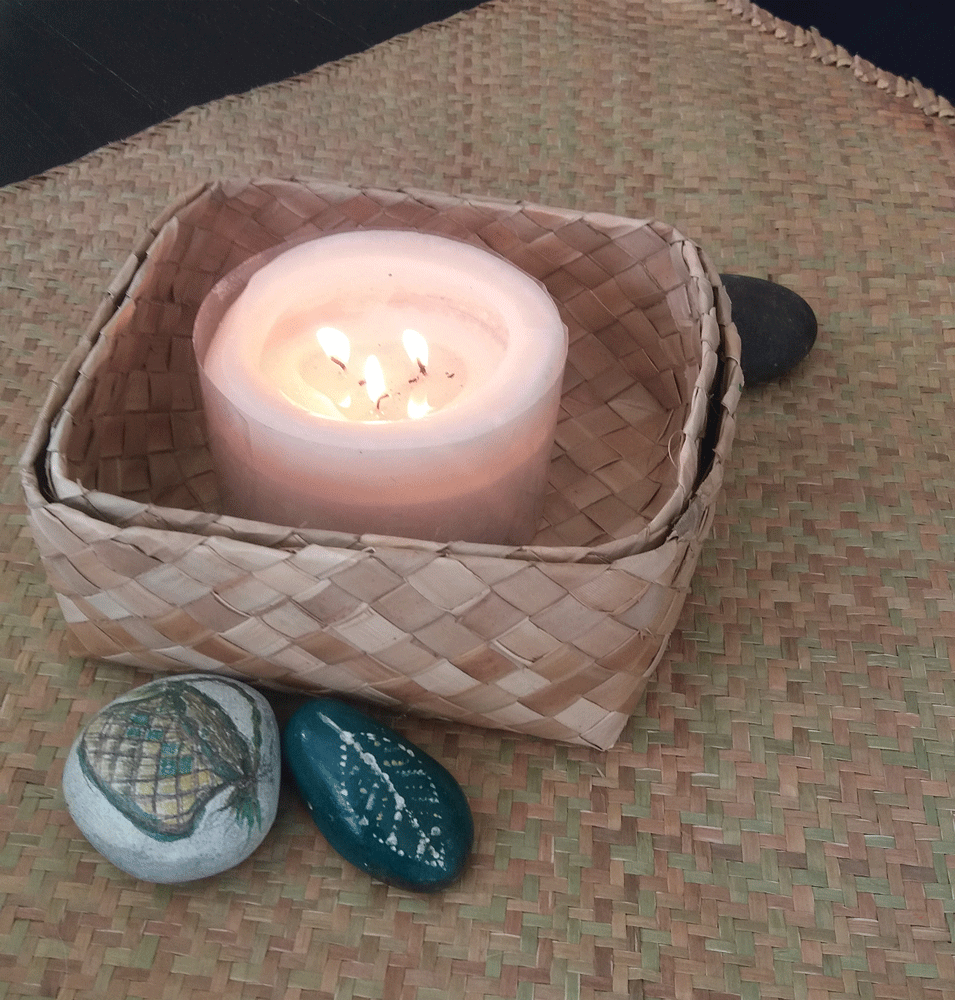
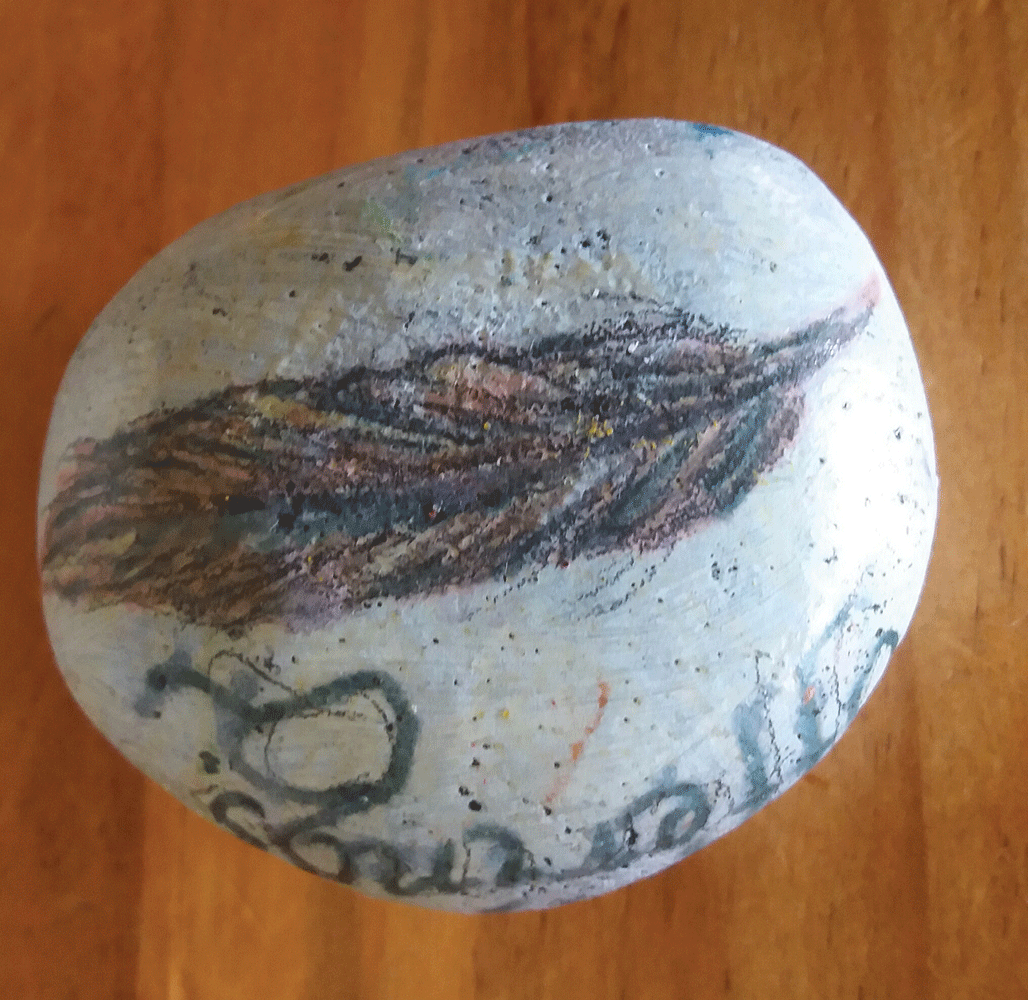
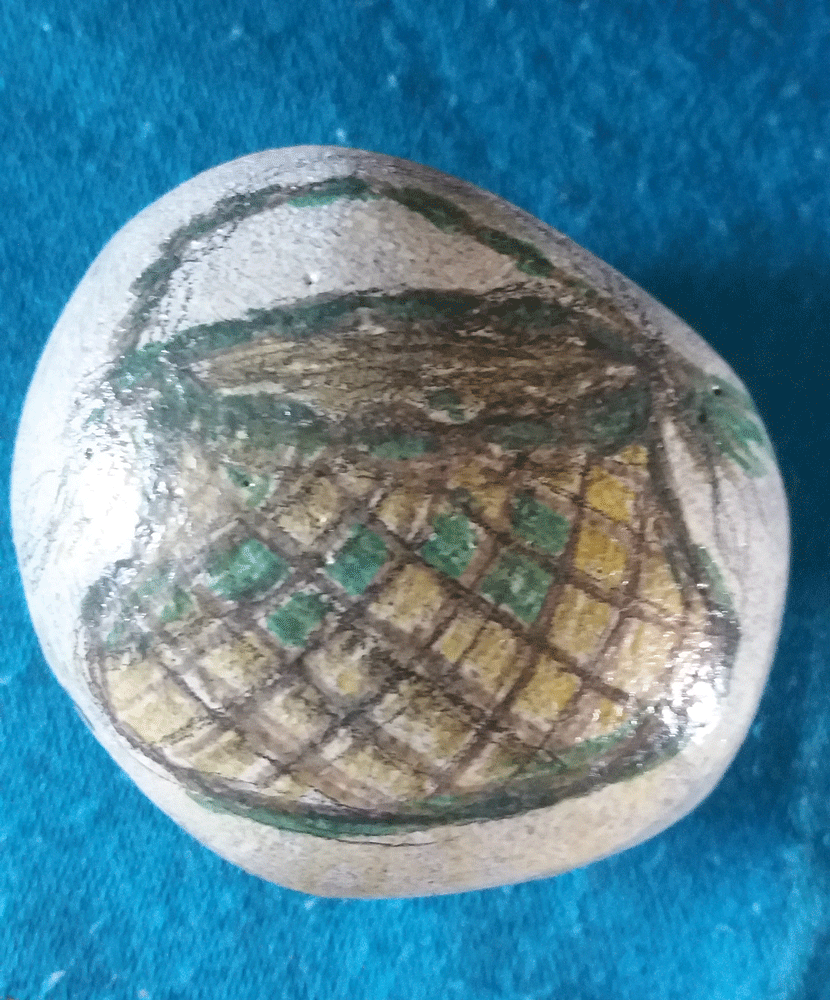
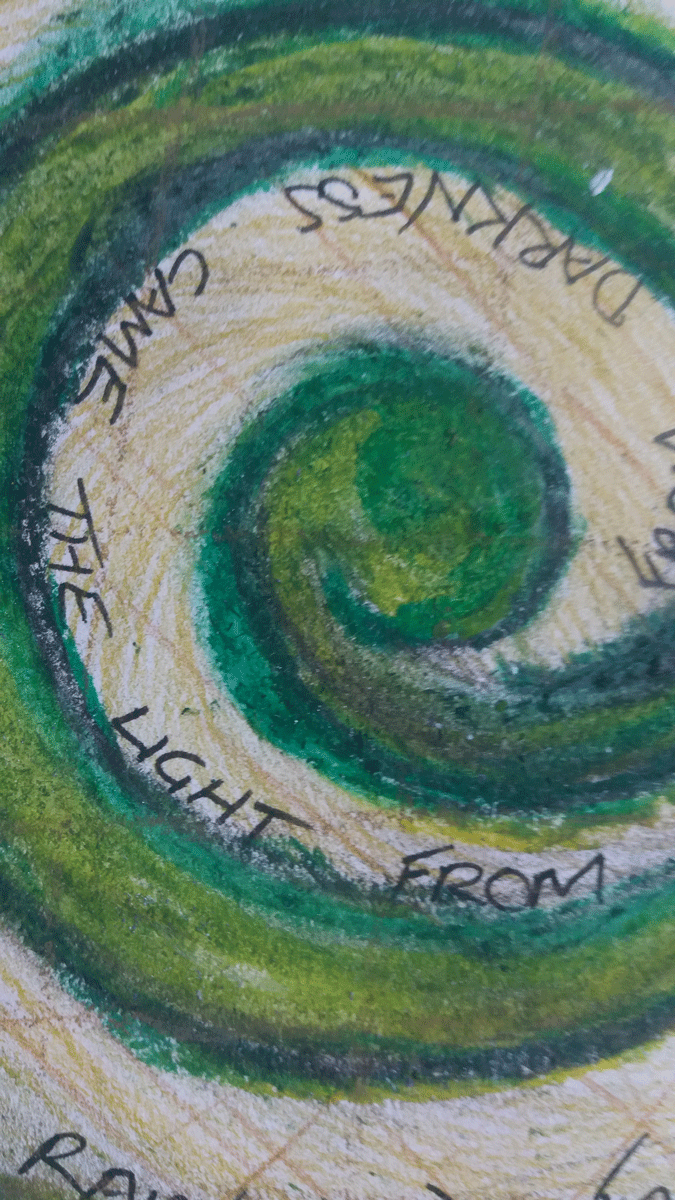
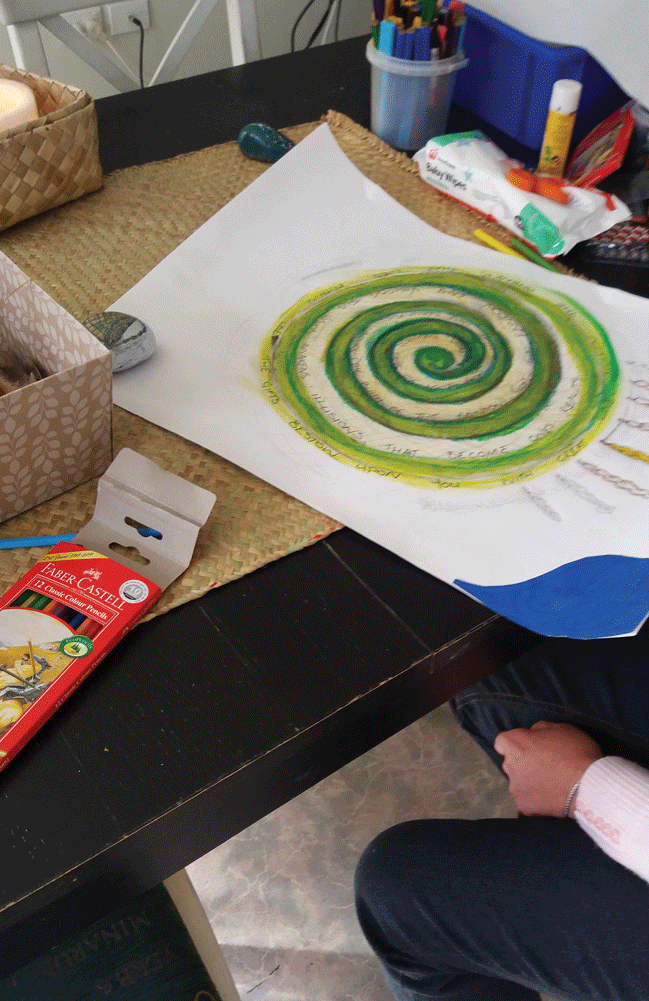
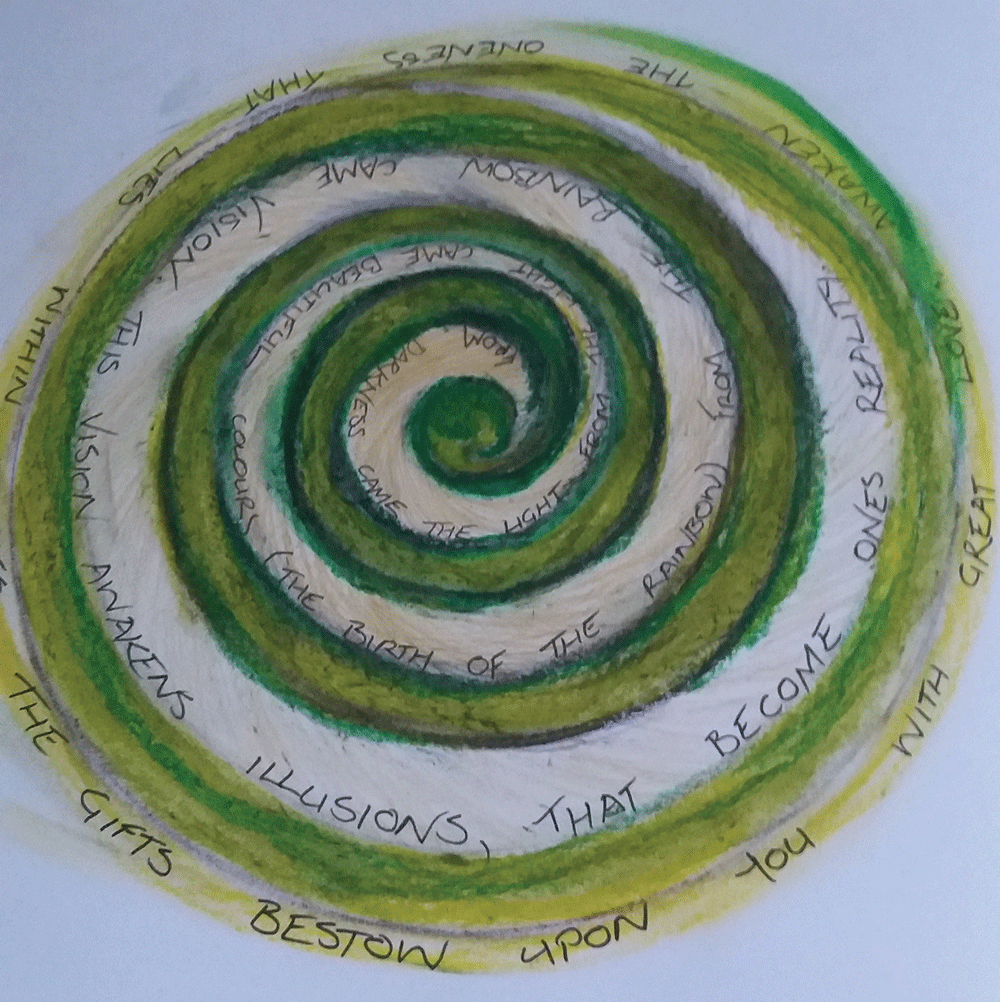
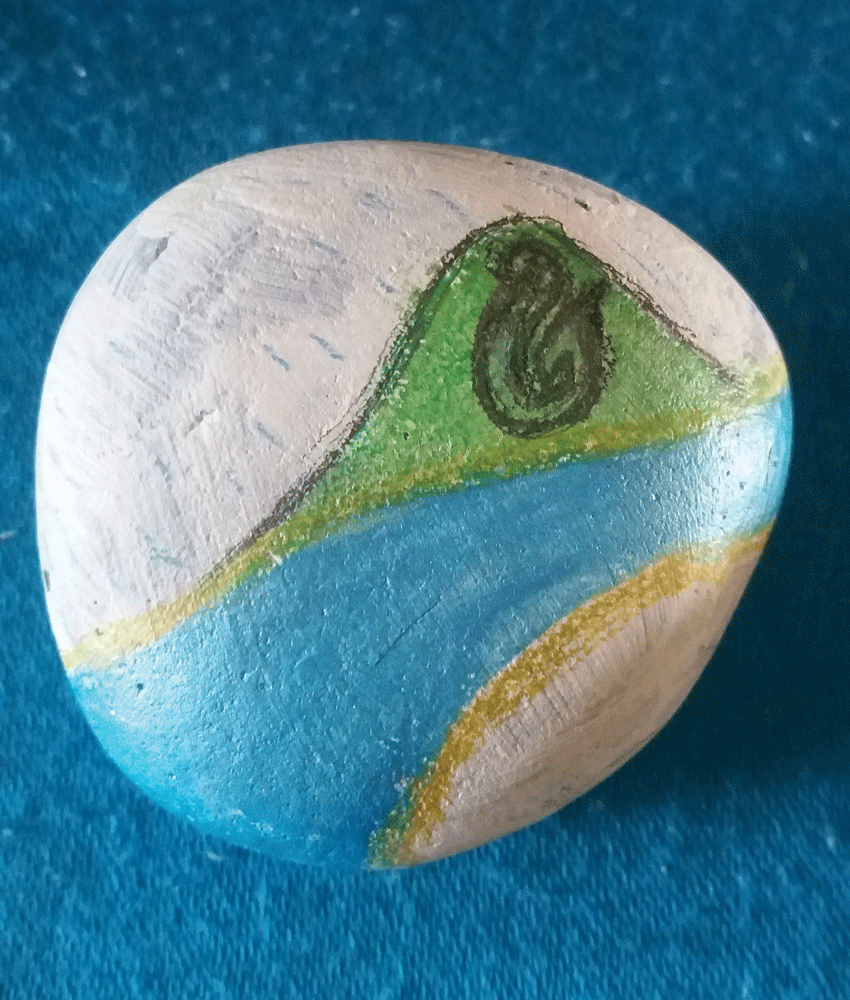
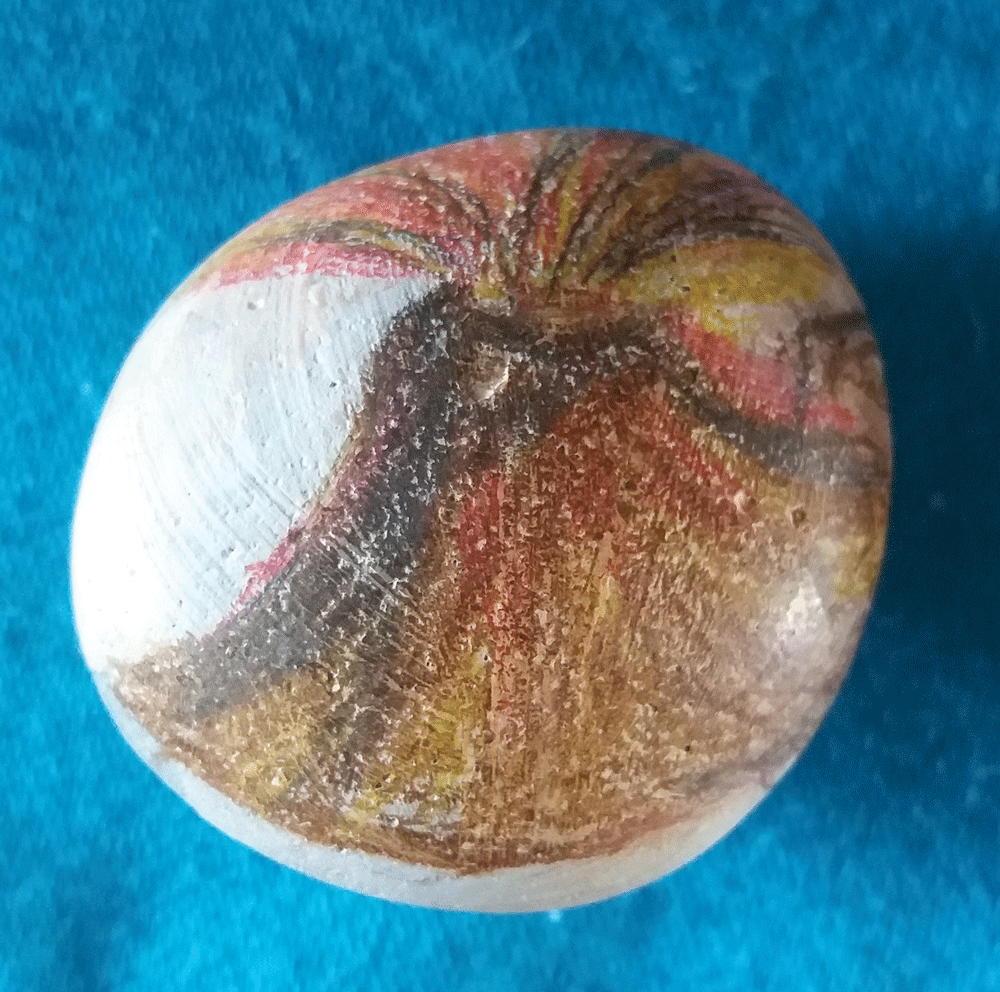
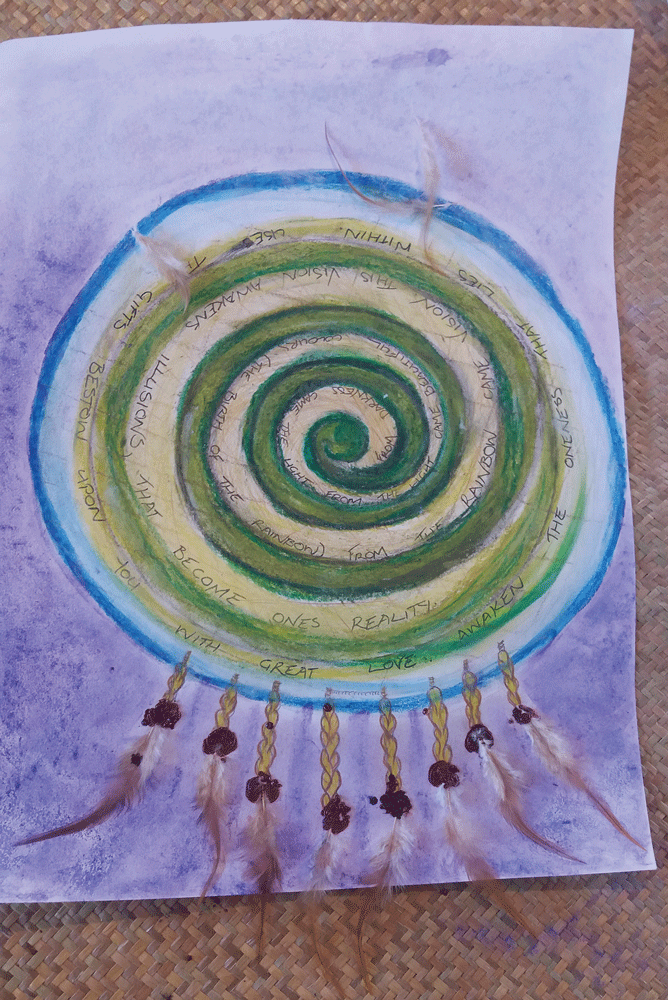
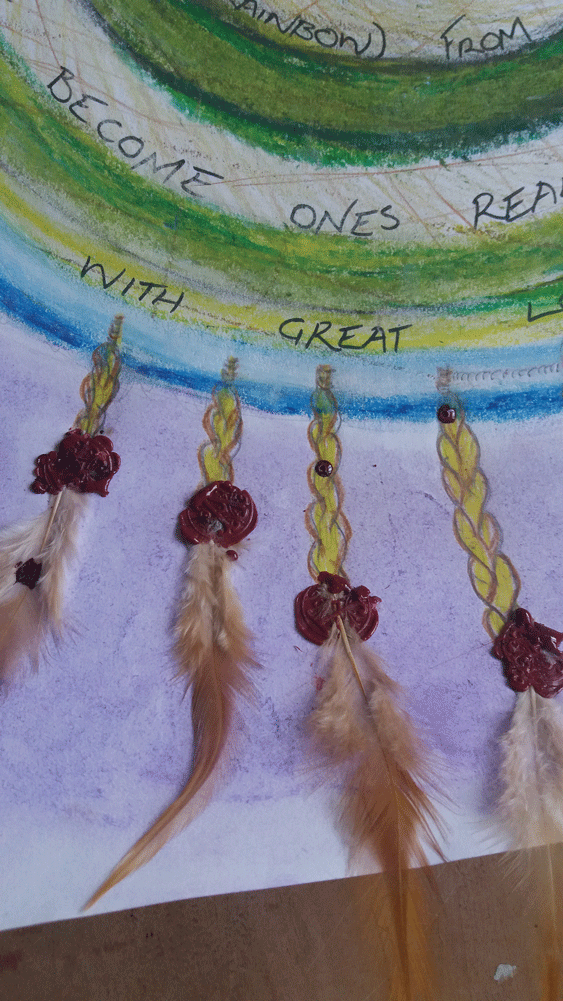
From top to bottom, left to right:
Figure 1. Session centrepiece; Figures 2 and 3. Waireti’s kotahitanga kōhatu; Figure 4 and 5. Waitreti’s artwork; Figures 6 and 7. Waireti’s artwork; Figures 8 and 9. Waireti’s completed art work.
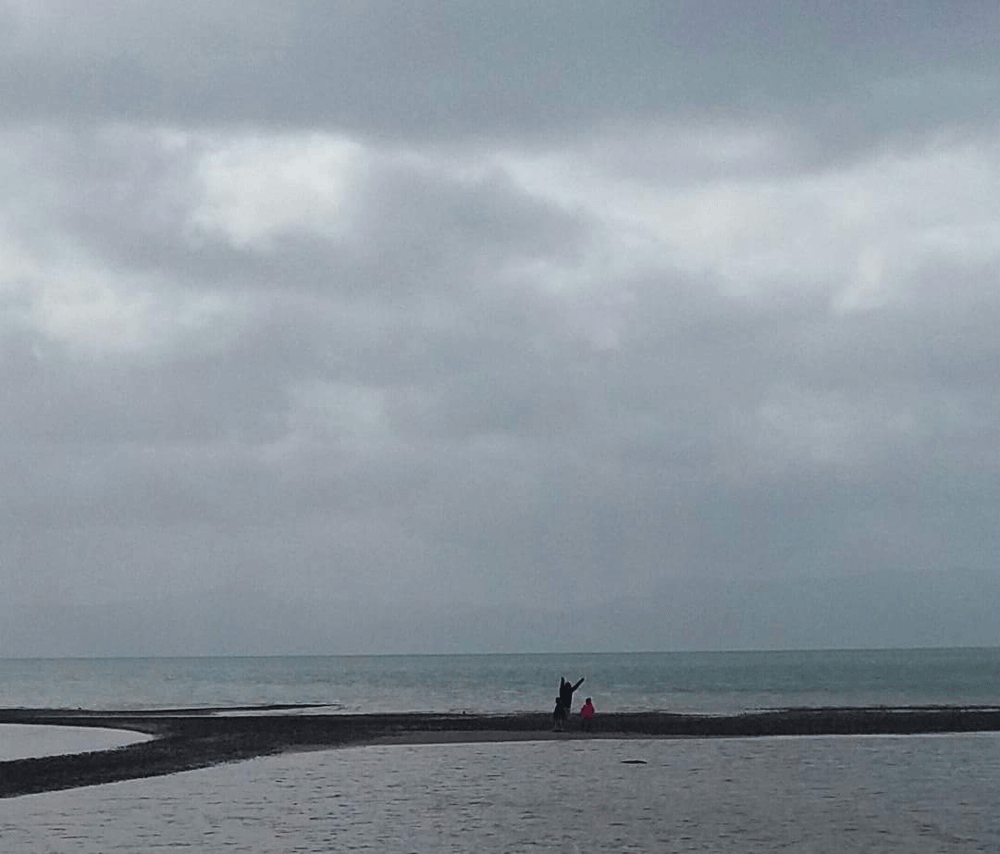
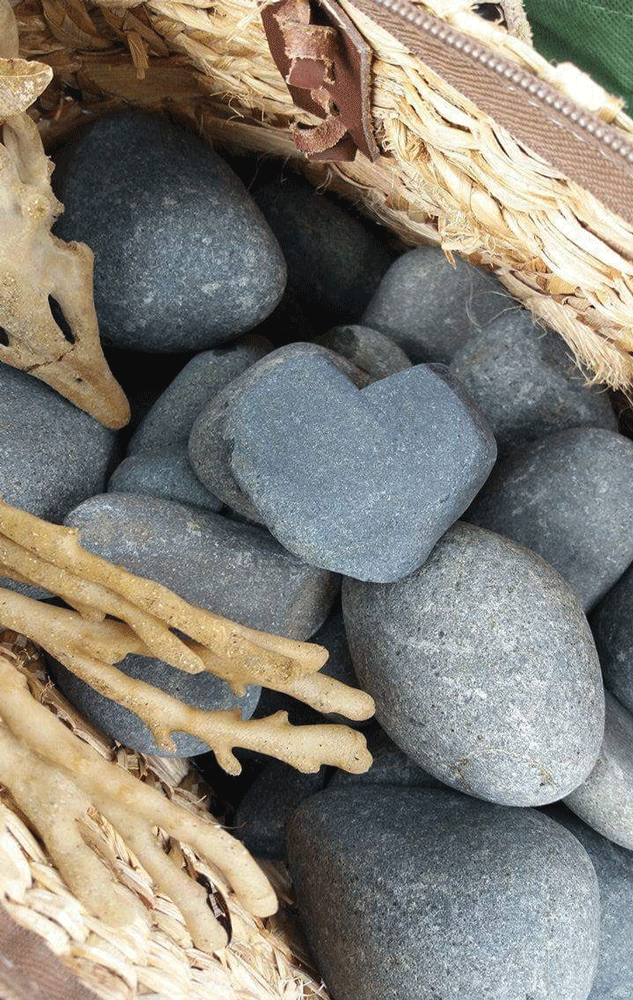
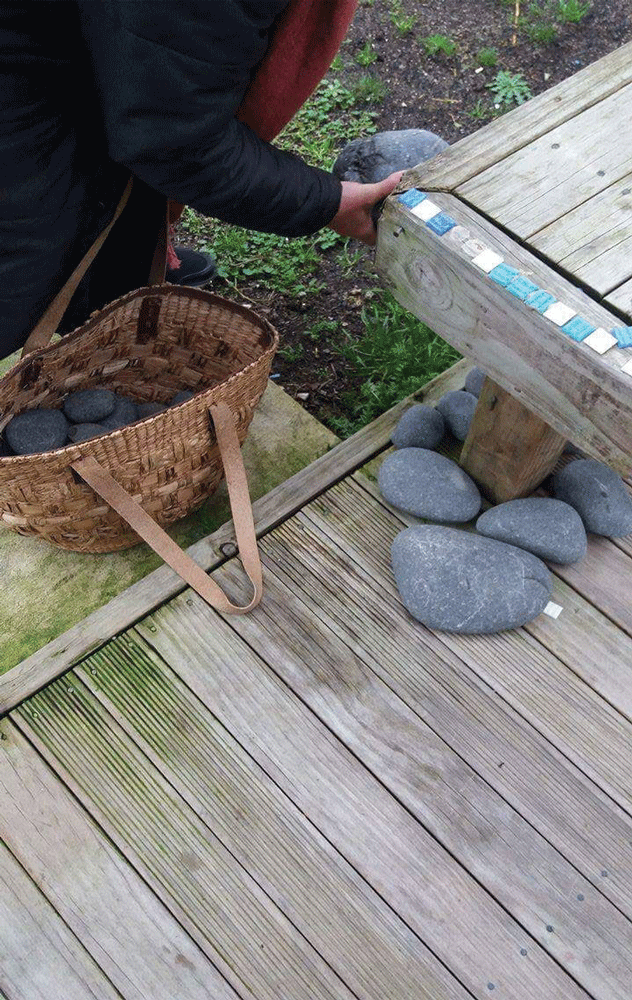
Figure 10. One of the clients collecting stone at the beach with her child.
Figures 11 and 12. Resources from our trip to the beach.
Client outcomes
Waireti was an active and willing participant. She knew that there was therapeutic value in making the arts therapy journey guided by her own story. By attending the sessions, Waireti was supported to navigate a potentially stressful and traumatic time. She was grateful for the space she was given to use arts therapy as a resource for healing. The goal of strengthening and supporting her was eventually achieved.
Conclusion
Arts therapy is an inclusive, healing process. It allows expression of cultural diversity while developing the client’s communication, problem-solving skills, and coping mechanisms for the challenges of everyday life. At the start I saw a woman with high stress and extreme uncertainty. I watched her engage in an arts therapy healing process on her own terms. I saw her rediscover the essence of what it meant to be Māori and then express this in her creativity using Māori concepts of Ahi Ka- and Whare Tapa Wha- and Māori resources such as Ko-hatu and Pou. By supporting her through an arts therapy process using tikanga and Kaupapa Māori I was able to walk alongside her as she realised that the answer lay within.
This was all about me. It started with the spiral of life and had no colour, but I was encouraged to look within. This spiral eventually became a colourful dream catcher that reached beyond the clouds. It made me realise that most answers lie within me. Be still, create your own reality and believe in yourself (Waireti, personal communication, 2016).
Endnotes
1. A glossary of Māori terms is provided at the end of this article.
2. The Māori philosophy toward health is based on a holistic health and wellness model called ‘Te Whare Tapa Whā’. Developed by Sir Mason Durie in 1982, it can be applied to any health issue, whether it involves physical or psychological well-being, and is commonly used in Kaupapa Māori health services. See Appendix 1.
References
Allen, P.B. (1995). Art is a way of knowing: A guide to self-knowledge and spiritual fulfilment through creativity. Boston: Shambhala Publications.
Bishop, R. (1996). Whakawhanaungatanga: Collaborative research stories. Palmerston North, NZ: Dunmore Press.
Busch, C. (2001). Celtic spirituality revisited. spirituality and art therapy: Living the connection. Jessica Kingsley.
Durie, M. (1994). Whaiora: Maori health development. Oxford University Press, Auckland. Retrieved from http://www.health.govt.nz/our-work/populations/maori-health/maori-health-models/maori-health-models-te-whare-tapa-wha
Durie, M. (2005). Ngā Tai Matatā: Tides of Māori endurance. Oxford University Press.
Kame’eleihiwa, L. (1992). Native land and foreign desires: Pehea lā e pono ai? Bishop Museum Press.
Lammers, M. (2012). Issue: Part 2 of a 2 part series. Psychology Aotearoa, 4(1), 19–23.
Malchiodi, C.A. (2014). Creative arts therapy approaches to attachment issues. In C. Malchiodi & D. Crenshaw (Eds.), Creative arts and play therapy for attachment problems (pp.3–18). Guilford Press.
Malchiodi, C. (2012). The handbook of art therapy. Guilford Press.
Manaia, A., Te Huia-Eastwood, L., & Lepper, T. (2016). ‘Nga Toiora Manawhenua: Arts therapy for Indigenous and ethnic minorities in Aotearoa New Zealand’: A summarised compilation of three Maori arts therapy case studies. Lowitja Institute International Indigenous Health and Wellbeing Conference, 8th–10th November 2016, Melbourne, Australia. http://lowitjaconf2016.org.au/
Marsden, M., (1988). The natural world and natural resources. Māori value systems and perspectives: Resource Management Law Reform Working paper 29. Part A. Wellington, Ministry for the Environment. Retrieved from: https://www.landcareresearch.co.nz/science/living/indigenous-knowledge/land-use/maori-values
Mason, S. (2000). Art therapy. In P. Dudgeon, D. Garvey & H. Pickett (Eds.), Working with Indigenous Australians: A handbook for psychologists (pp.431–38). Perth, Australia: Gunada Press.
Ministry of Health. (1996). The Maori health policy guidelines for regional health authorities. Te Kete Hauora, Maori Health Unit, Ministry of Health, Wellington.
McNiff, S. (2015). Imagination in action: Secrets for unleashing creative expression. Shambhala.
Nepe, T.M. (1991). Te Toi Huarewa Tipuna: Kaupapa Ma-ori, an educational intervention system. [Unpublished Master’s Thesis, Department of Education. The University of Auckland, Auckland].
Piripi, T., & Body, V. (2010). Tihei Wa Mauri Ora. New Zealand Journal of Counselling, 30(1), 34–46.
Smith, G. (2004). Mai i te maramatanga, ki te putanga mai o te tahuritanga: From conscientization to transformation. Educational Perspectives. Indigenous Education, 37(1), 46–52.
Smith, G.H. (1997). The development of Kaupapa Māori: theory and praxis. [Unpublished doctoral dissertation, The University of Auckland].
Smith, L.T. (1999). Decolonizing methodologies, research and indigenous peoples. Zed Books.
Weick, A. (1992). Building a strengths perspective for social work. In D. Saleebey, (Ed.), The strengths perspective in social work practice. Longman.
Glossary of terms
Ahi Kā – Home fire.
Hine-nui-te-po- – Māori goddess of death.
Hinengaro – Mental.
Karakia – Prayer / Blessing.
Kaupapa Māori – A Māori philosophy, concept or belief system.
Kete – Woven container or basket.
Kotahitanga – Unity.
Kōhatu – Stone.
Mauri – Life force / Ethos.
Papatuanuku – Mother earth.
Pou – A wooden post.
Tainui – A Māori tribe based in the Waikato region in the central North Island of Aotearoa, New Zealand.
Te Ao Māori – The Māori worldview.
Te Runanga – The Board, usually associated with governance.
Tihei-wa mauri ora – The bringing of life.
Tinana – Body / Physical.
Wairua – Spirit / Soul.
Whakapapa – Ancestry.
Whanau – Family
Whānaungatanga – Family unity.
Whare Tapa Whā – The four-sided construct of Māori well-being.
Appendix 1: Te Whare Tapa Whā
One model for understanding Māori health is the concept of ‘Te Whare Tapa Whā’, the four cornerstones (or sides) of Māori health.
With its strong foundations and four equal sides, the symbol of the wharenui illustrates the four dimensions of Māori well-being. Should one of the four dimensions be missing or in some way damaged, a person, or a collective may become ‘unbalanced’ and subsequently unwell. For many Māori modern health services lack recognition of taha wairua (the spiritual dimension). In a traditional Māori approach, the inclusion of the wairua, the role of the whanau (family) and the balance of the hinengaro (mind) are as important as the physical manifestations of illness.
Taha Tinana (physical health)
The capacity for physical growth and development. Good physical health is required for optimal develop-ment. Our physical ‘being’ supports our essence and shelters us from the external environment. For Māori the physical dimension is just one aspect of health and well-being and cannot be separated from the aspect of mind, spirit and family.
Taha wairua (spiritual health)
The capacity for faith and wider communication. Health is related to unseen and unspoken energies. The spiritual essence of a person is their life force. This determines us as individuals and as a collective, who and what we are, where we have come from and where we are going. A traditional Māori analysis of physical manifestations of illness will focus on the wairua or spirit, to determine whether damage here could be a contributing factor.
Taha Whānau (family health)
The capacity to belong, to care and to share where individuals are part of wider social systems. Wha-nau provides us with the strength to be who we are. This is the link to our ancestors, our ties with the past, the present and the future. Understanding the importance of whanau and how whanau (family) can contribute to illness and assist in curing illness is fundamental to understanding Māori health issues.
Taha hinengaro (mental health)
The capacity to communicate, to think and to feel mind and body are inseparable. Thoughts, feelings and emotions are integral components of the body and soul. This is about how we see ourselves in this universe, our interaction with that which is uniquely Māori and the perception that others have of us (Durie, 1994).
Appendix 2: Mother Earth Karakia
Mā te rā e kawe mai te ngoi ia rā ia rā,
Mā te marama e whakaora a koe i waenga pō.
Mā te ua e horoi ōu māharahara,
Mā te hau e pupuhi te pākahukahu ki roto i tō tinana,
I roto i ōu hikoitanga i te ao kia whakaaro koe ki te humarie ataahua hoki o ōu rā mō ake tonu atu
Āmine
English translation:
May the sun bring you energy by day,
May the moon softly restore you by night,
May the rain wash away your worries,
May the wind blow new strength into your being,
May you walk on this earth in peace, all the days of your life and know its beauty for ever and ever.
Amen
Appendix 3: Tihei-Wa Mauri Ora pre and post assessment tool
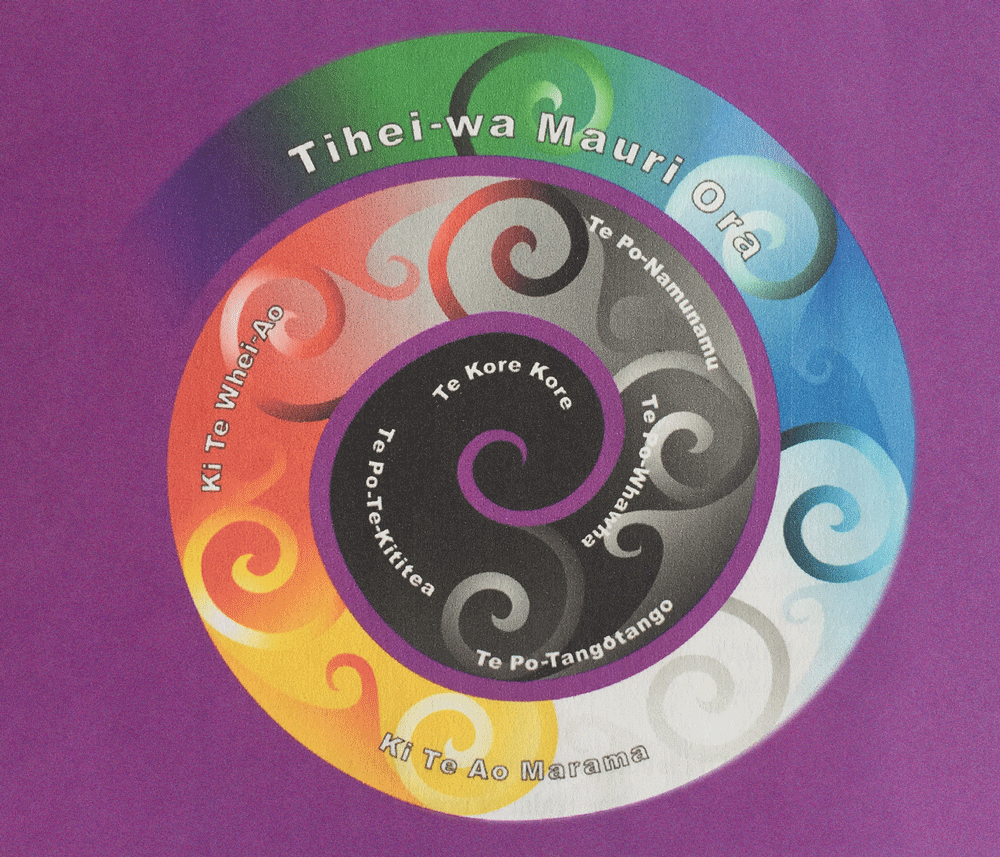
Tihei-wa Mauri Ora (There is Life) is an Indigenous Kaupapa Māori Resource and Assessment Tool developed by two Māori counsellors, Vivienne Body and Teina Piripi at Te Runanga o Te Rarawa. The tool was part of their work with suicidal youth and their whanau. It is based on Māori concepts of creation and was developed to incorporate spirituality and sacredness into healing from a Māori and Indigenous worldview.
According to Piripi and Body, “Nature provides examples of this regeneration in the continuous growth of plant life. It is within these natural form-ations that Māori view themselves and the world around them” (Piripi & Body, 2010, p.35). Using this metaphor of creation allows a shift from darkness to light.
The Tihei-wa Mauri Ora construct shows a life continuum where periods of light and darkness are normalised as proper and valid, given this space and time in their lives. The construct locates the person in an innate way within Te Tuakiri o te Tangata (Te Ataarangi Educational Trust, 2000).
Io has already implanted this knowledge and wairua within us, and when we see it, there is recognition from within; an innate resonance and memory ignited. The connection to ourselves and our collective understandings grounds us in the whole cosmic order of life. The concept of Te Wā and continuous life forces becomes apparent in the construct and for the people involved.
Author
Anita Vlasić Manaia
BASW, MAAT (Clin)
Anita is of Dalmatian, Scottish and Ma-ori (Tainui) descent. She has a bicultural degree in Applied Social Work and a Masters in Arts Therapy (Clinical) from Whitecliffe College of Arts and Design. Her passion is working with Indigenous peoples to strengthen identity and build resilience using arts therapy. Her Master’s thesis was entitled ‘Te Puawaitanga – Seeds of social change: The restoration and reinforcement of identity using arts therapy’. She currently works as an arts therapist with Māori and Pacific Island clients who live in South Auckland in low socio-economic communities with high and complex needs. Her work involves acknowledging ancestral, spiritual and intuitive knowledge and using this as a resource when working with the impacts of colonisation. Anita also incorporates the making of traditional Māori cloaks (korowai) and the weaving of flax (raranga harakeke) in her therapeutic processes.